














DESCRIÇÃO DO PROJETO
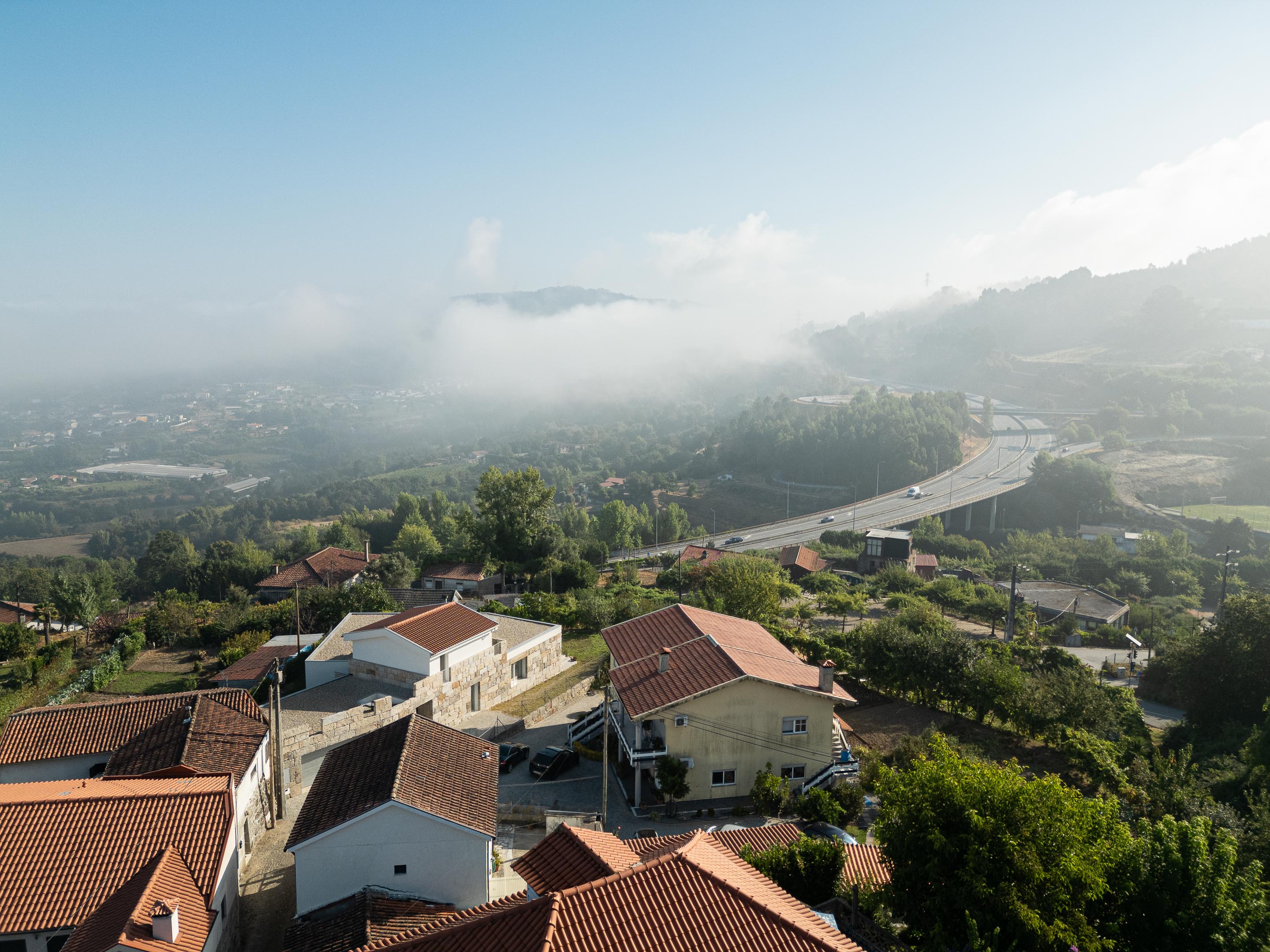
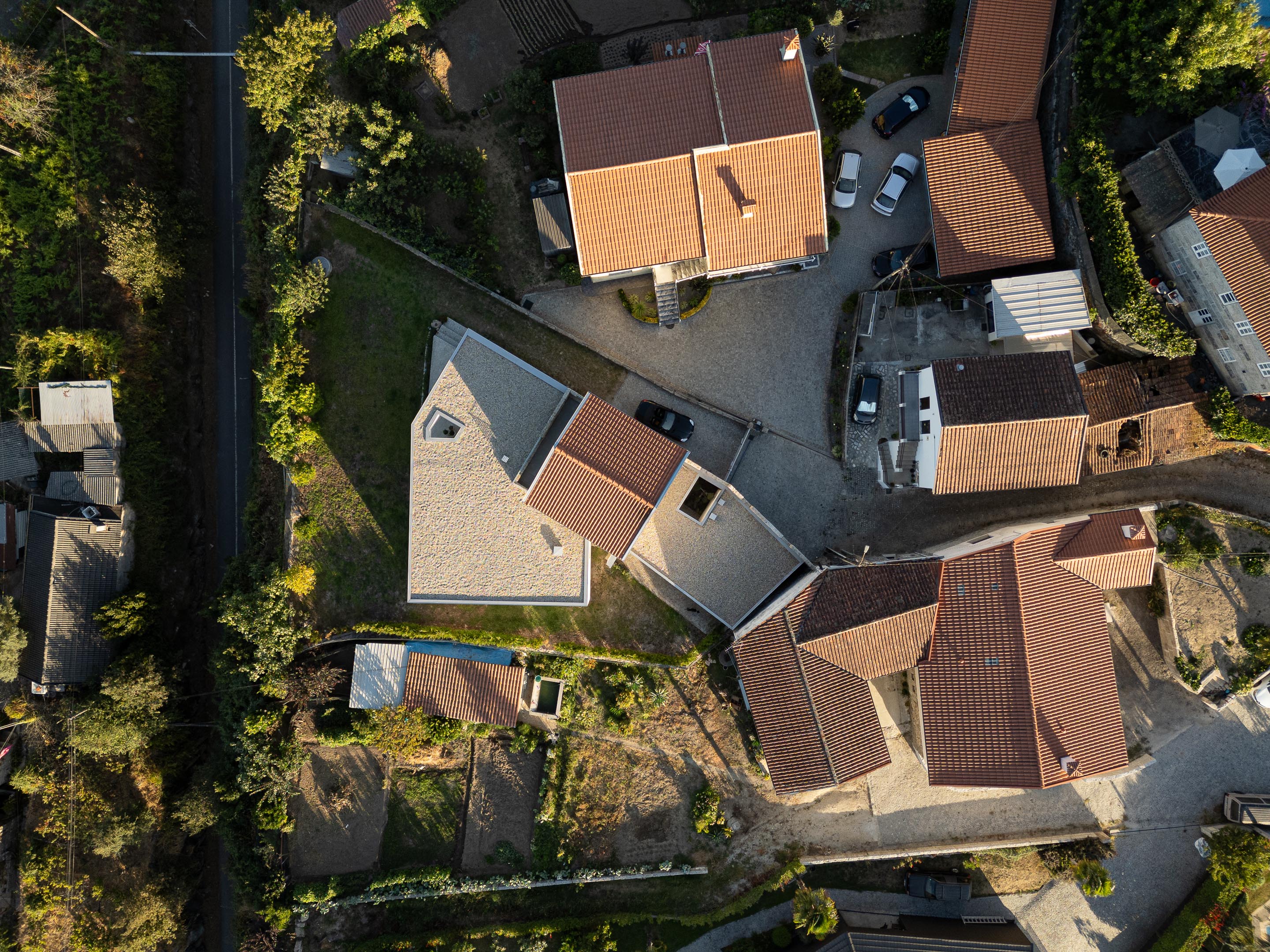
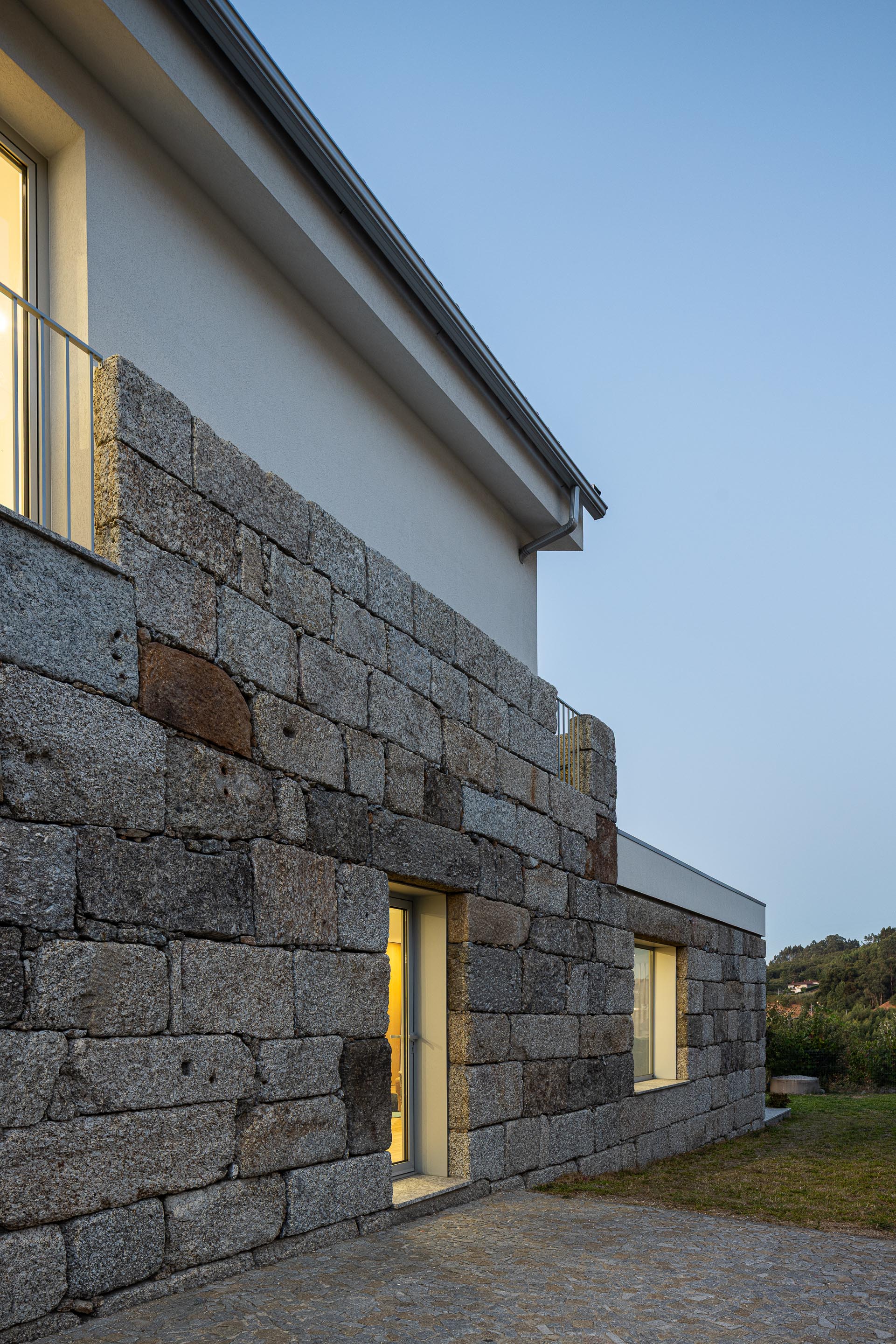
"No final de uma rua tranquila, onde grande parte das construções são da mesma família alargada, existia uma ruína integrada nesse núcleo de construções familiares. Uma família jovem, e em crescimento, decide reconstruir essa ruína com a qual têm uma grande relação afetiva, pois pertencia aos avós da cliente. Mesmo ao lado da ruína, está a casa dos pais da cliente, onde viveu durante muito tempo. A vontade de reabitar da ruína surge dessa intenção de voltar ao lugar da memória e de estar muito perto do núcleo familiar, onde os pais da cliente, agora avós, viverão com grande proximidade o crescimento dos netos.
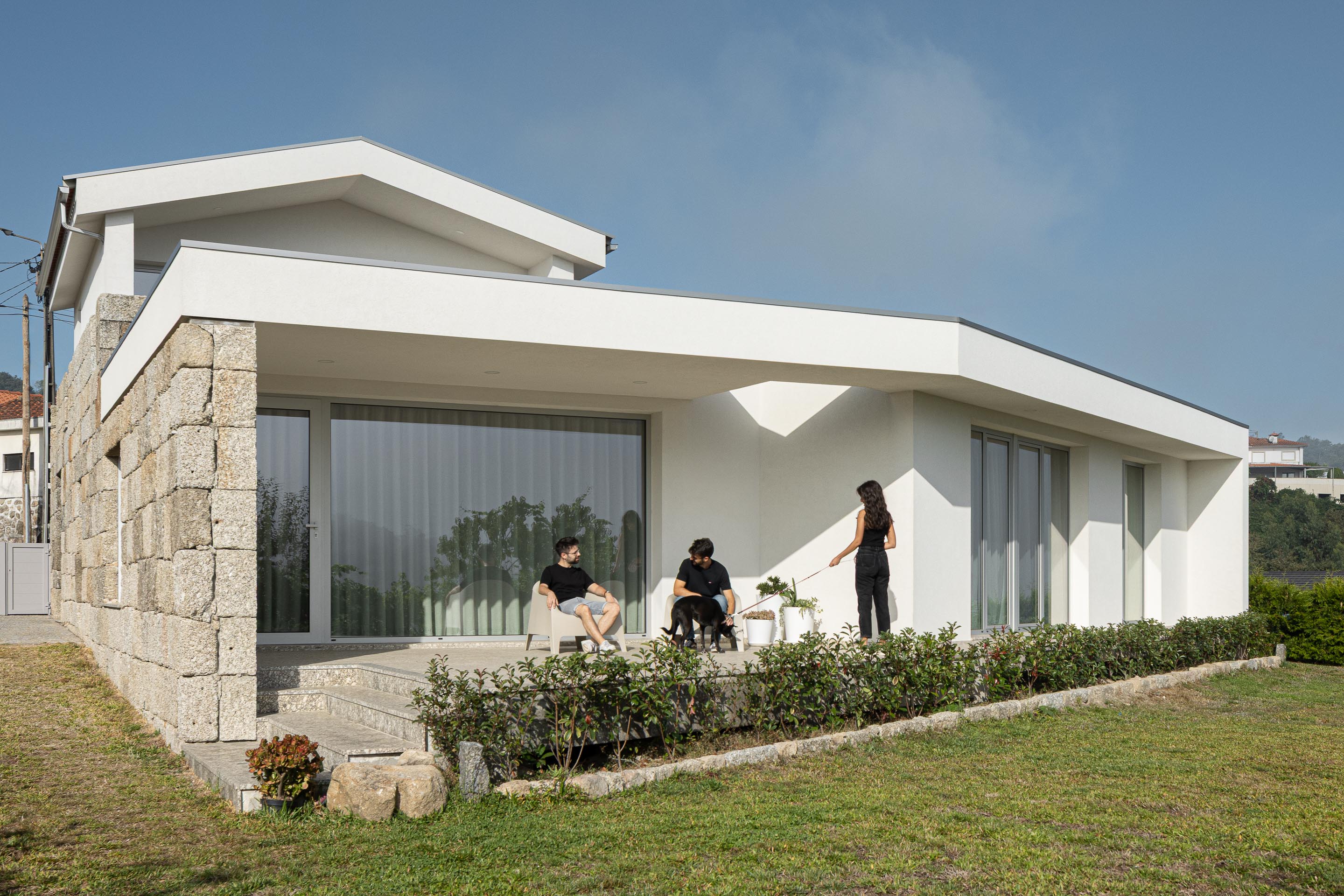
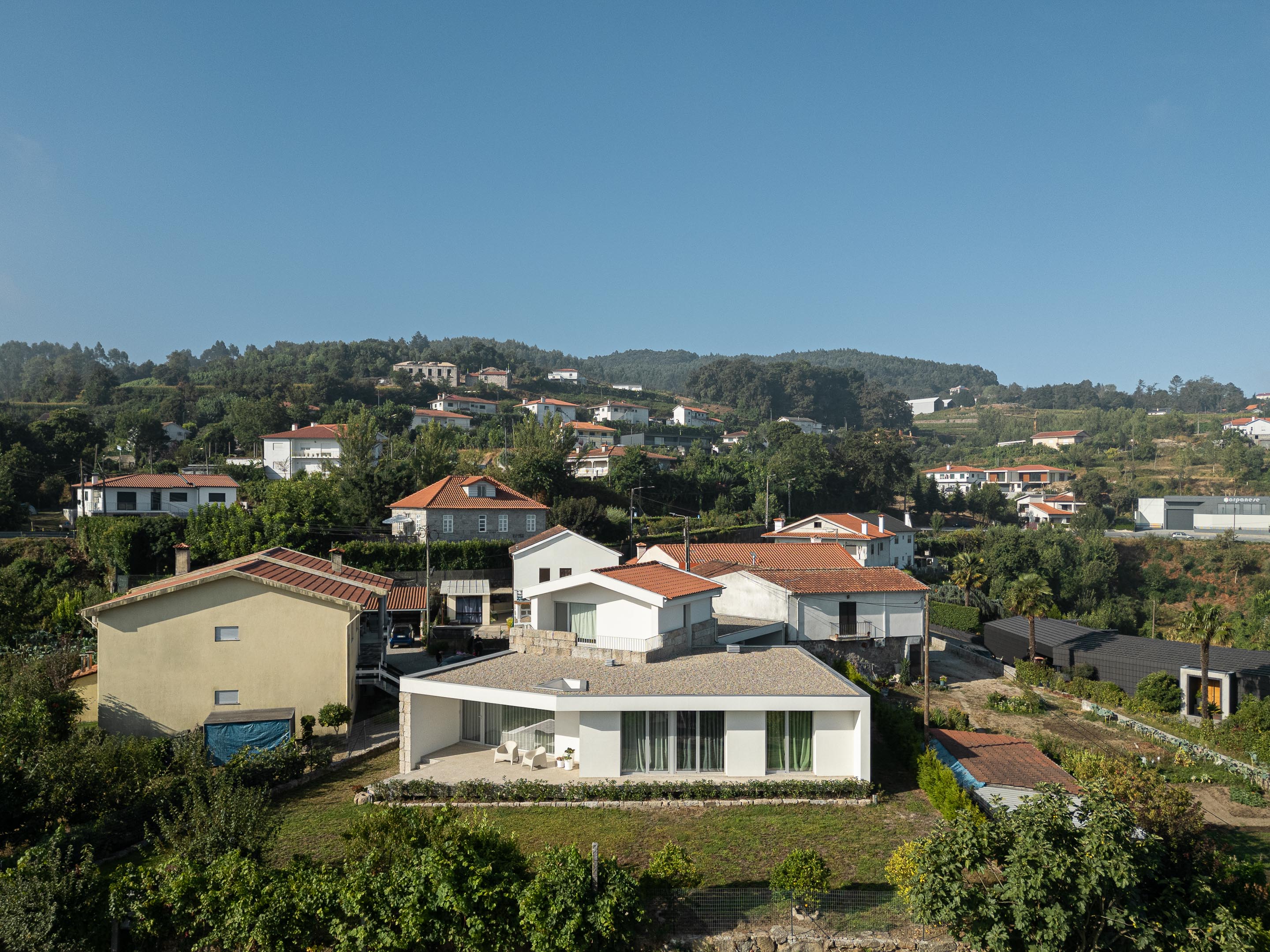
A ruína é o símbolo dessa partilha familiar e da memória, e por isso foi assumida, reinterpretada, e absorvida pelo projeto. A ideia da relação existente/novo, antigo/contemporâneo, era algo que já pairava na mente dos clientes. A necessidade de espaços específicos, interiores e exteriores, levou à necessária ampliação. A vontade de reconstrução foi acima de tudo um ato de continuidade e pertença.
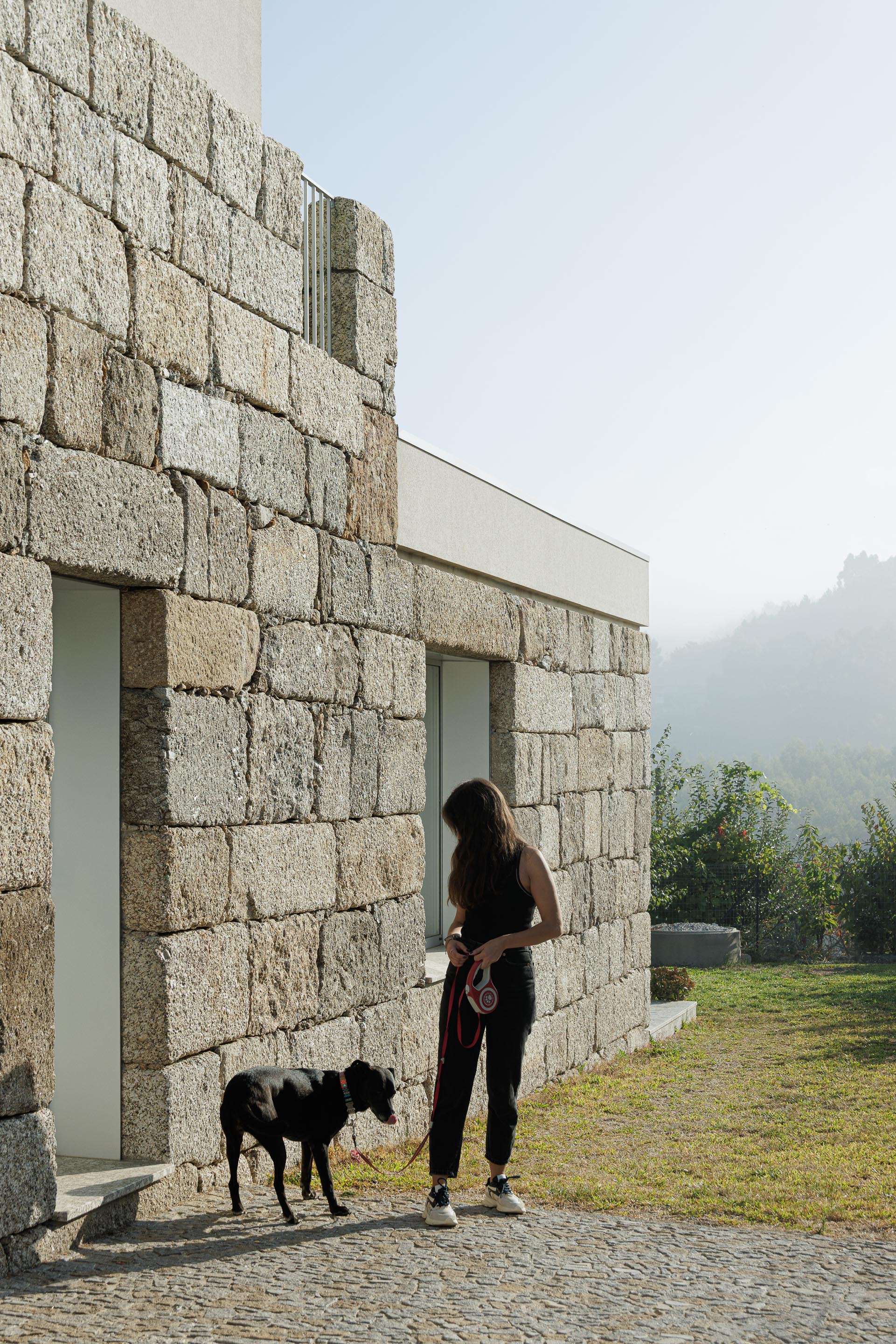
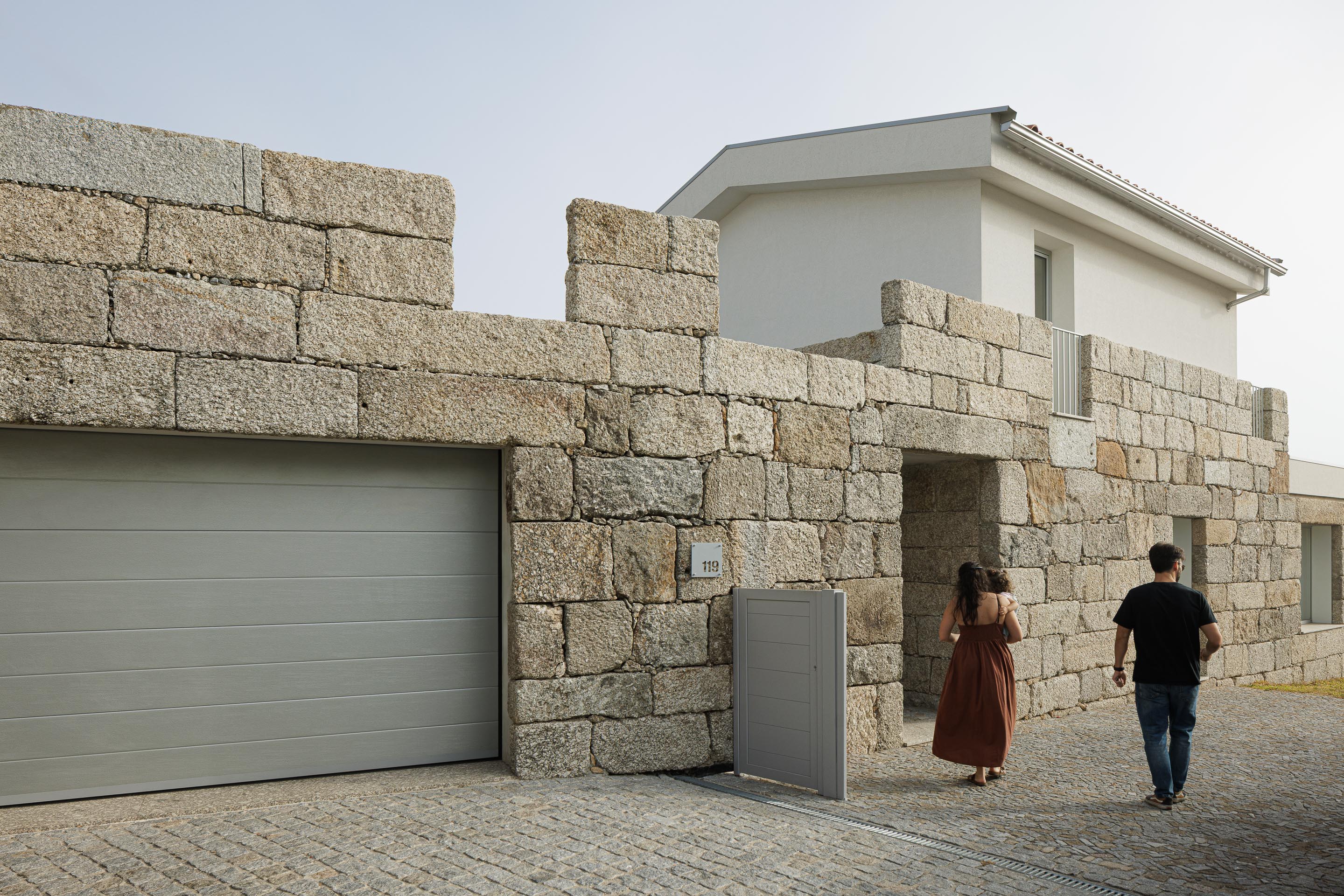
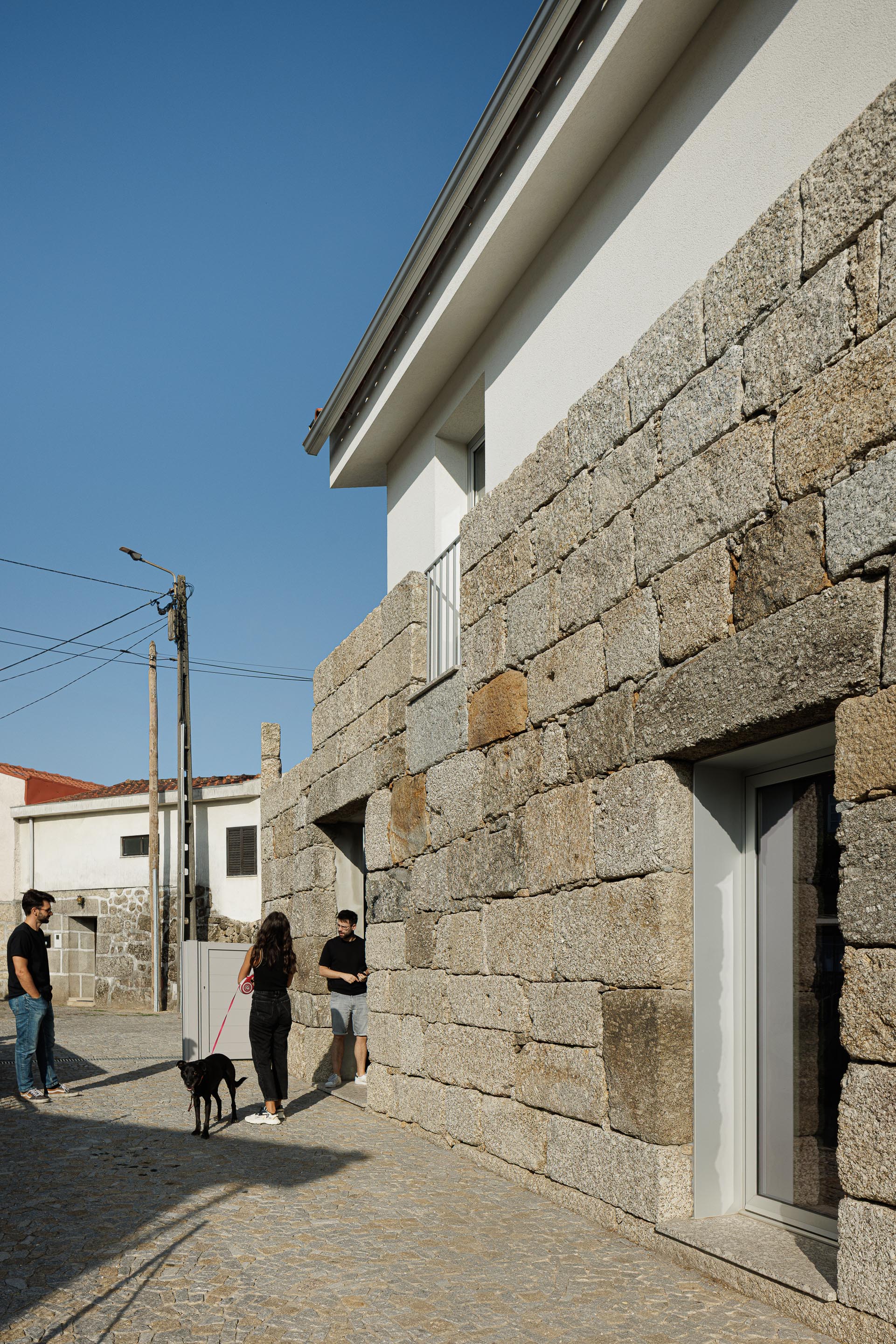
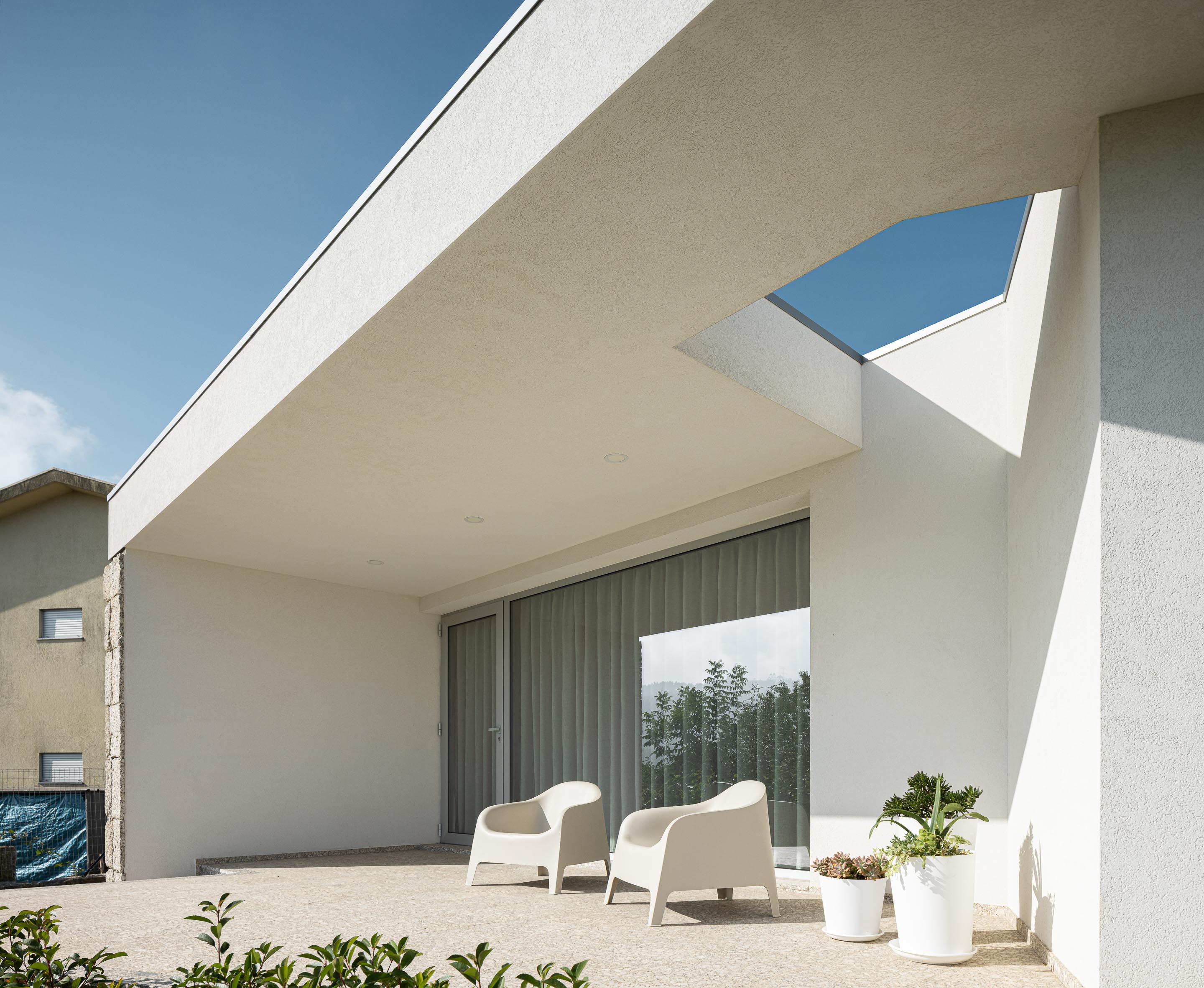
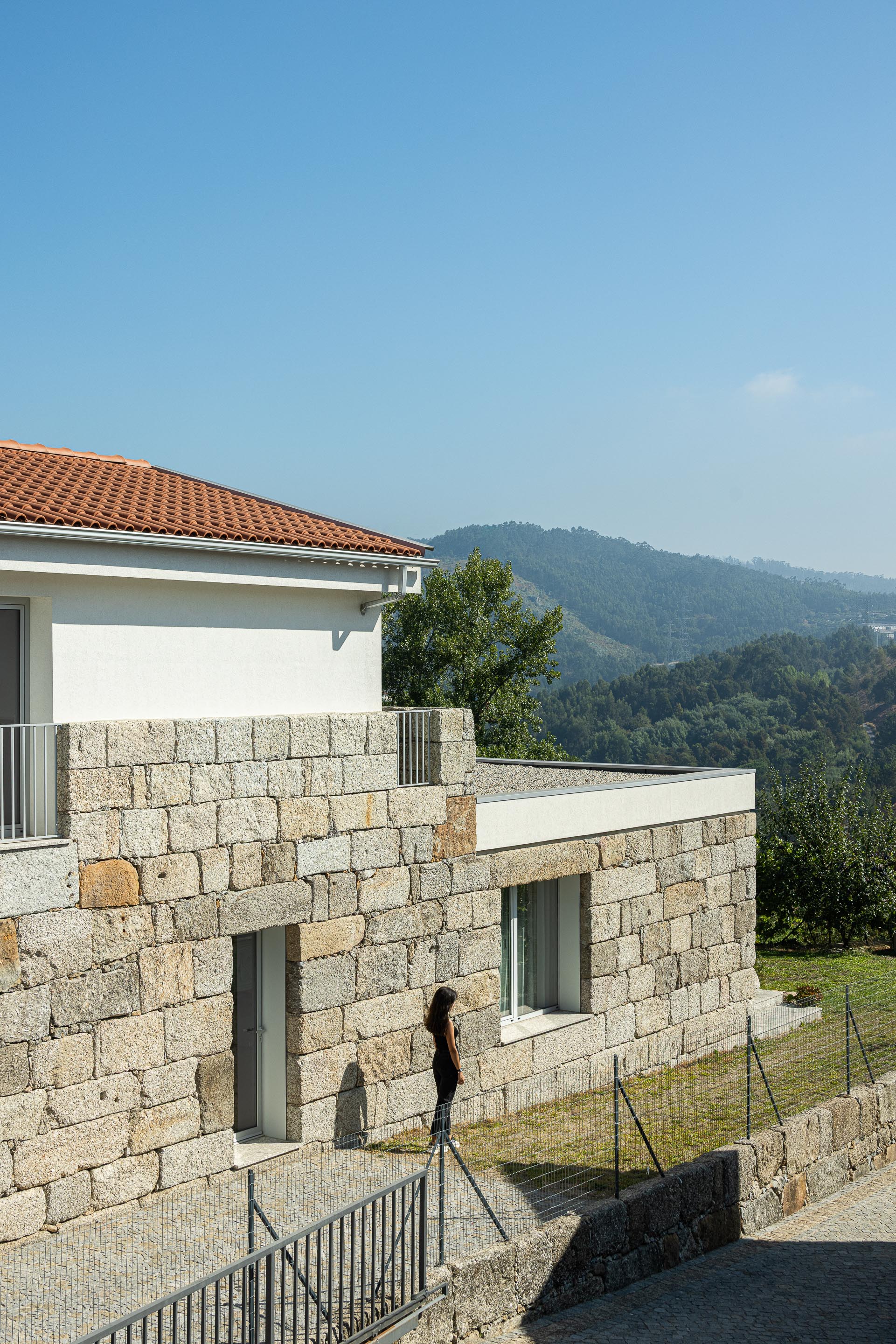
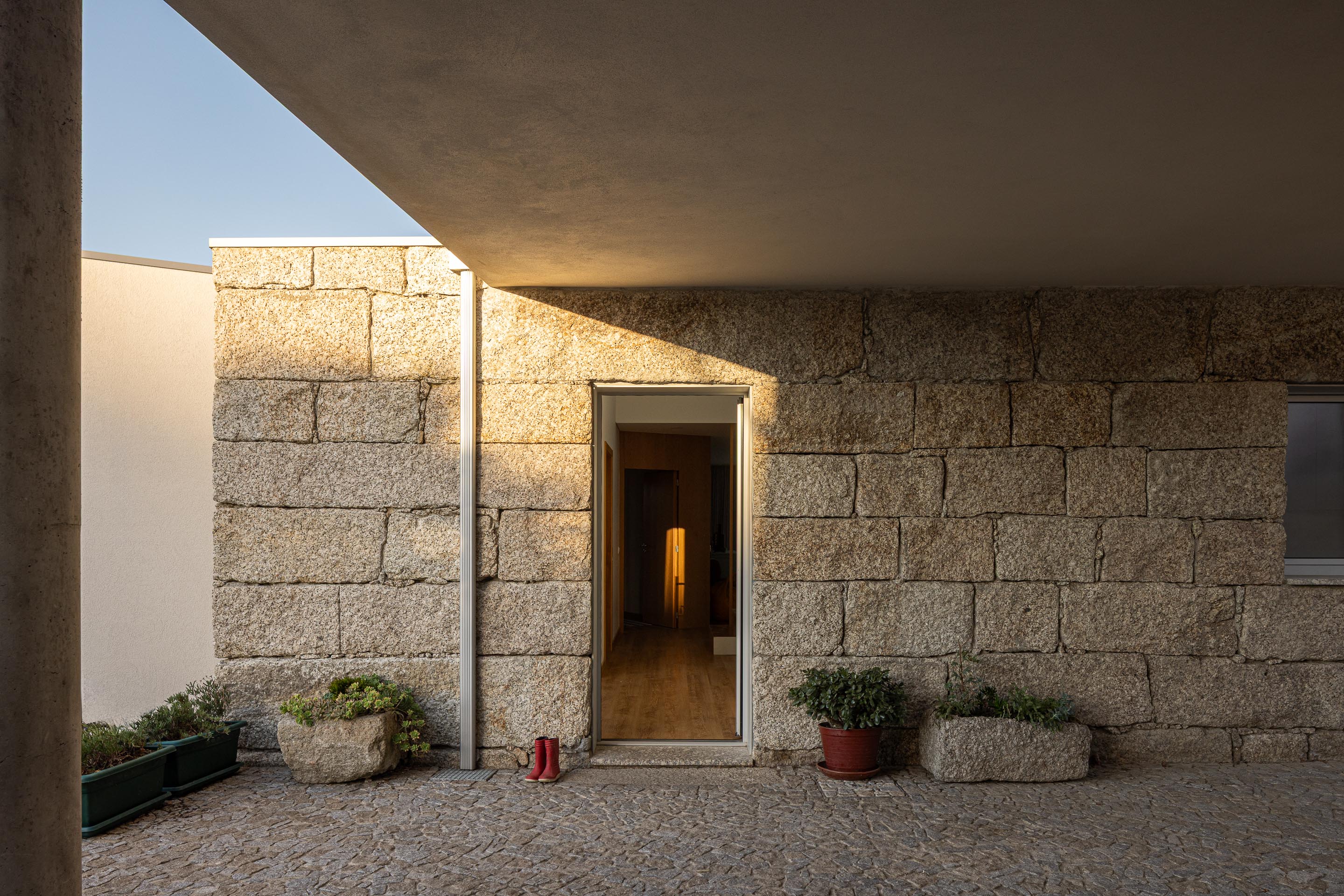
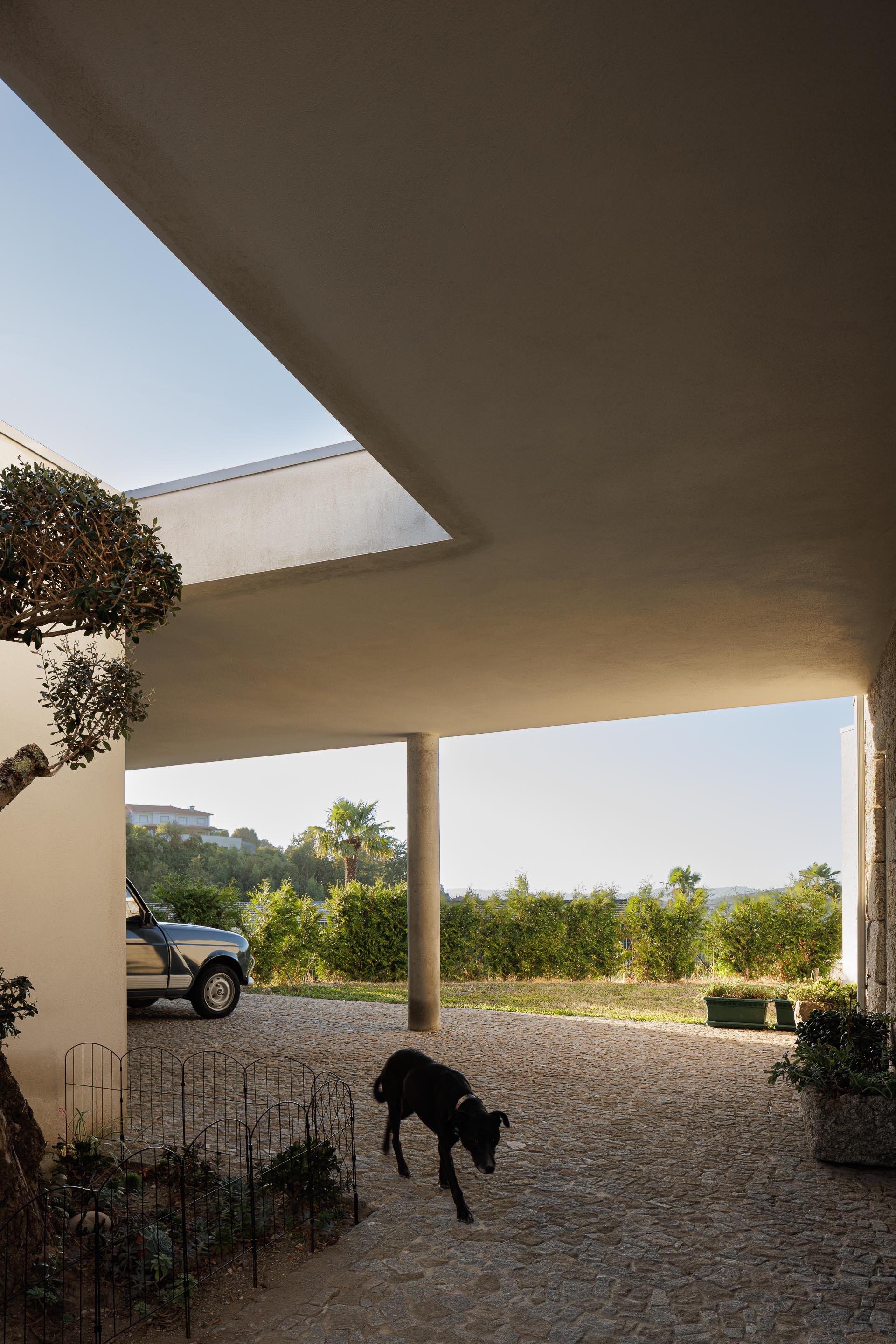
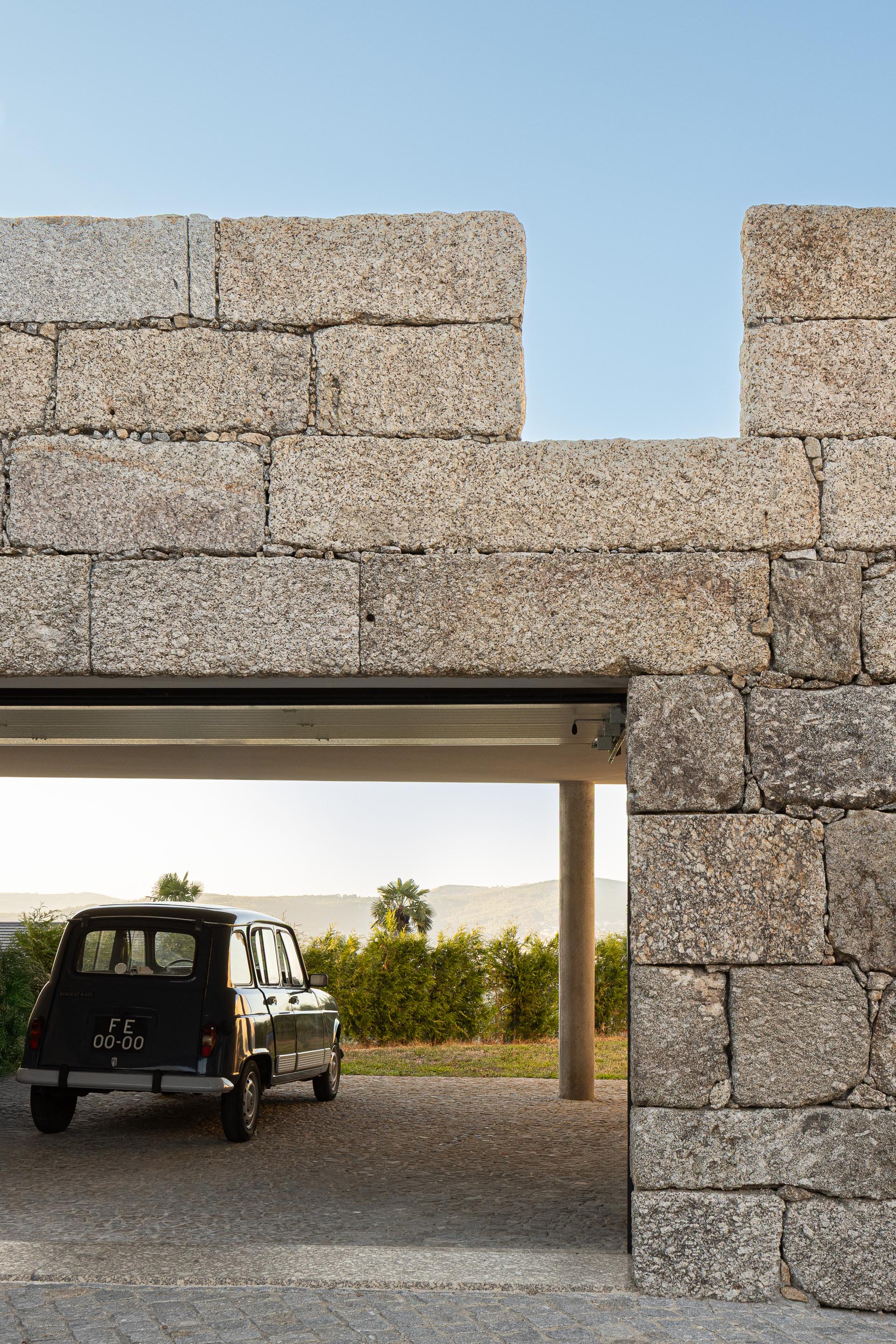
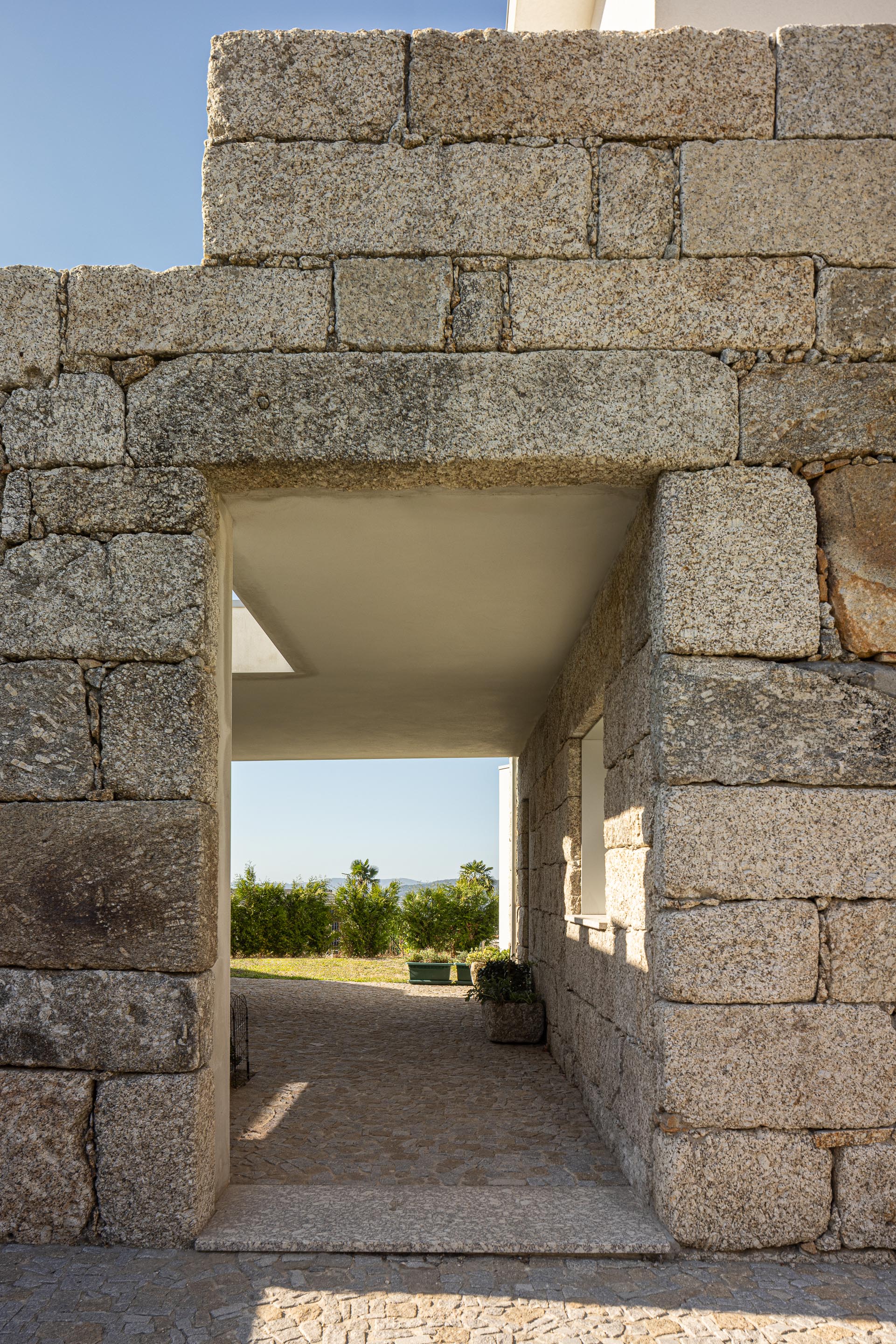
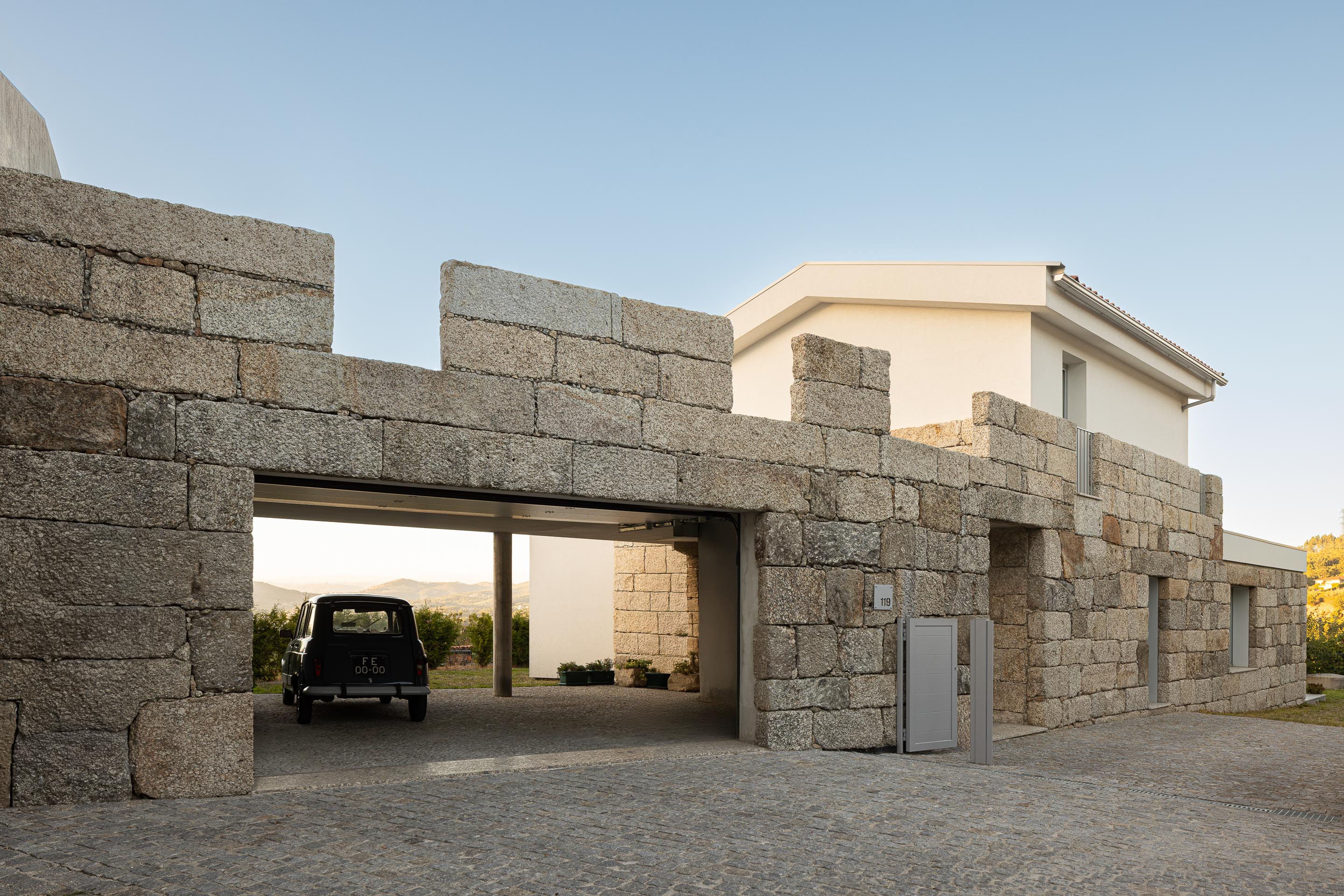
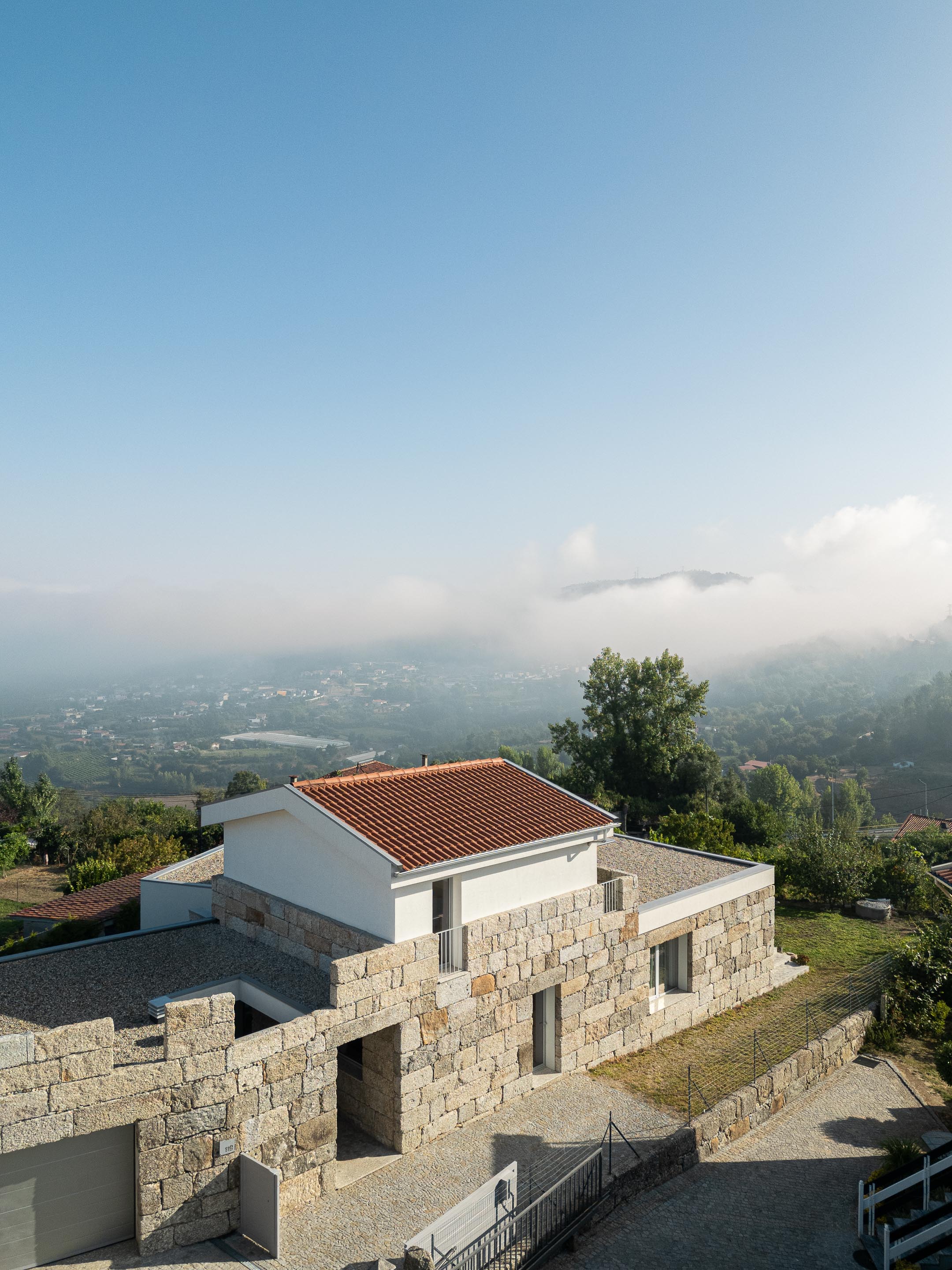
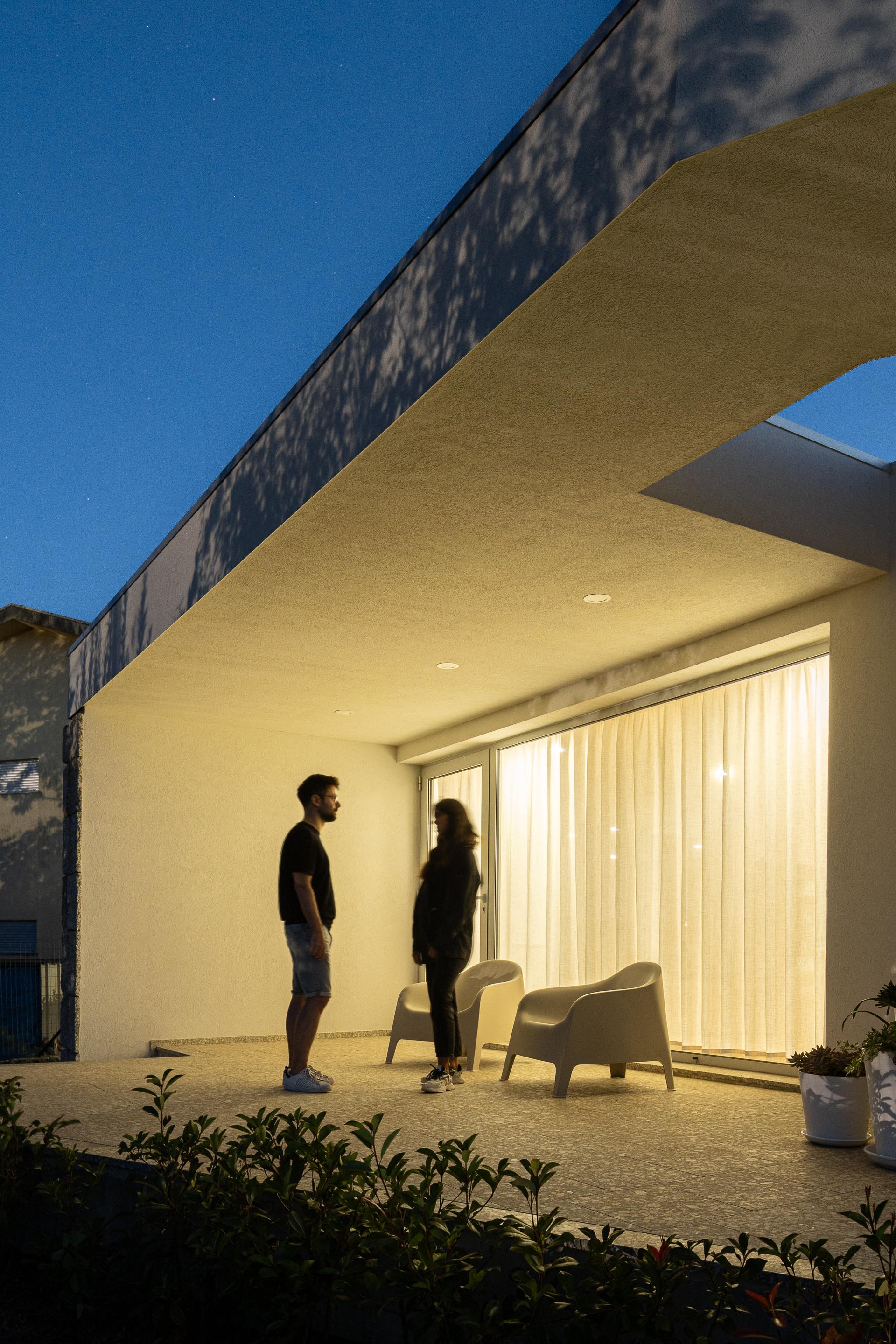
Tal como antes da intervenção, parte da sua volumetria confronta diretamente com a rua, definindo-se aí o portão para o coberto automóvel. O acesso pedonal, após um habitual portão de homem no limite do terreno, faz-se pela ruína, através de um espaço exterior coberto, criando um momento em que “se entra para fora”.
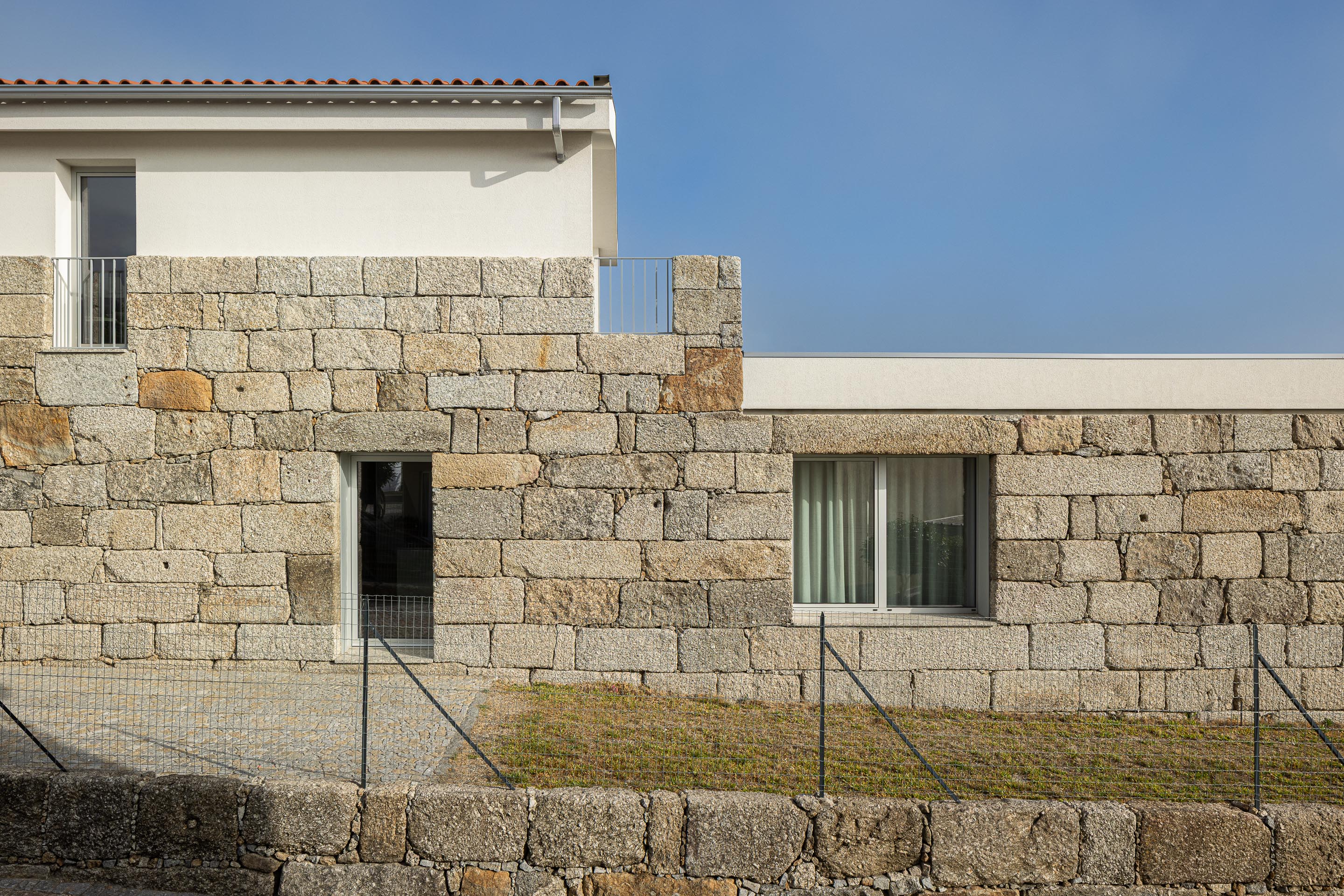
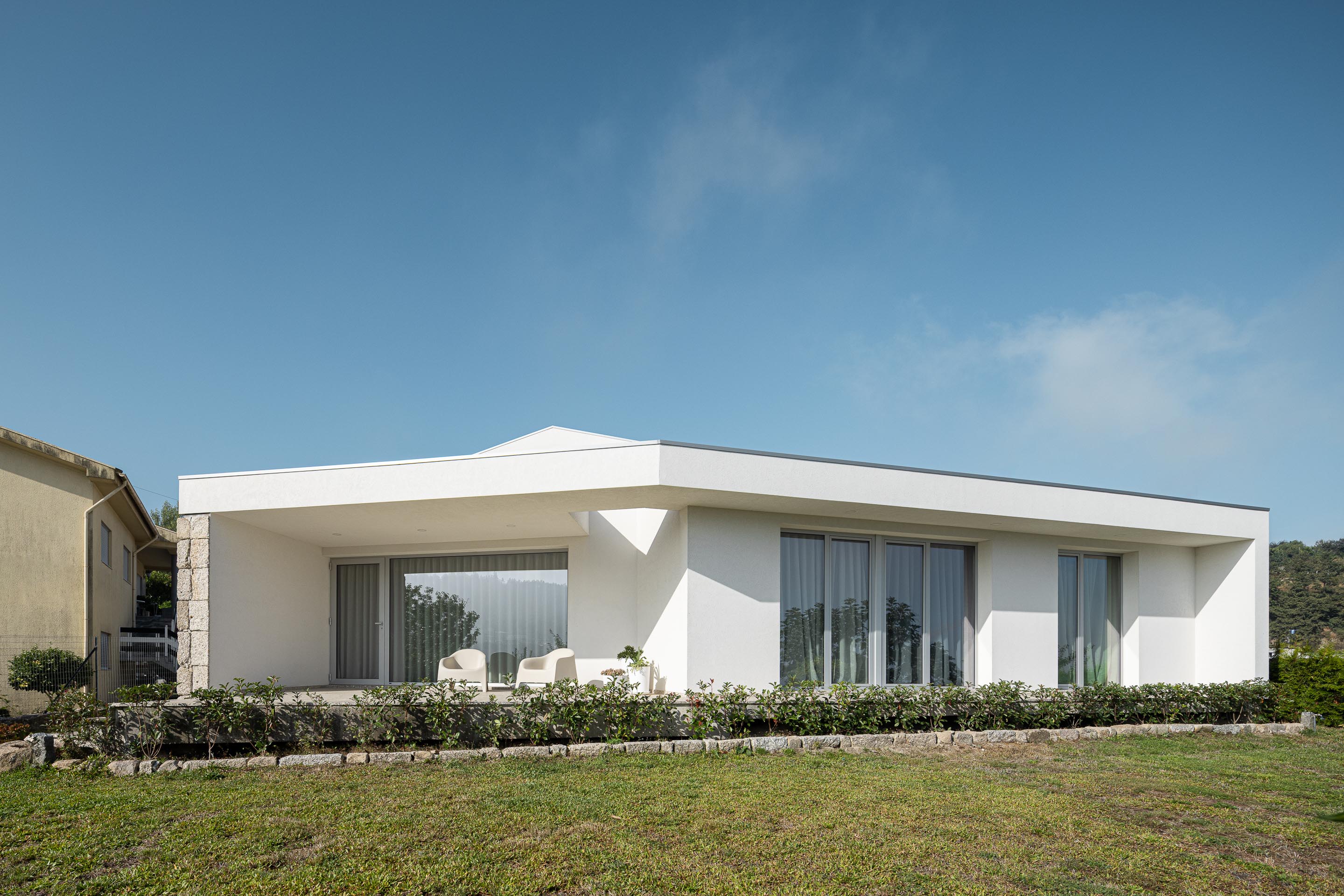
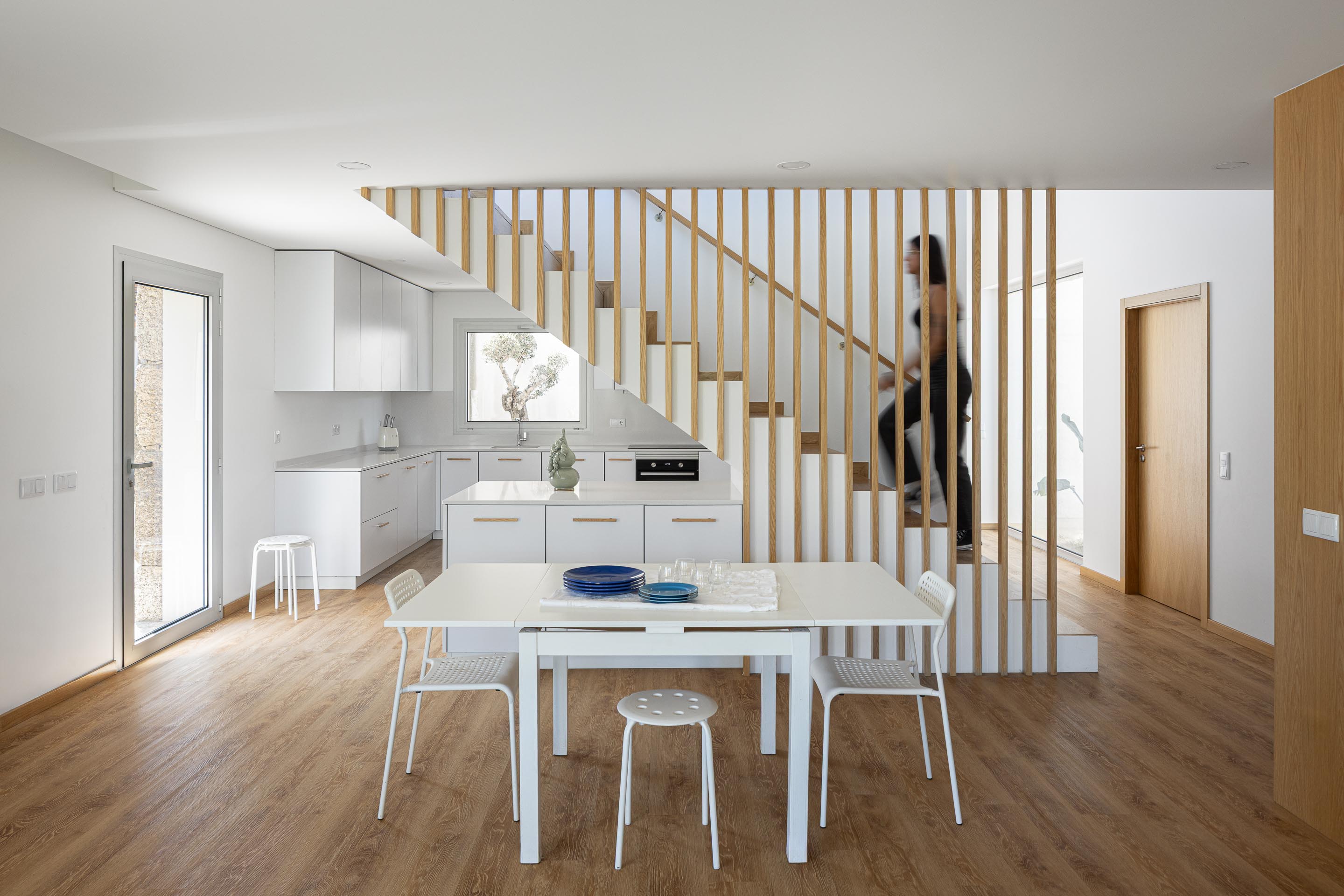
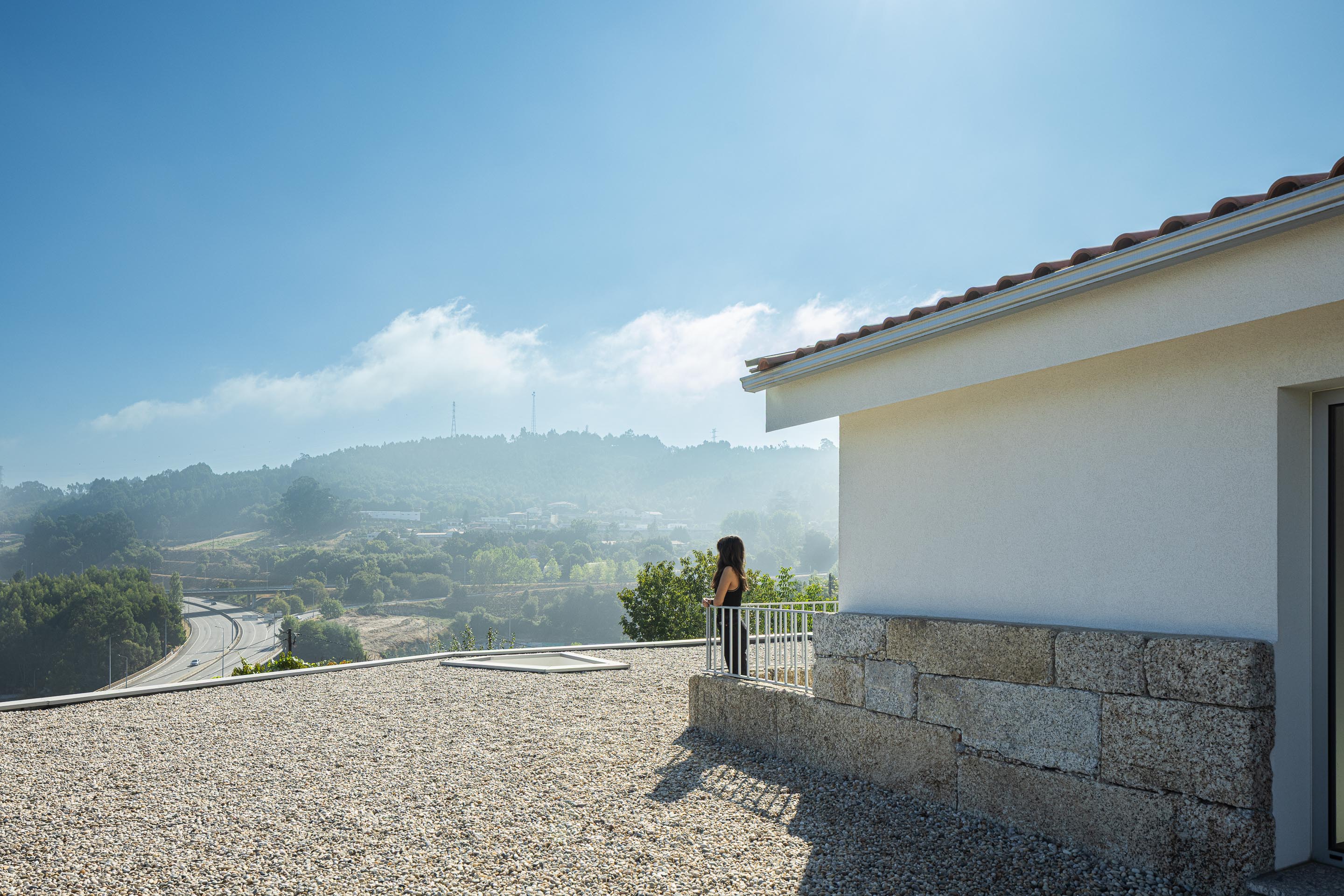
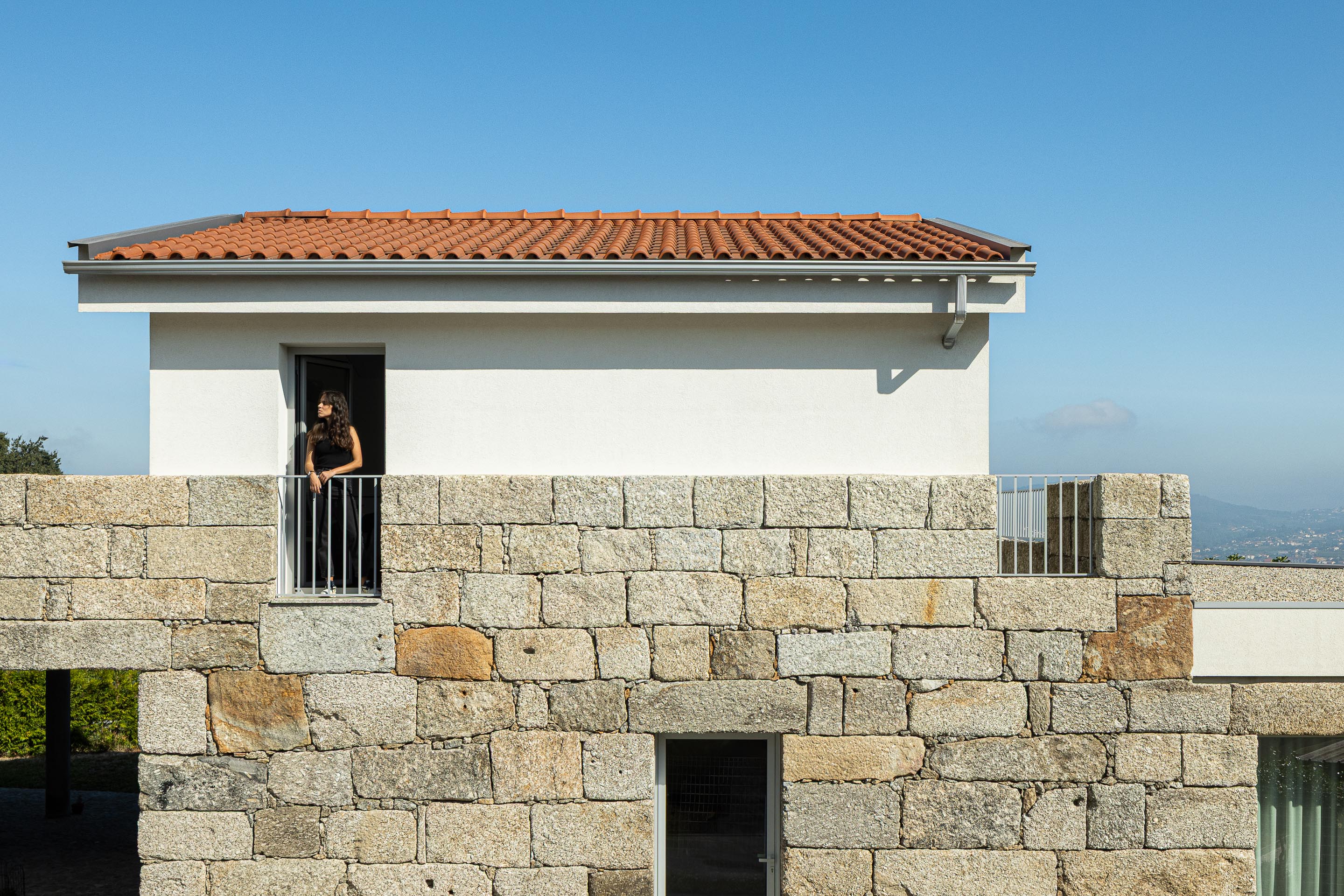
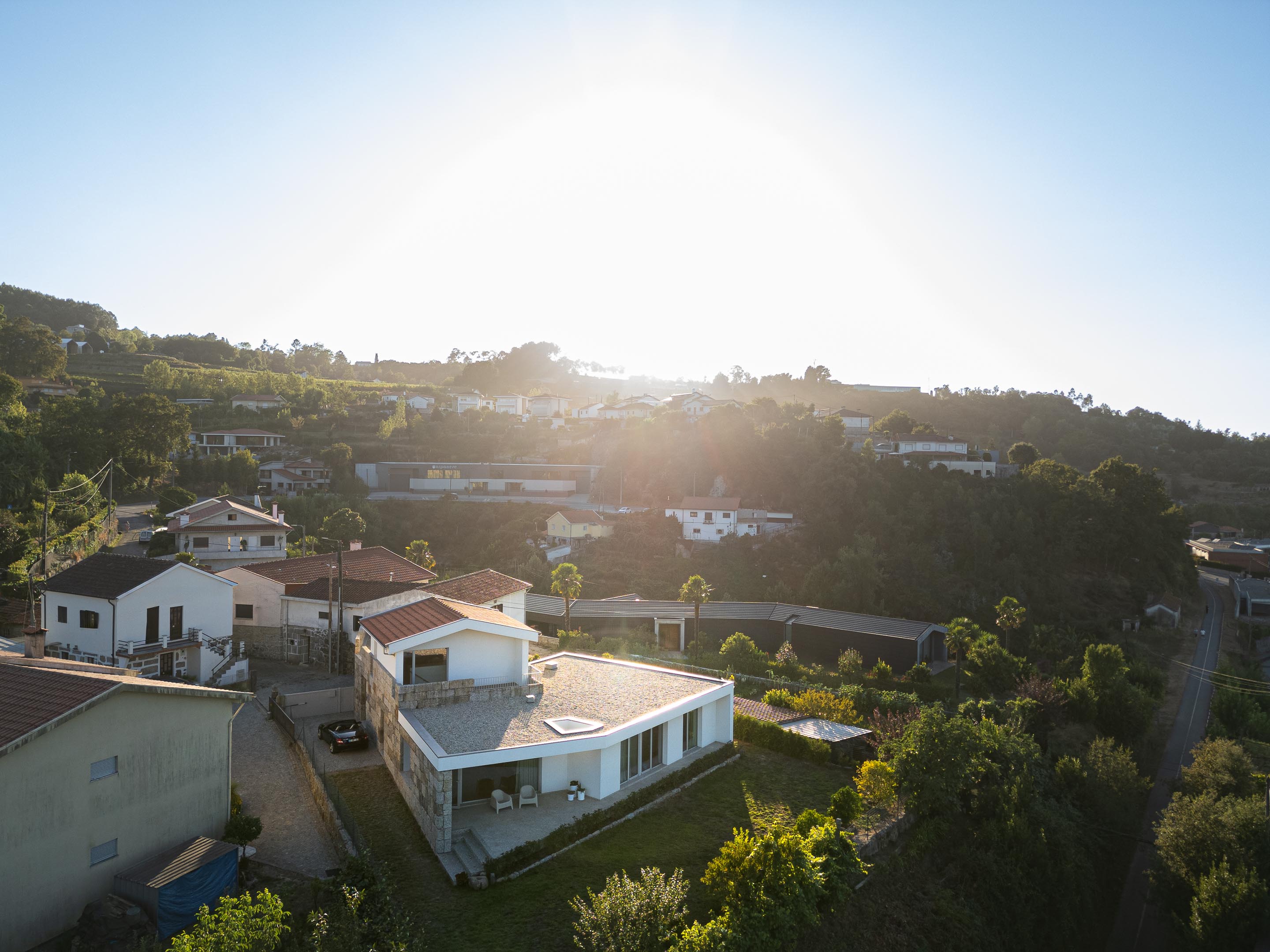
No restante espaço da ruína, para além da entrada, estabelece-se a cozinha, área nobre das casas desta região do Minho, numa posição muito semelhante à original, conservando assim a lógica do uso anterior. Sobre esta, um pequeno volume define um estúdio/atelier, mantendo os dois pisos existentes, e assume uma cobertura tradicional em telha, integrando delicadamente a construção na sua envolvente e relacionando-se discretamente com as construções vizinhas.
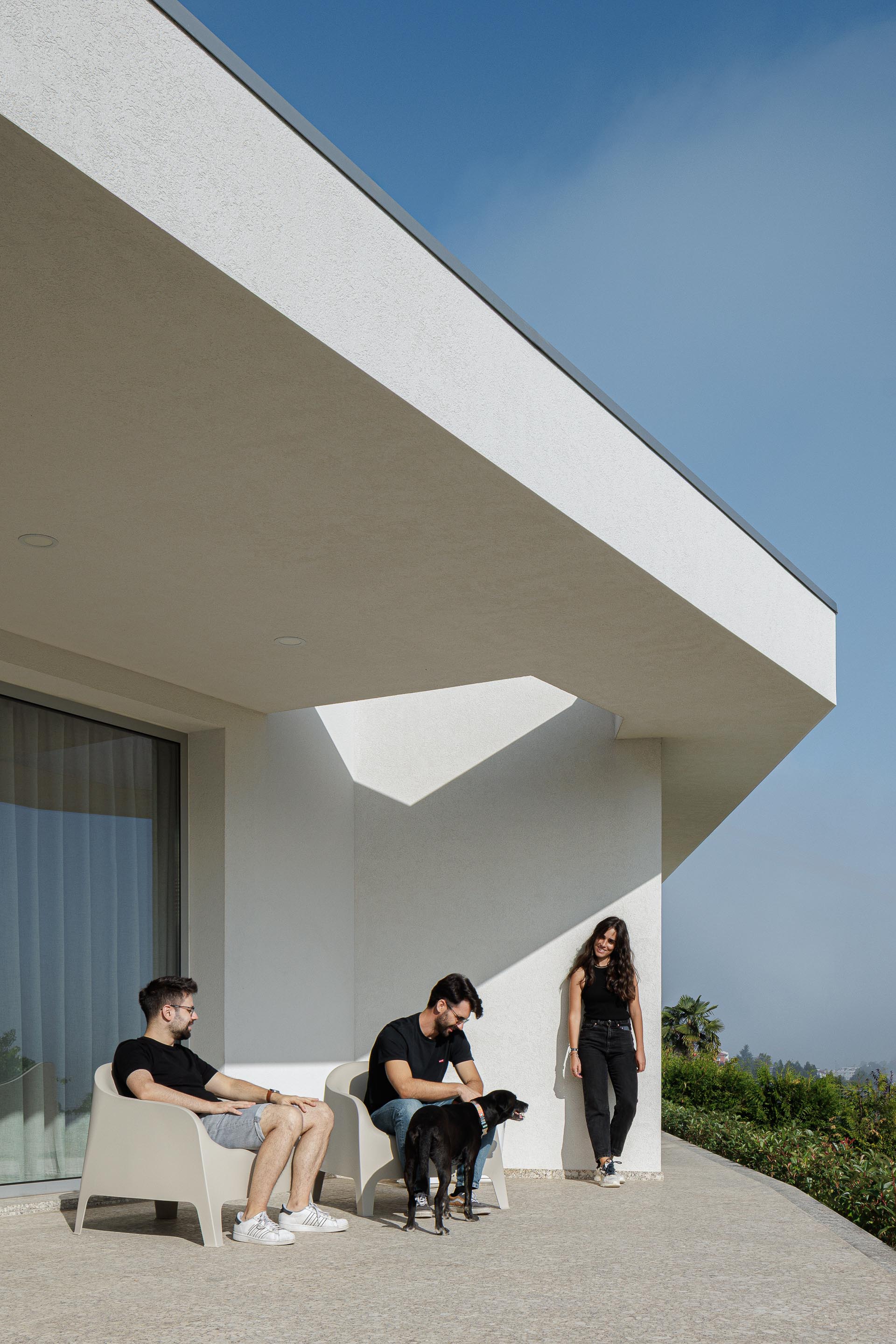
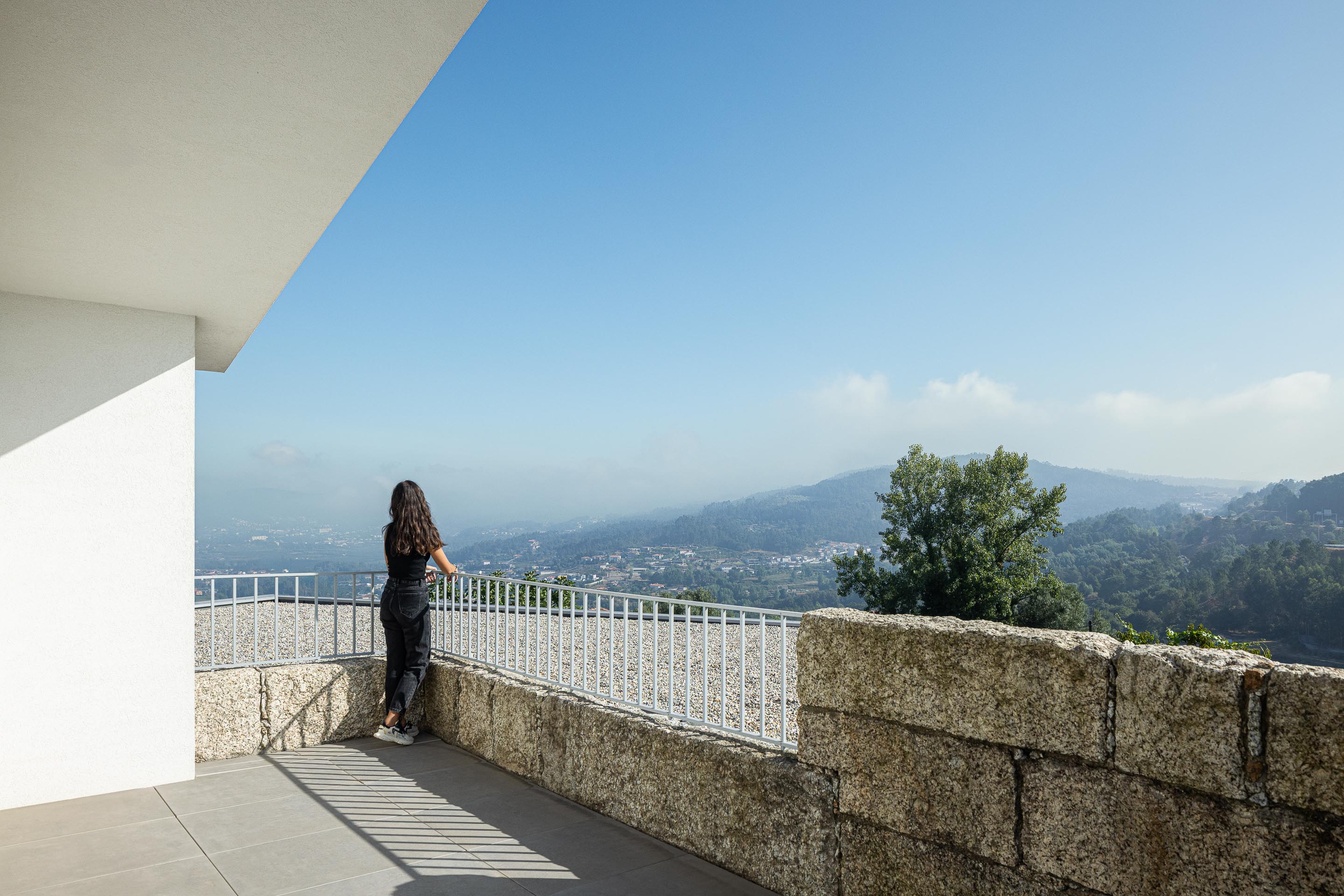
A sala de estar e os quartos desenvolvem-se na continuidade da ruína, sendo a laje de cobertura o elemento responsável por marcar a fluída transição entre os dois tempos: o passado e o presente.
Assim, cumpriu-se o maior desejo dos clientes: preservou-se a memória, a imagem, e parte do uso da ruína, criando-se simultaneamente uma utilização e um ambiente contemporâneos para o (re)habitar desta casa. O projeto desenvolveu-se em torno desta relação, sendo a principal característica da sua identidade. A diversidade de espaços definidos pela confrontação do antigo com o novo conserva a imagem e a espacialidade da ruína.
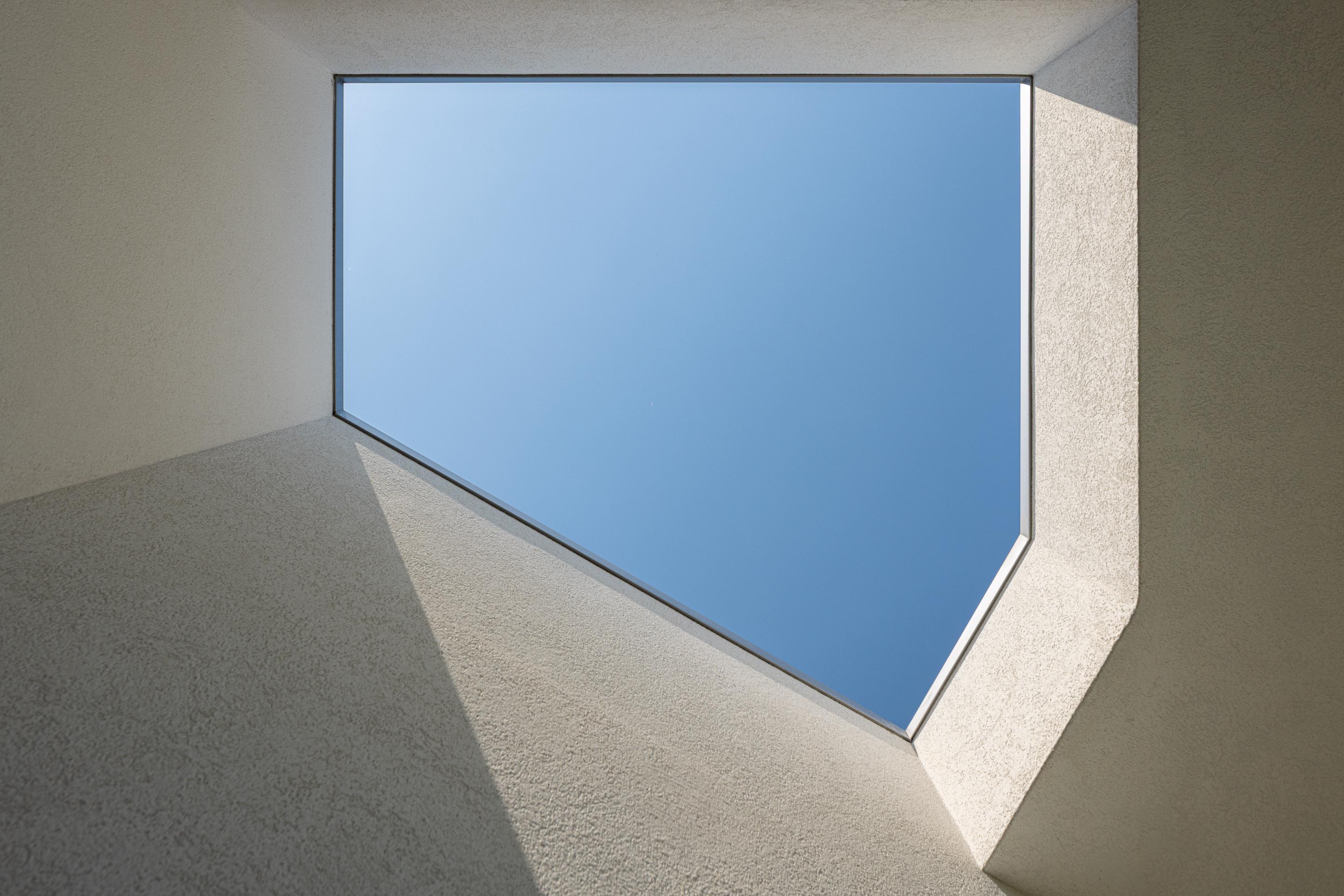
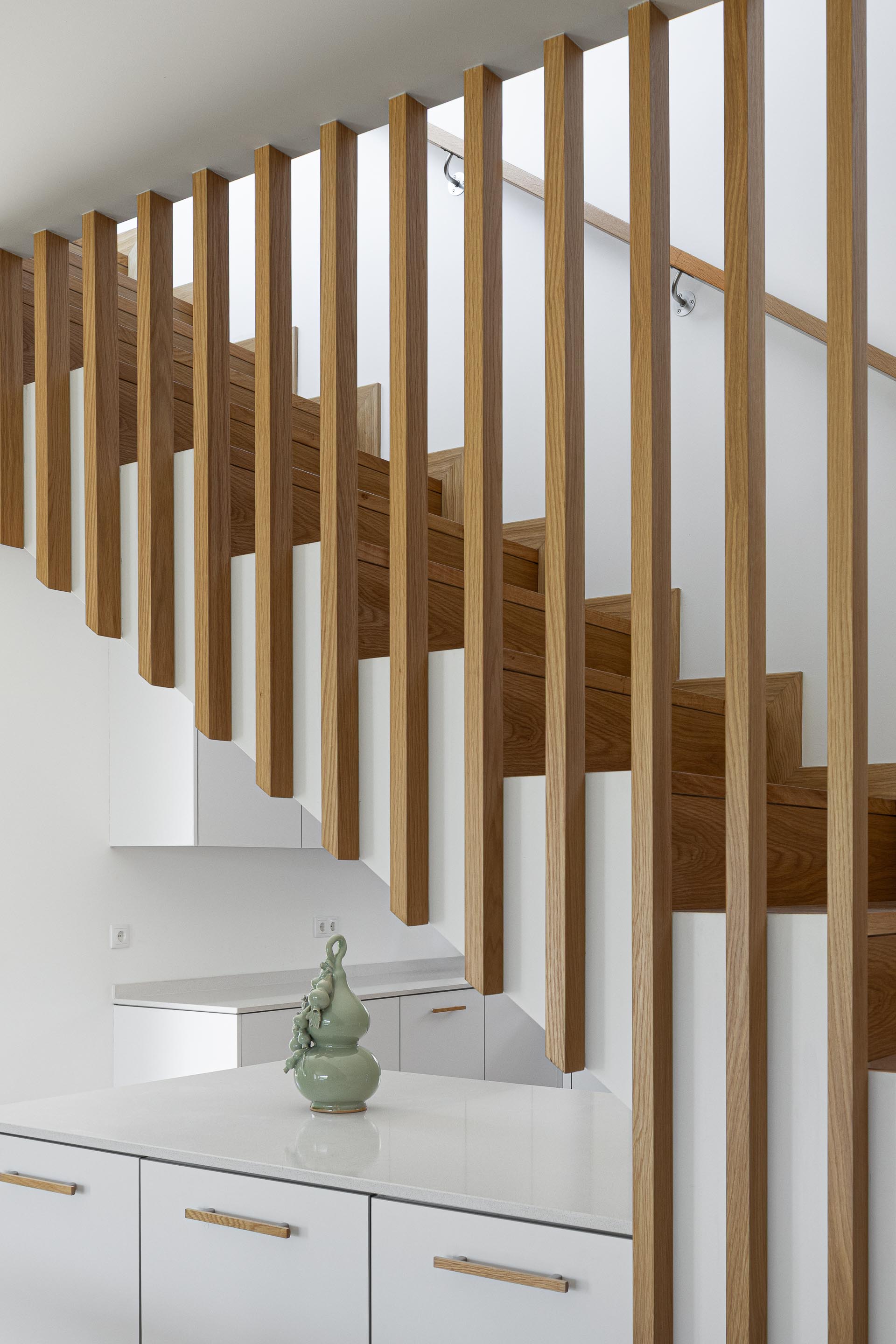
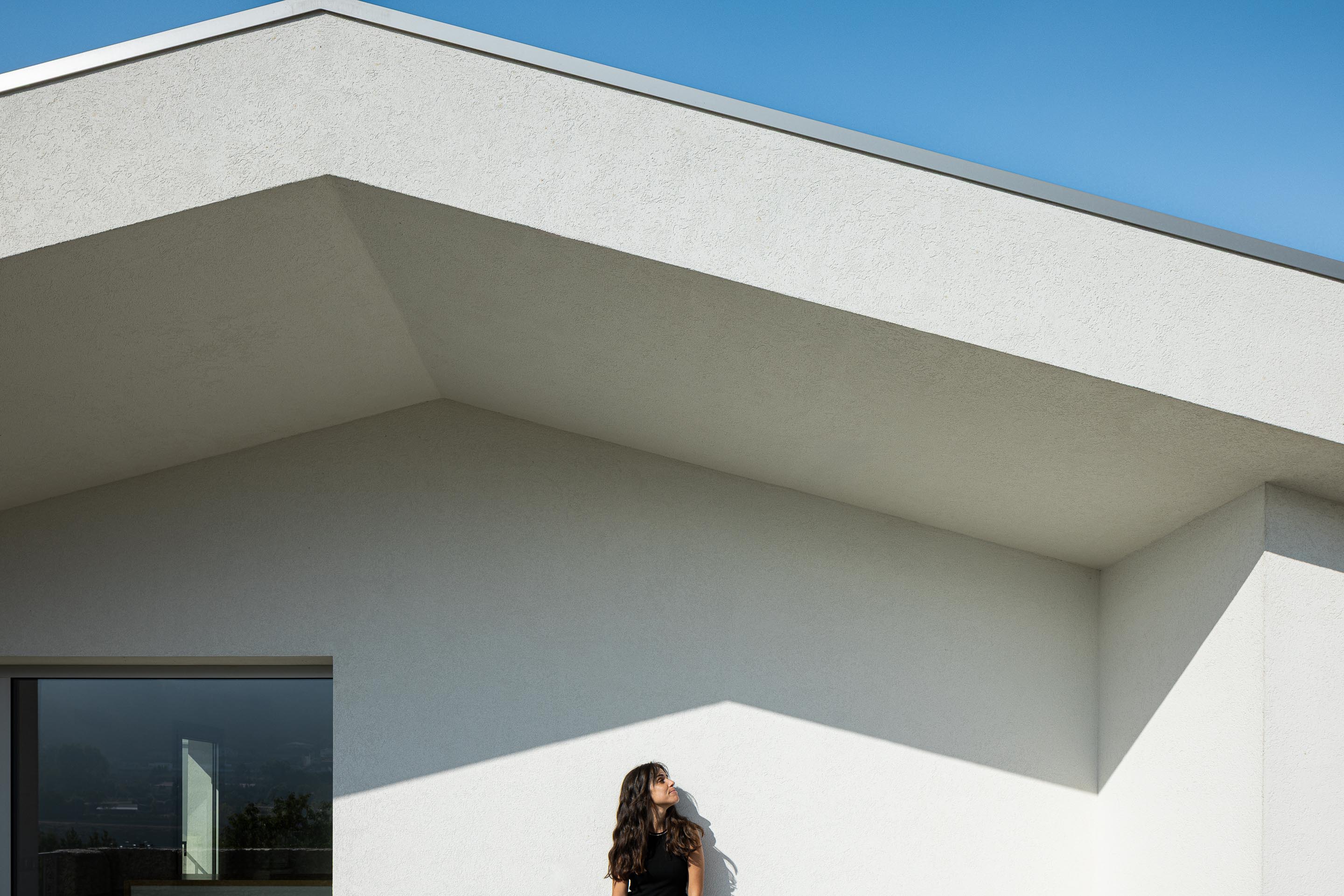
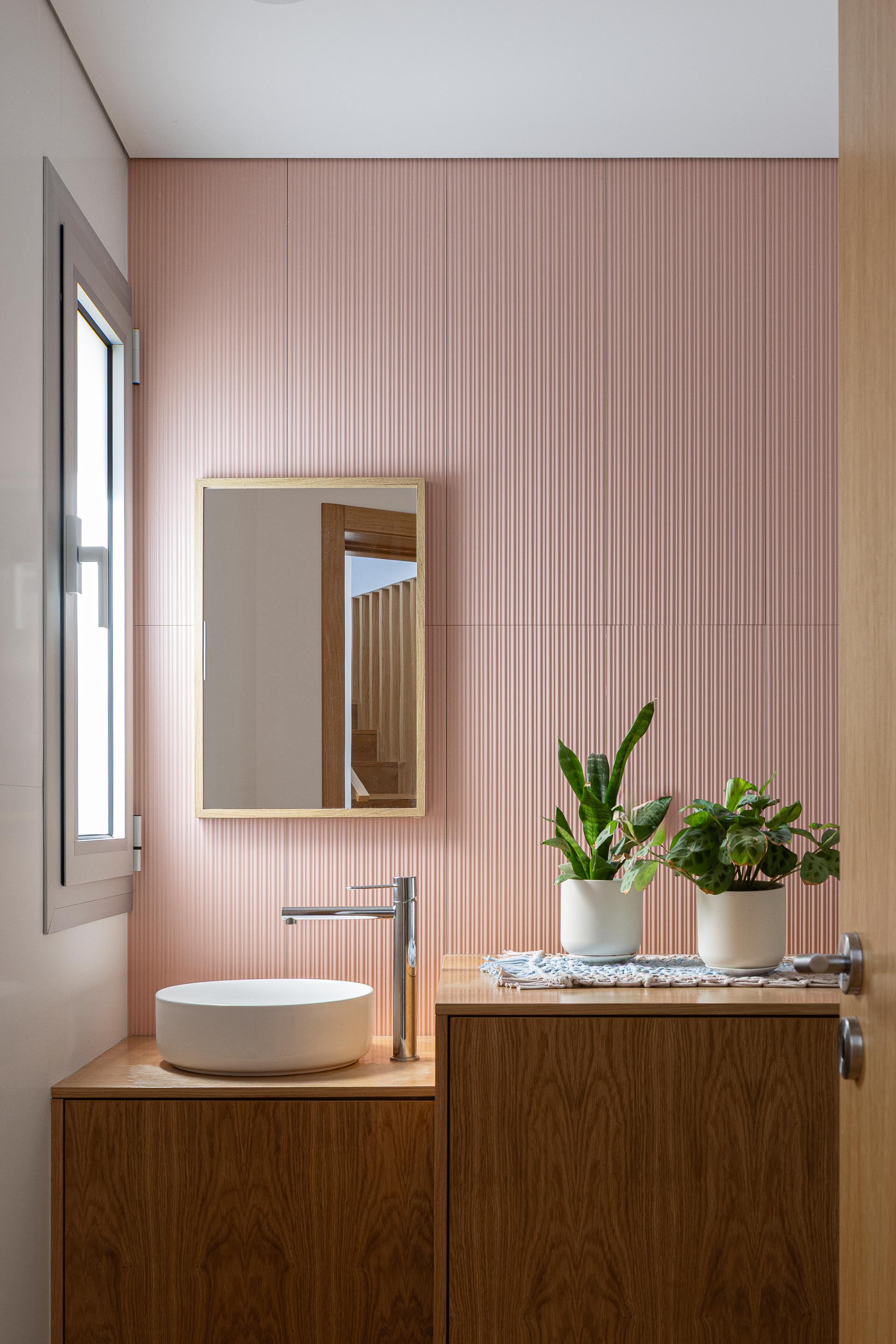
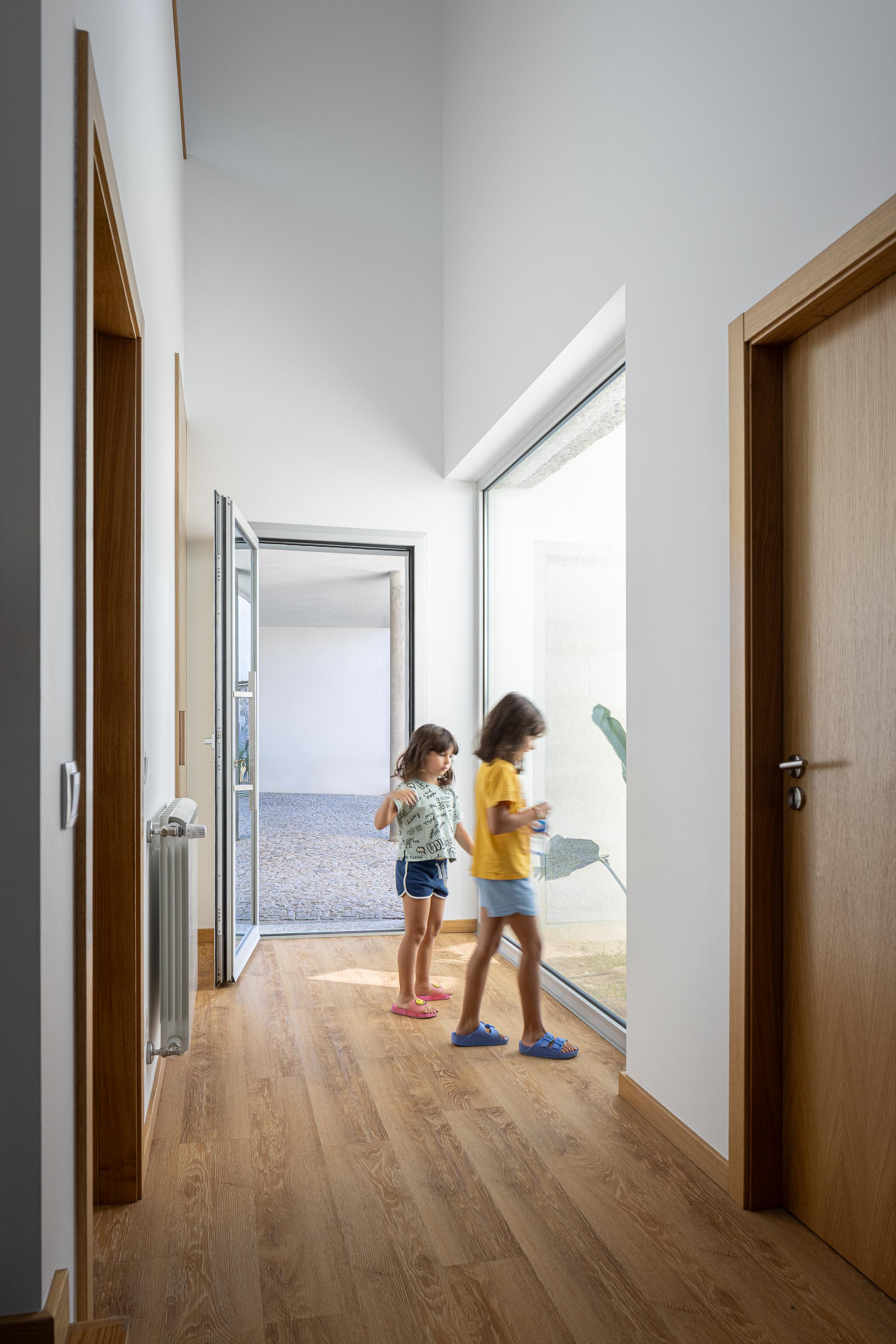
A atmosfera sentida resulta dessa presença constante da ruína e dos diversos espaços exteriores que define, bem como da abundância de texturas naturais e constante iluminação natural que rasga os vãos e faz as texturas vibrarem. No exterior a nobreza da pedra preserva a memória, no interior a madeira assume o protagonismo para definir espaços serenos e vibrantes. "
Texto fornecido pelo atelier de arquitetura


