






DESCRIÇÃO DO PROJETO
“REESCREVER A MEMÓRIA: ANTIGO TRIBUNAL CÍVEL TRANSFORMA-SE EM LUGAR DE HABITAR
Depois de décadas como Tribunal Cível de Pequena Instância do Porto, o edifício é reconvertido pela MASSLAB num conjunto de 16 unidades residenciais. Inspirado na fluidez espacial das casas senhoriais, o projeto transforma a rigidez judicial em domesticidade contemporânea, articulando memória, plasticidade e reabilitação enquanto matéria crítica de projeto.
Durante décadas, o número 1299 da Rua de Santa Catarina albergou o Tribunal de Pequena Instância Cível do Porto — uma presença discreta mas sólida no tecido urbano. Com o tempo, o edifício perdeu a coerência original, acumulando remendos funcionais que o afastaram da sua morfologia inicial. Hoje, pelas mãos do escritório de arquitetura MASSLAB, o volume outrora institucional assume uma nova lógica programática: um conjunto de 16 unidades habitacionais de estadia prolongada, sob o nome Vila Catarina Apartments. Através de uma intervenção que devolve-lhe continuidade e presença, o volume propõe uma leitura crítica da pré-existência — não como ruína ou fetiche, mas como matéria ativa de projeto.
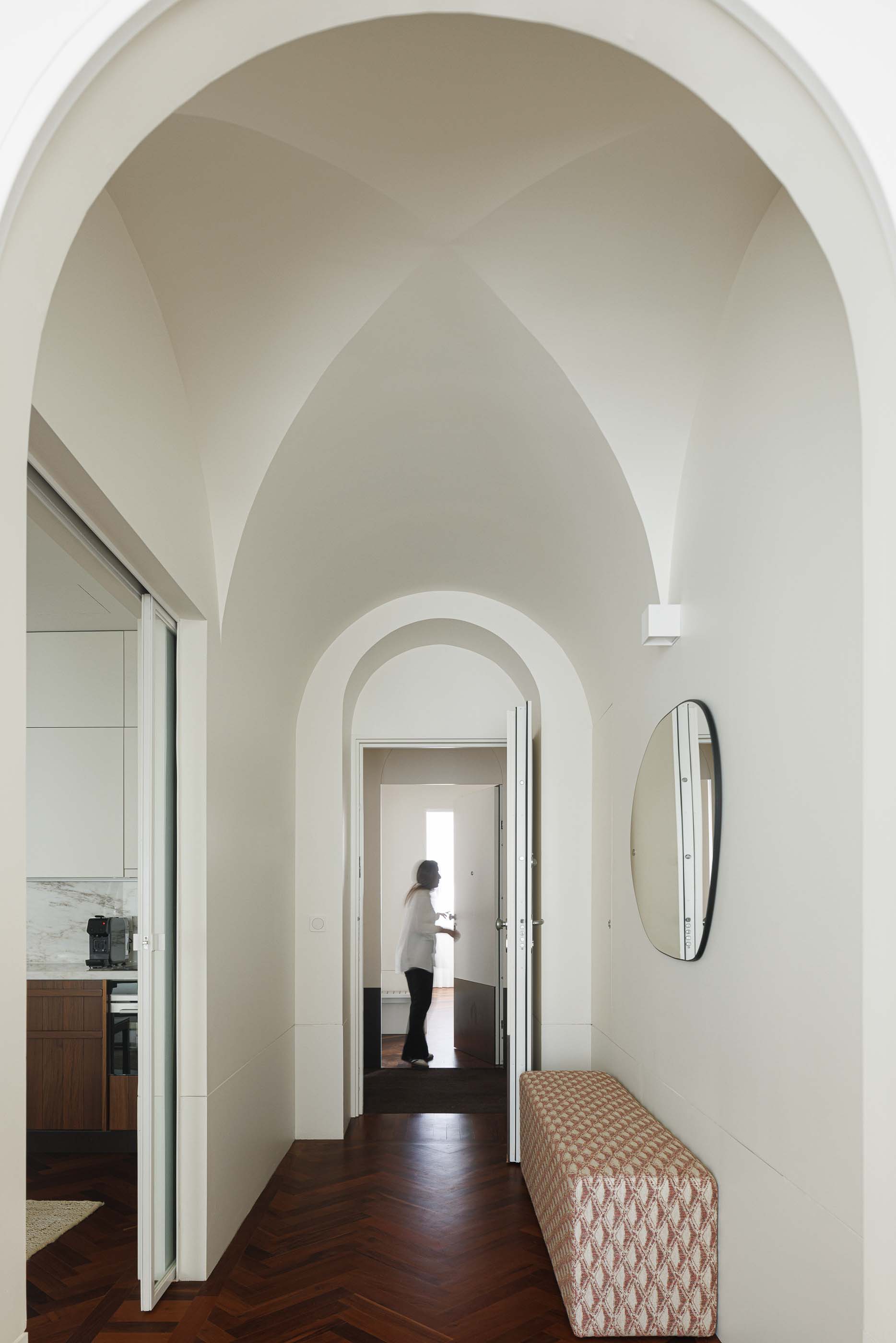
O projeto parte de uma leitura arquitetónica da memória existente do lugar. Com inspiração nas casas senhoriais portuguesas do início do século XX — onde não existiam corredores, mas sim sucessões de compartimentos articulados — o projeto do escritório de arquitetura MASSLAB propõe uma lógica distributiva que elimina os corredores convencionais e aposta na fluidez entre compartimentos enquanto premissa. Assim, a circulação interior acontece por extensão e transição, com uma sensação de continuidade e movimento, e não por mera passagem. O desenho interior constrói uma topografia doméstica subtil, onde em cada compartimento habita uma geometria própria, marcado por abóbadas que se diferenciam conforme a função: mais contidas nos espaços de descanso, mais amplas nas zonas sociais, definindo uma gramática silenciosa mas presente.
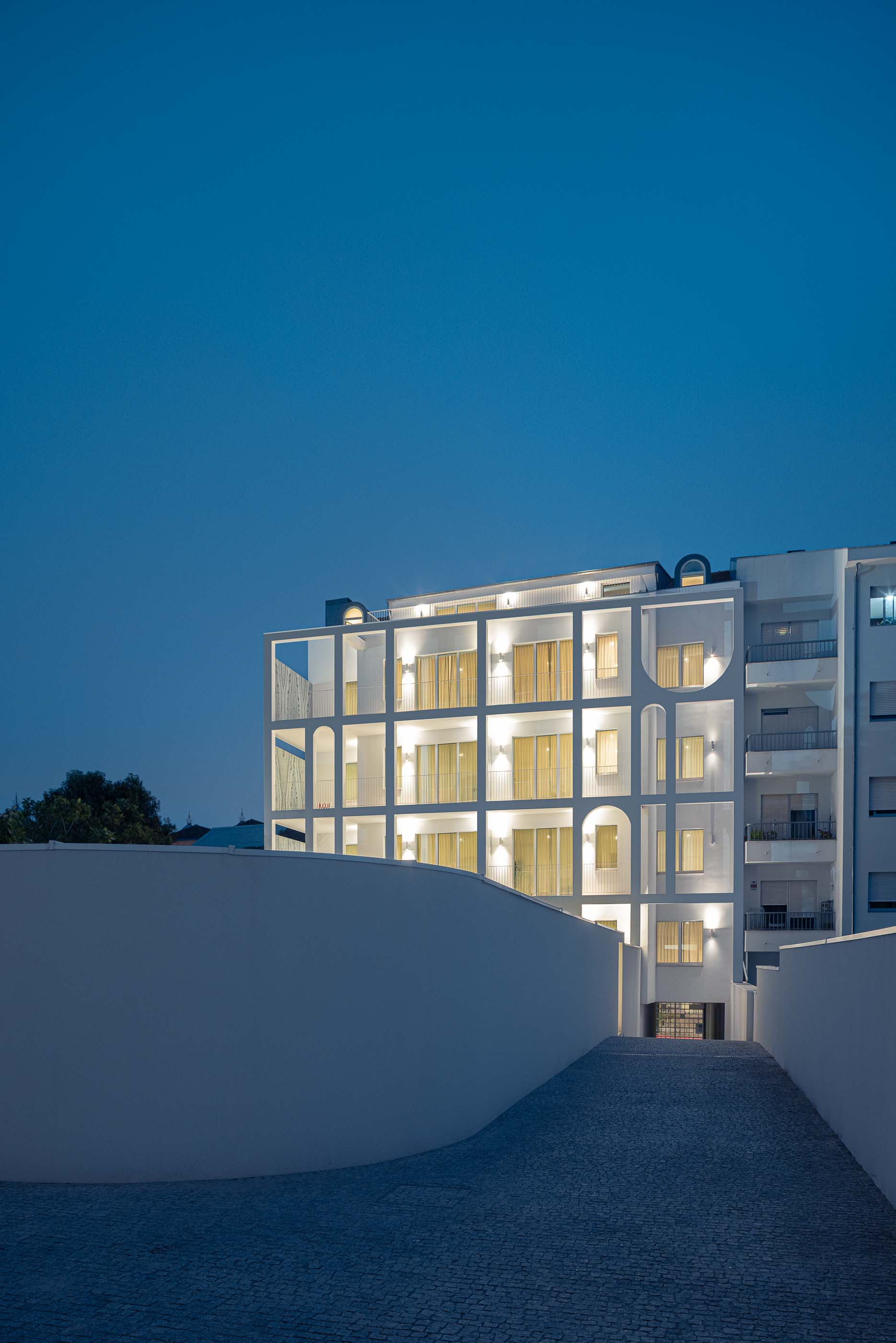
Desde a delicada geometria dos interiores até ao exterior restaurado, cada elemento da intervenção articula o passado e o presente com um cuidado quase cirúrgico. No exterior, a intervenção do volume reabilitado assume uma dualidade consciente. A composição formal voltada para a frente de rua recupera a gramática original da cantaria e reinterpreta os azulejos com contenção e pigmento de tom azulado, característico da fachada original, evocando o passado reabilitado, sem folclore. Já na tardoz do envelope, o gesto é mais contemporâneo e afirmativo: uma nova pele, de desenho geométrico, acopola-se à superfície existente e cria uma ampliação estrutural com varandas generosas. Esta fachada geométrica projeta a plasticidade do interior para o exterior, estabelecendo uma continuidade volumétrica antes inexistente.
O projeto com o nome “Vila Catarina” inscreve-se numa abordagem de reabilitação crítica, onde a herança edificada não é inerte nem estanque, mas sim entendida como um campo de leitura, oportunidade e reinvenção. Com este projeto, a MASSLAB propõe que arquitetura se torne num exercício de edição: cortar, intensificar, silenciar — sem nostalgia nem ruptura, mas com consciência disciplinar e urbana daquilo que veio antes e do que pode vir a seguir.”
Texto fornecido pelo atelier de arquitetura MASSLAB


