



PROJECT DESCRIPTION
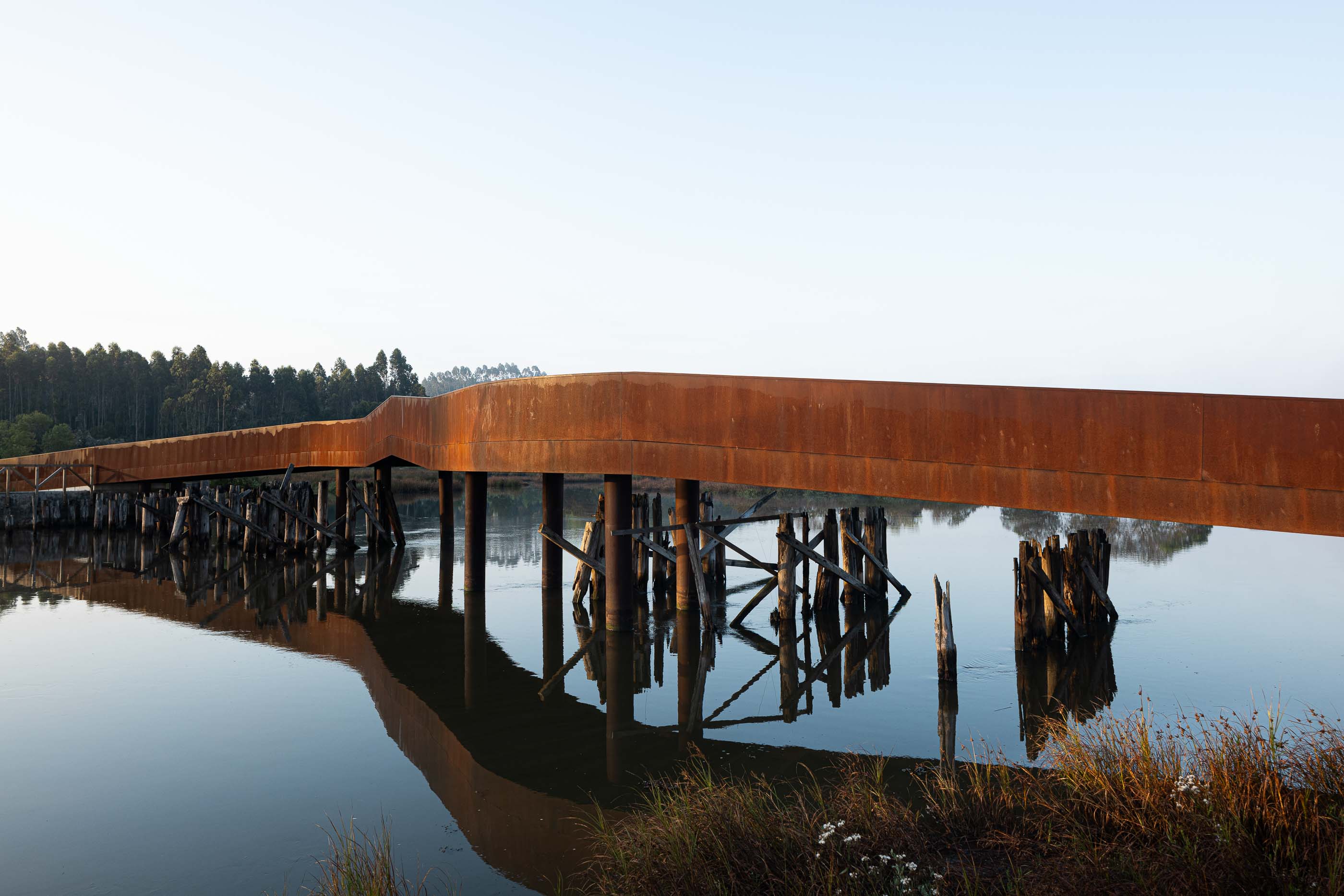
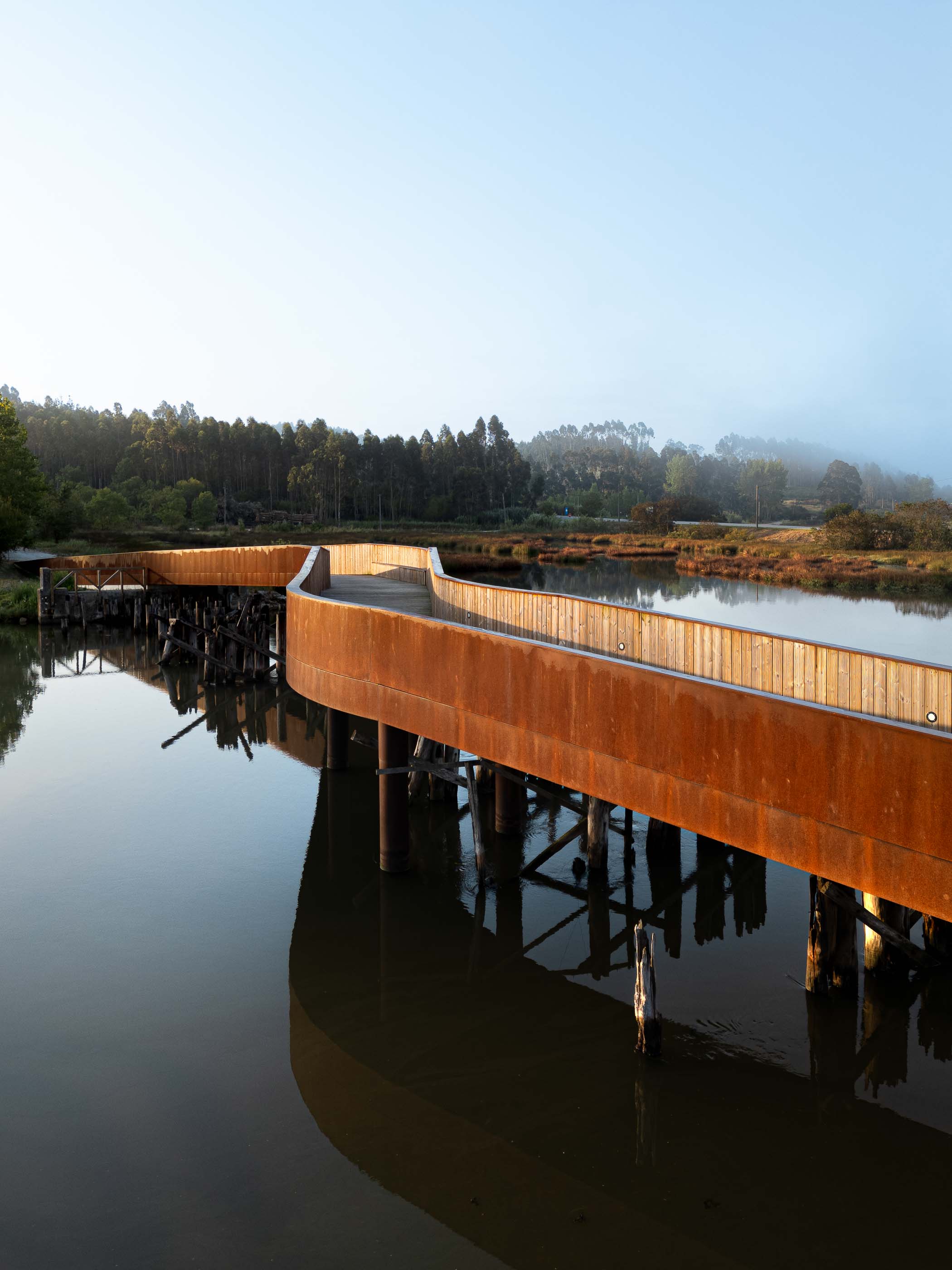
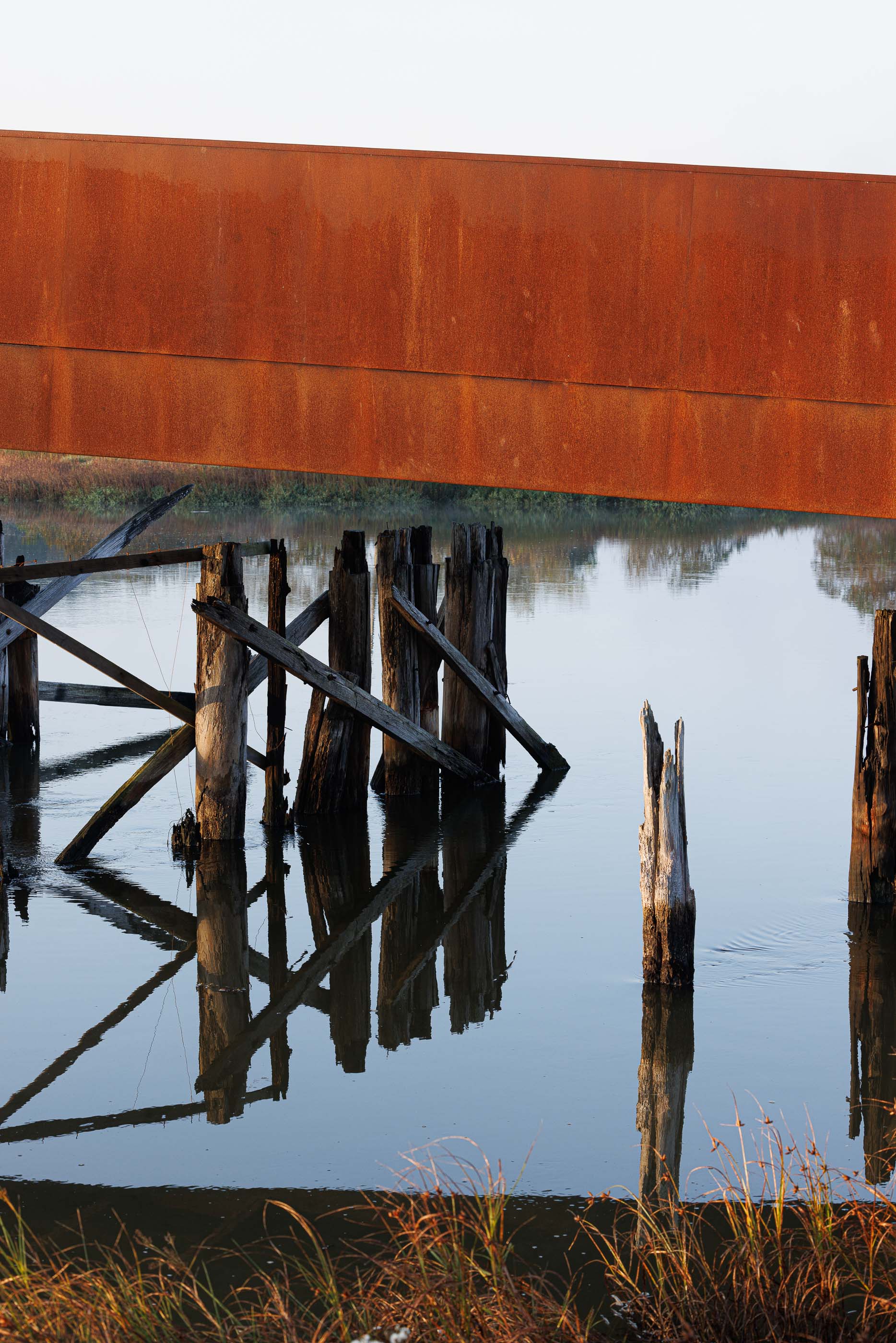
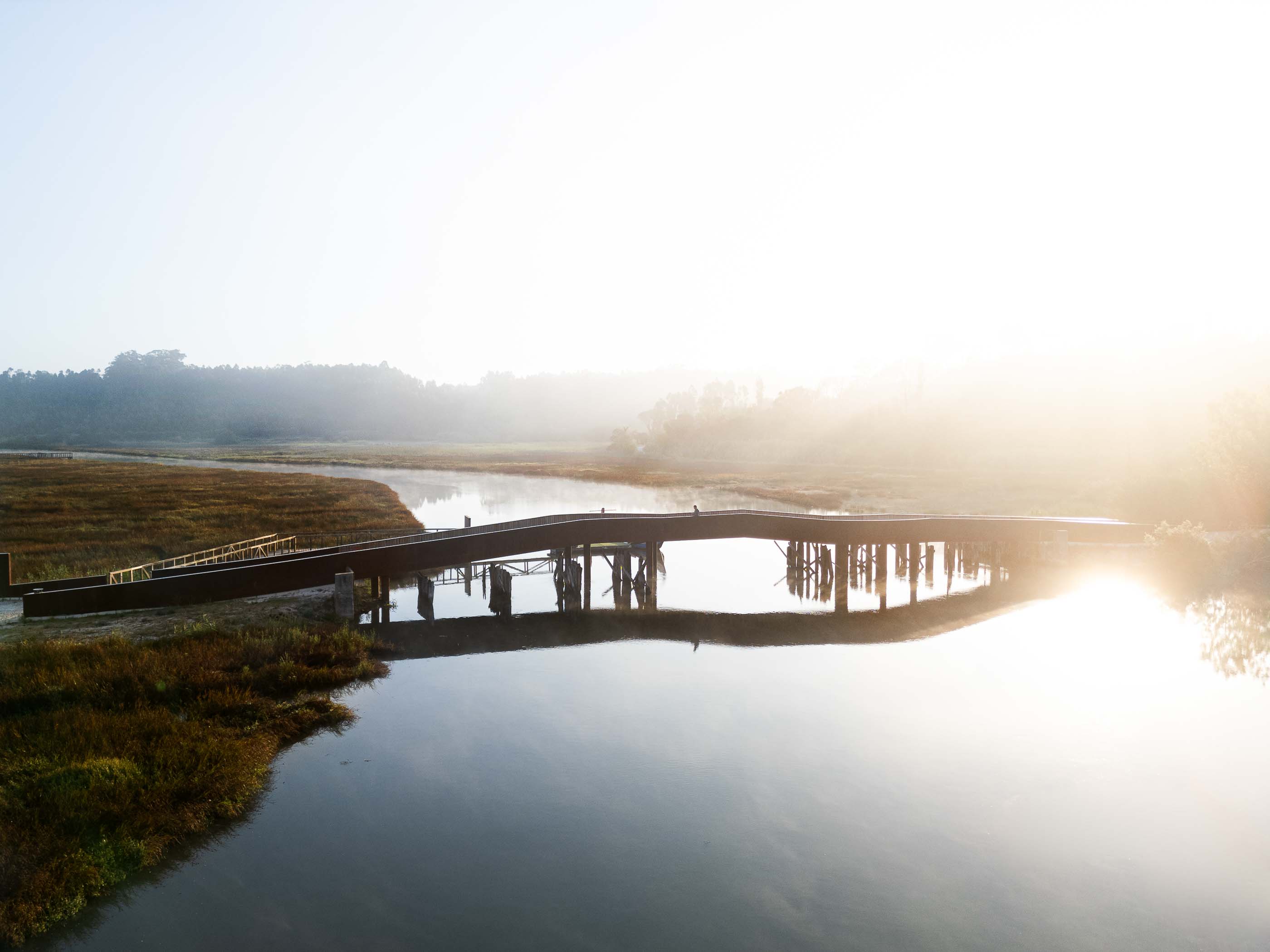
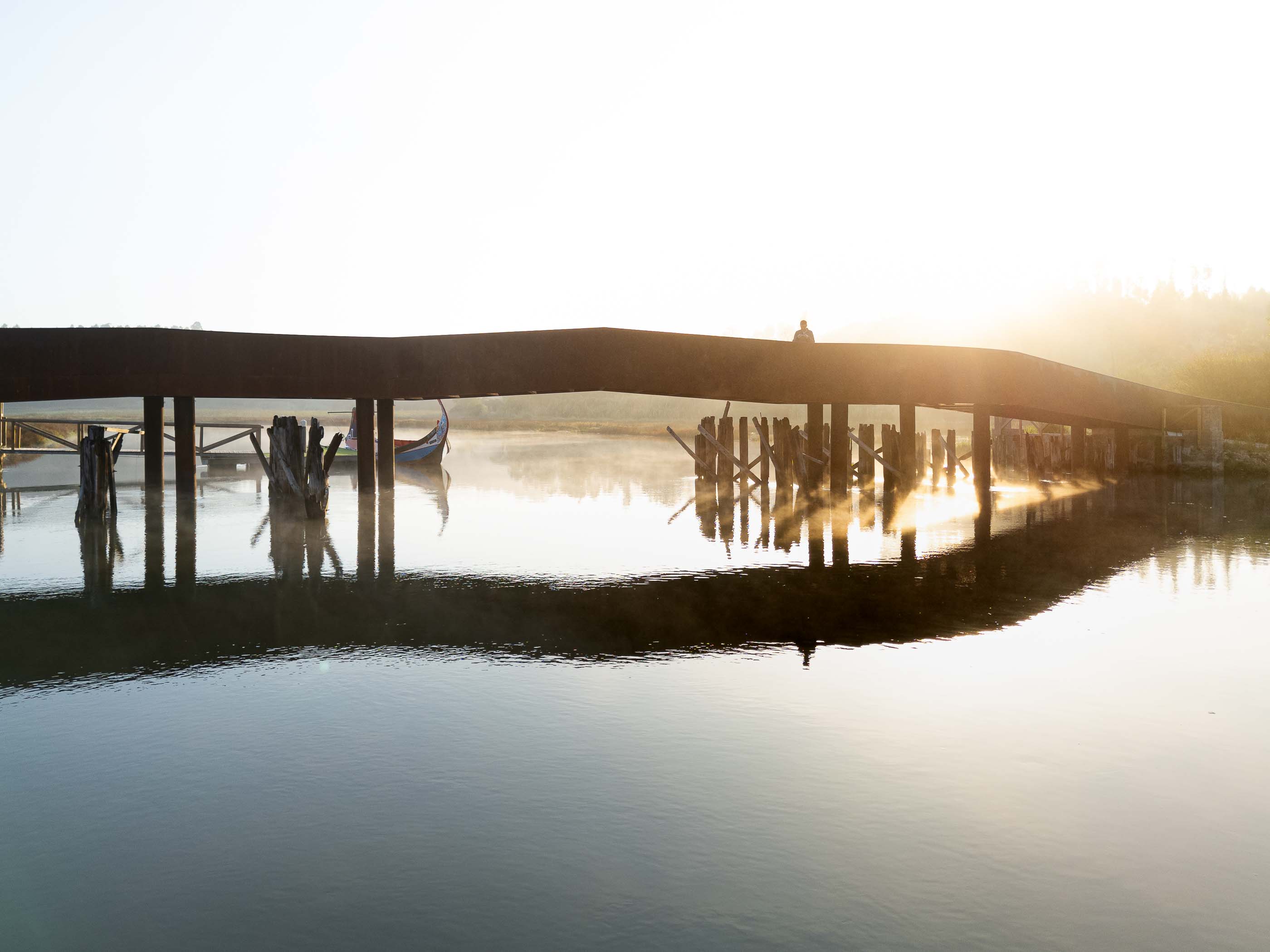
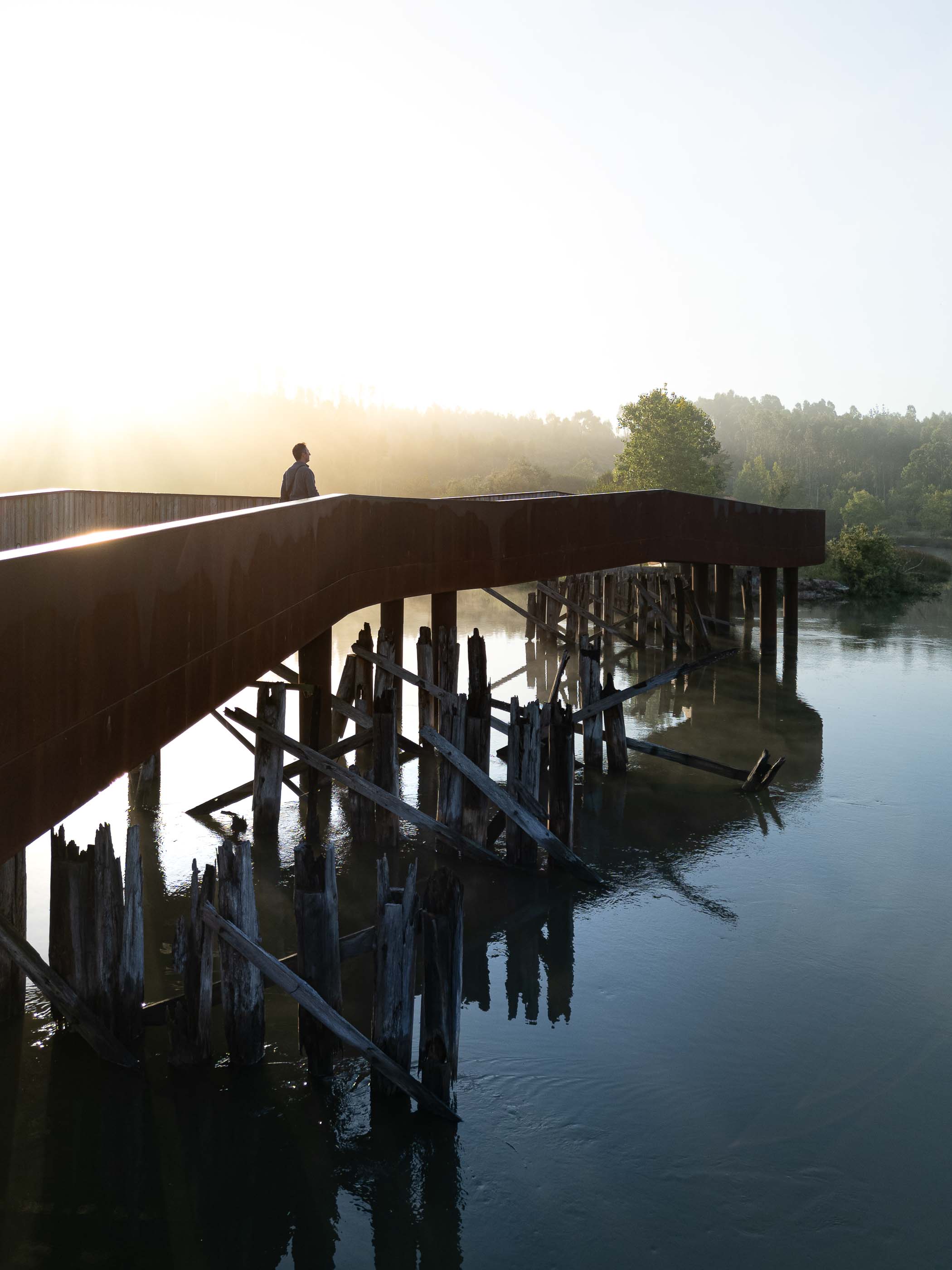
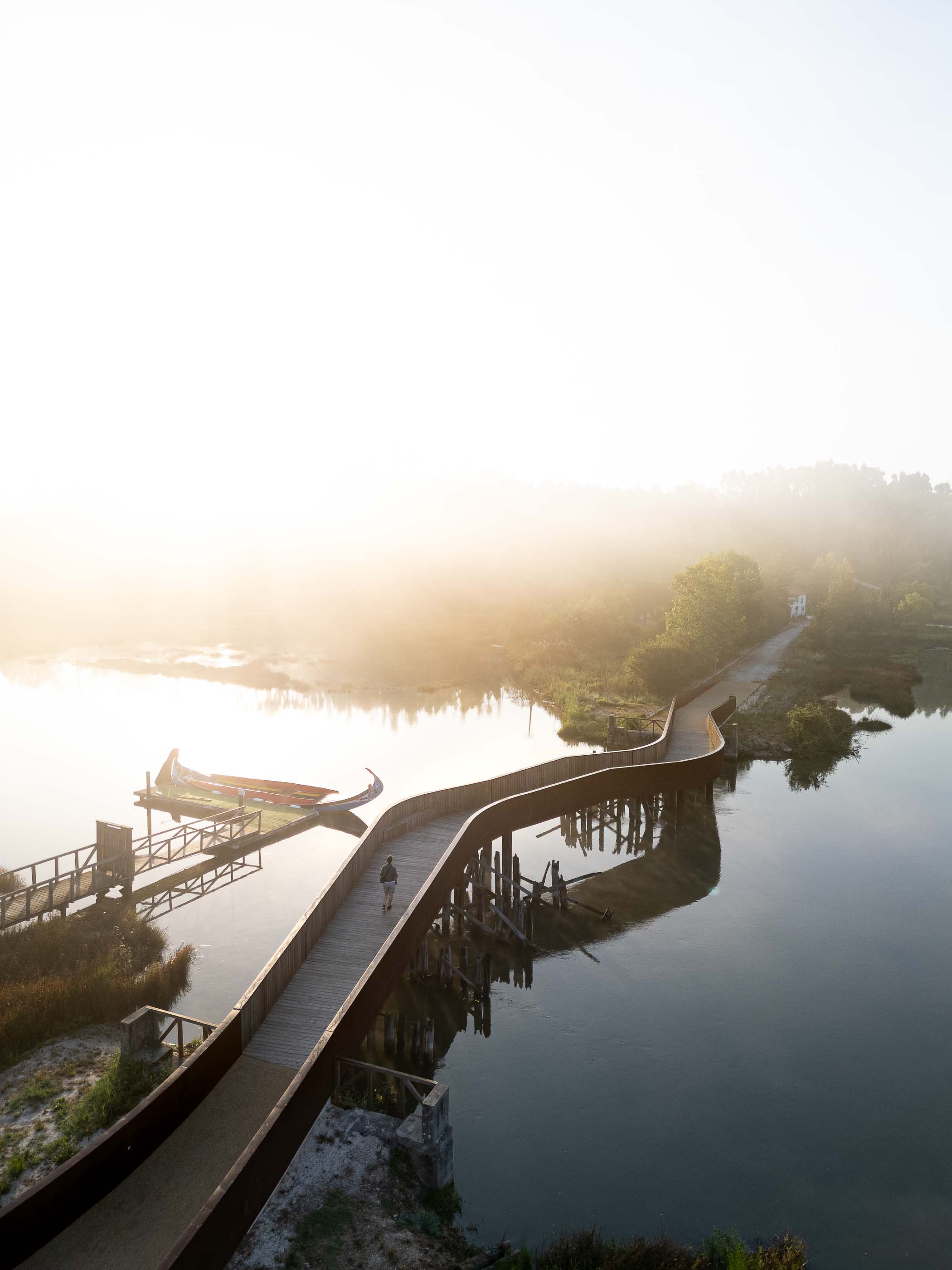
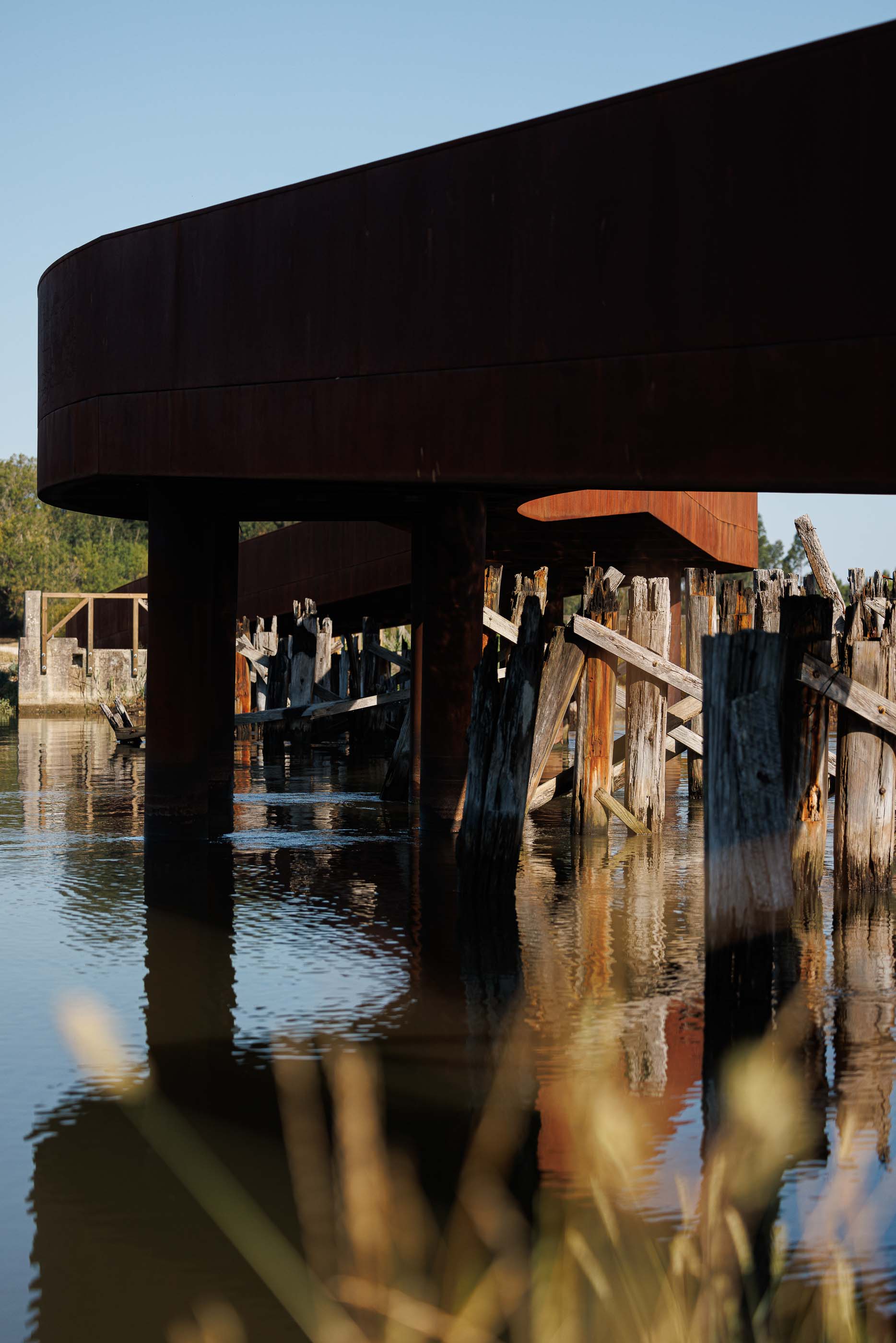
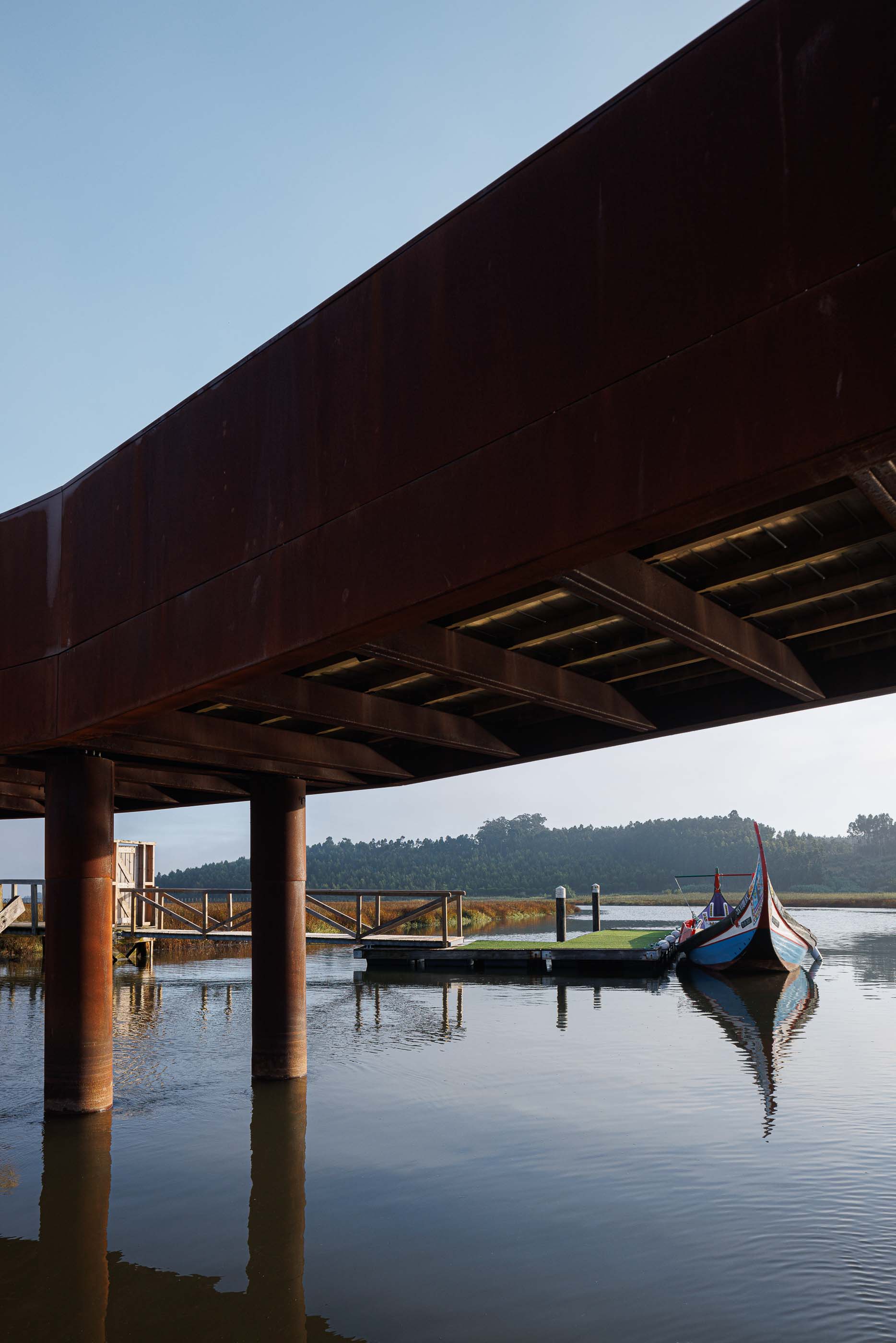
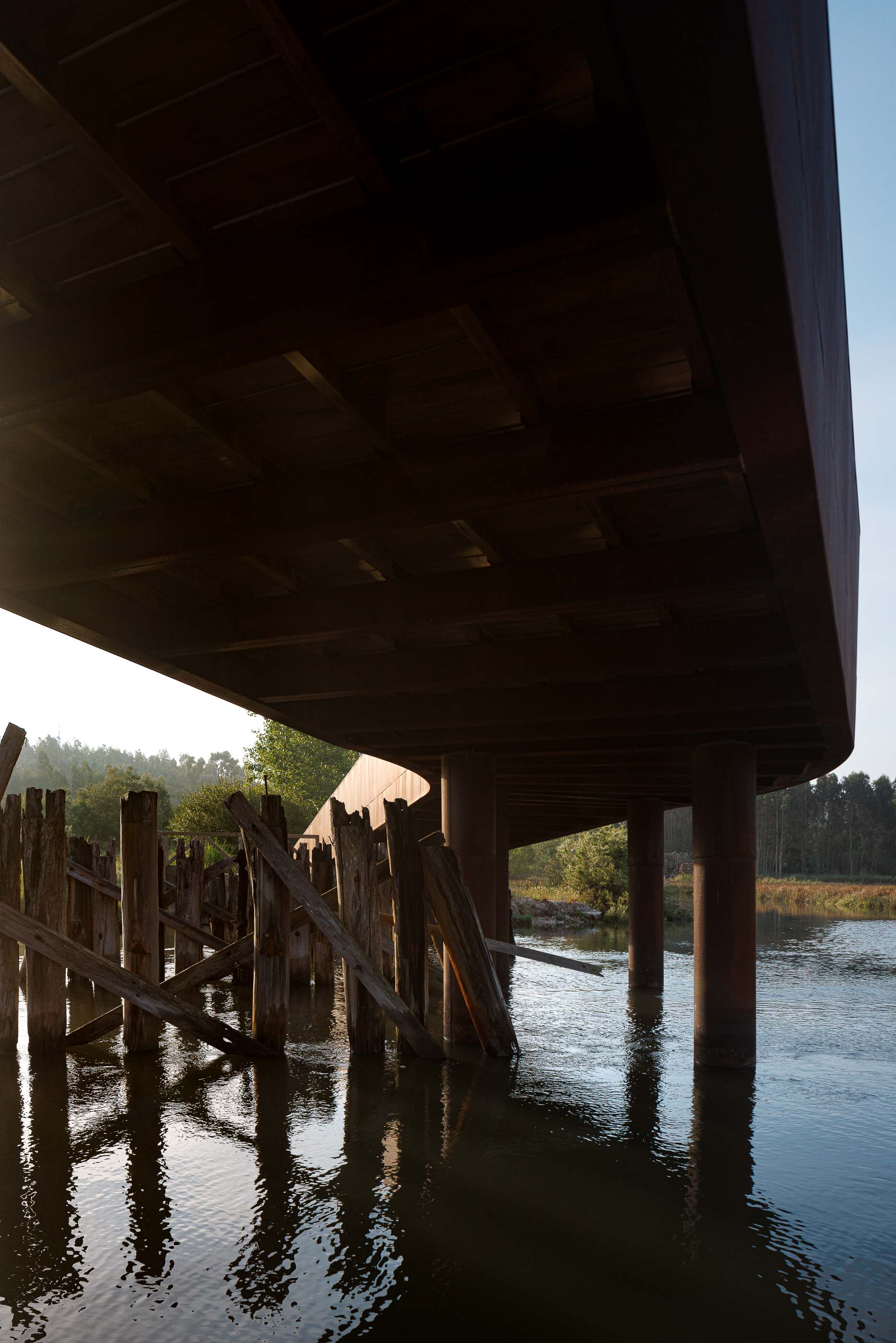
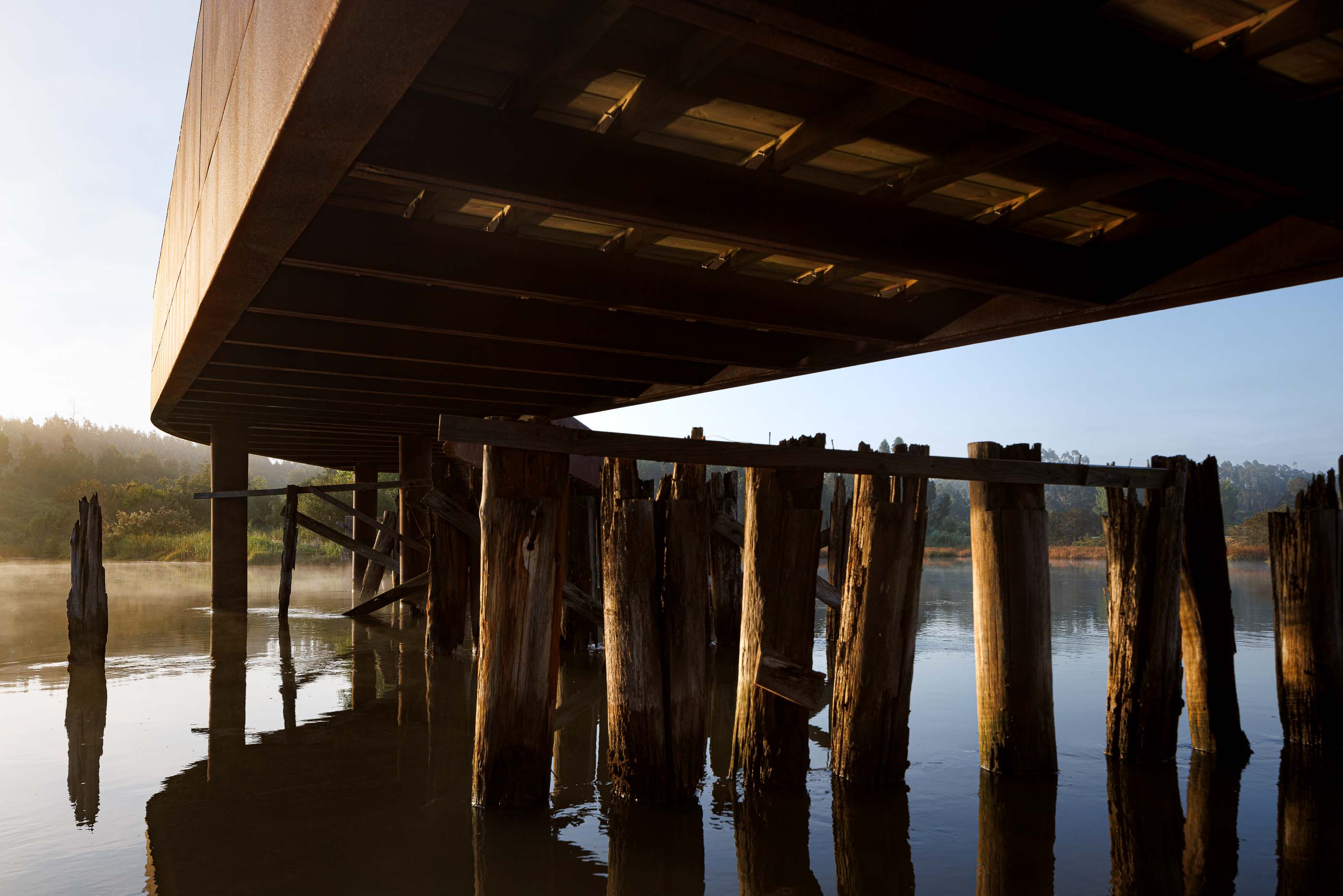
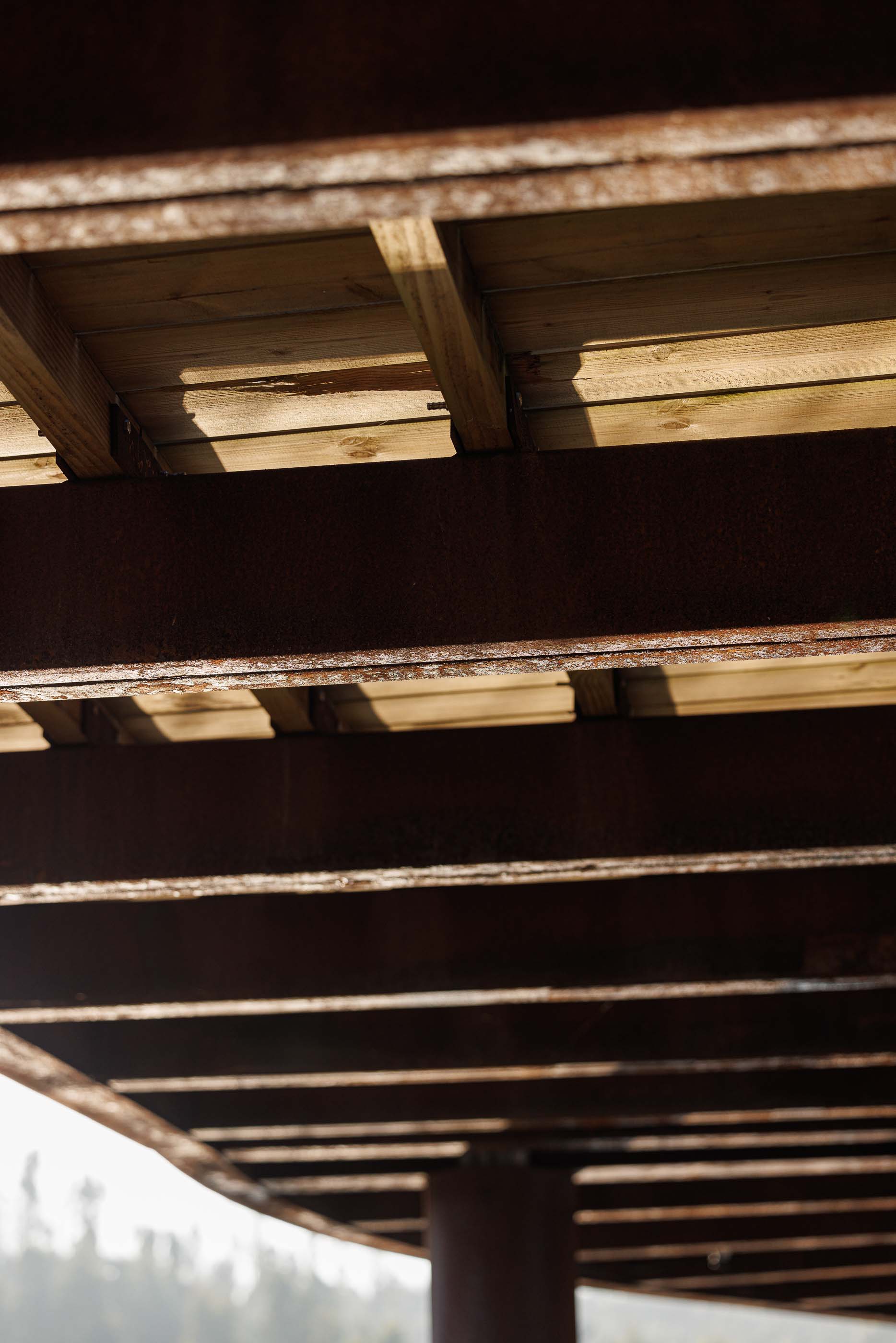
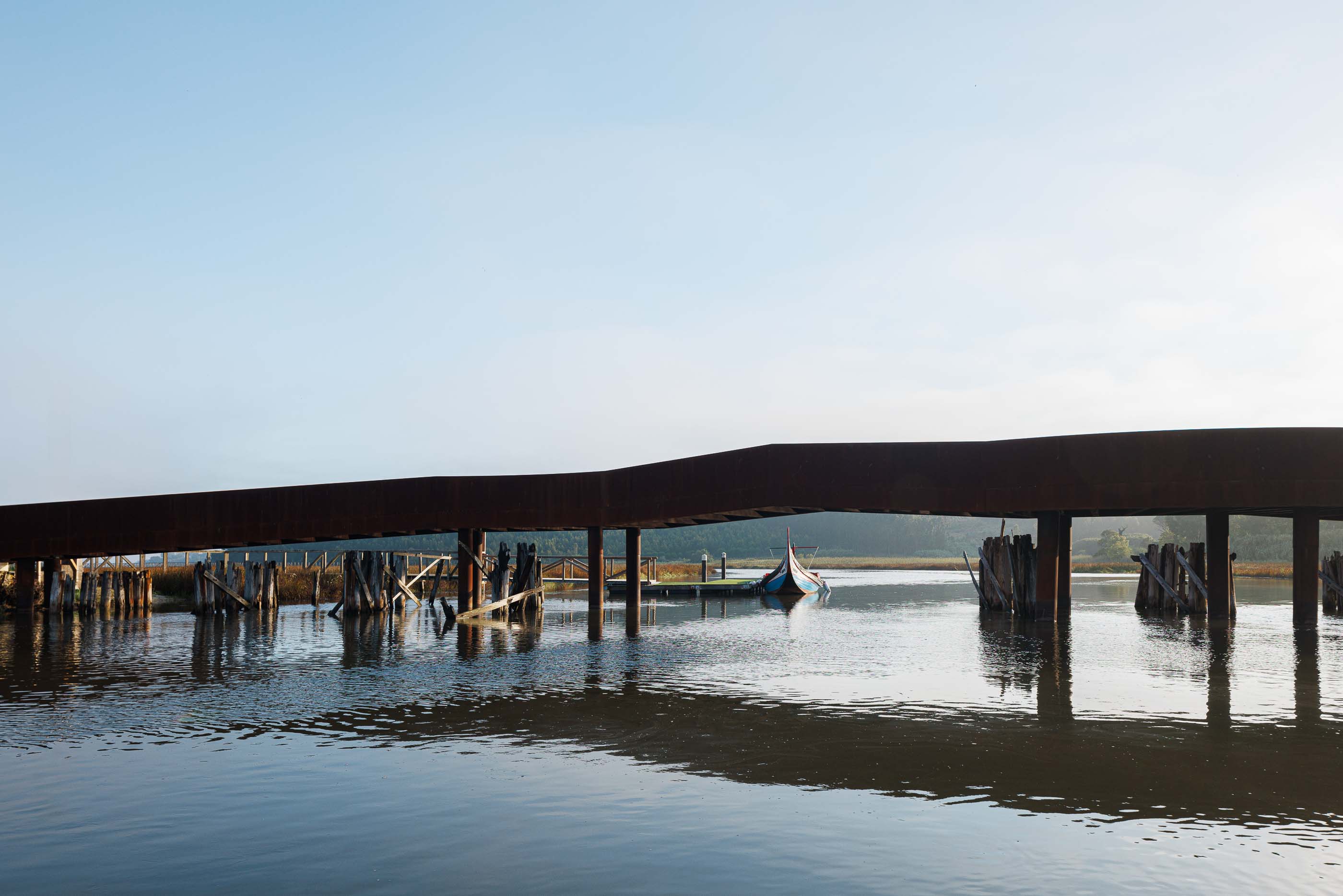
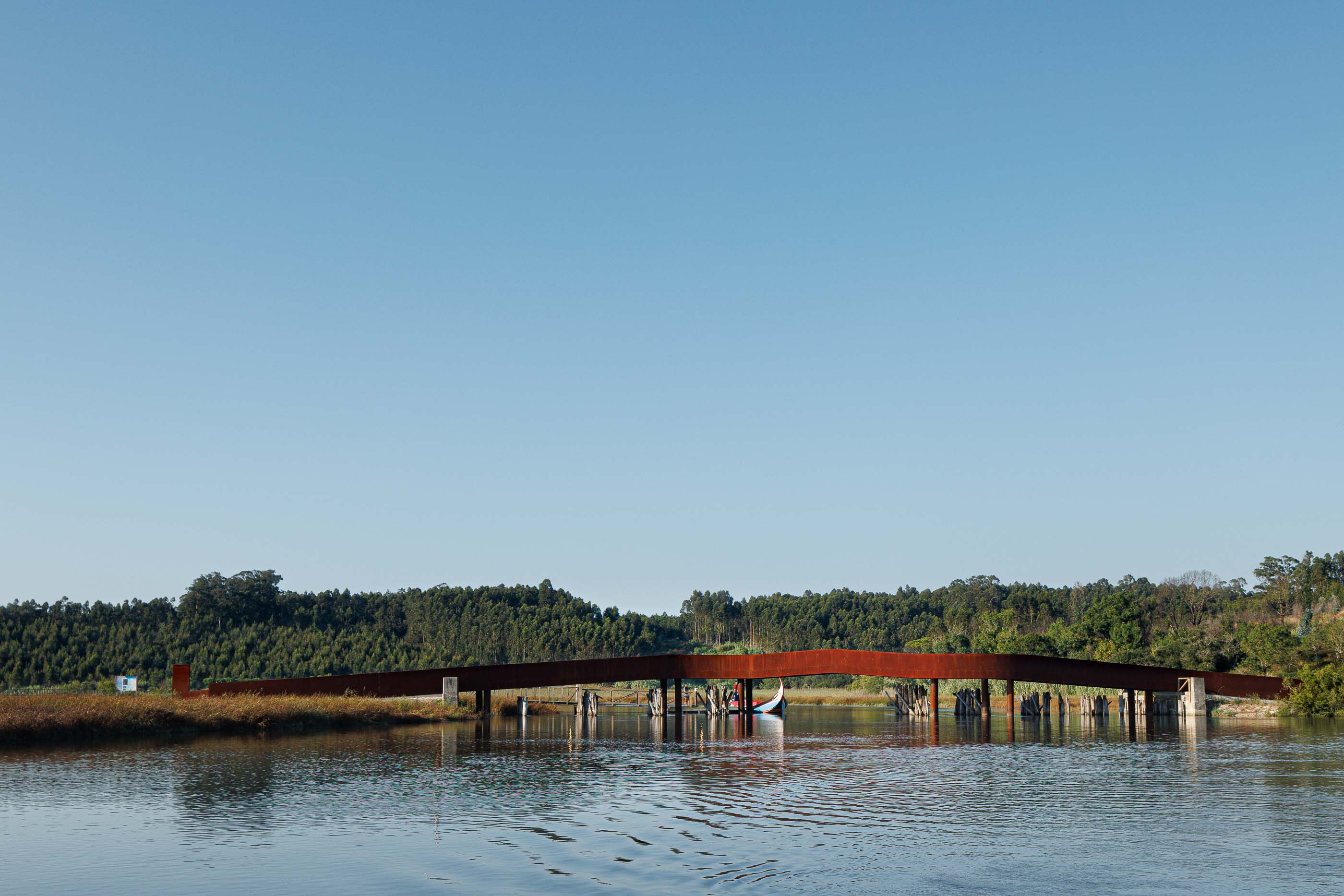
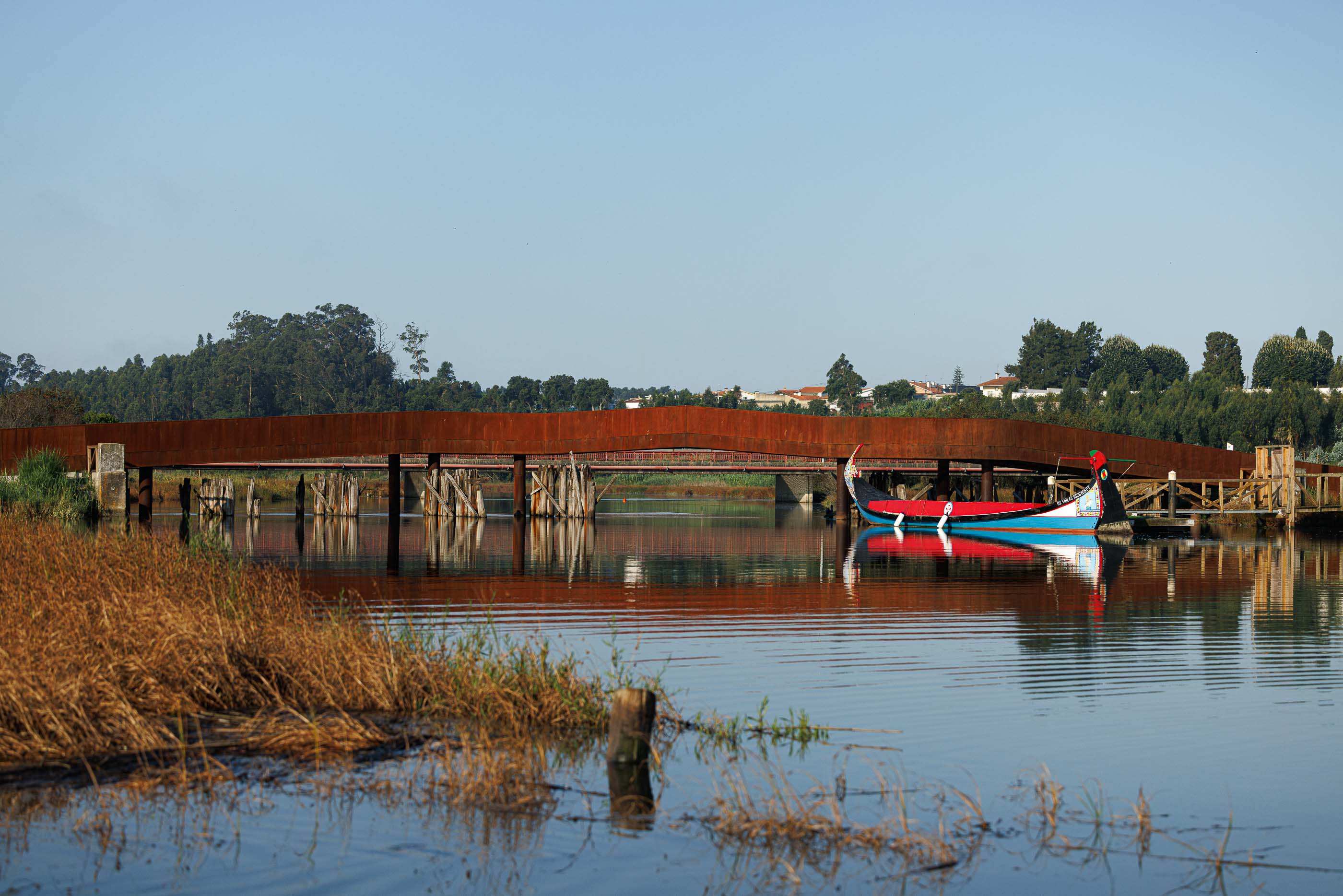
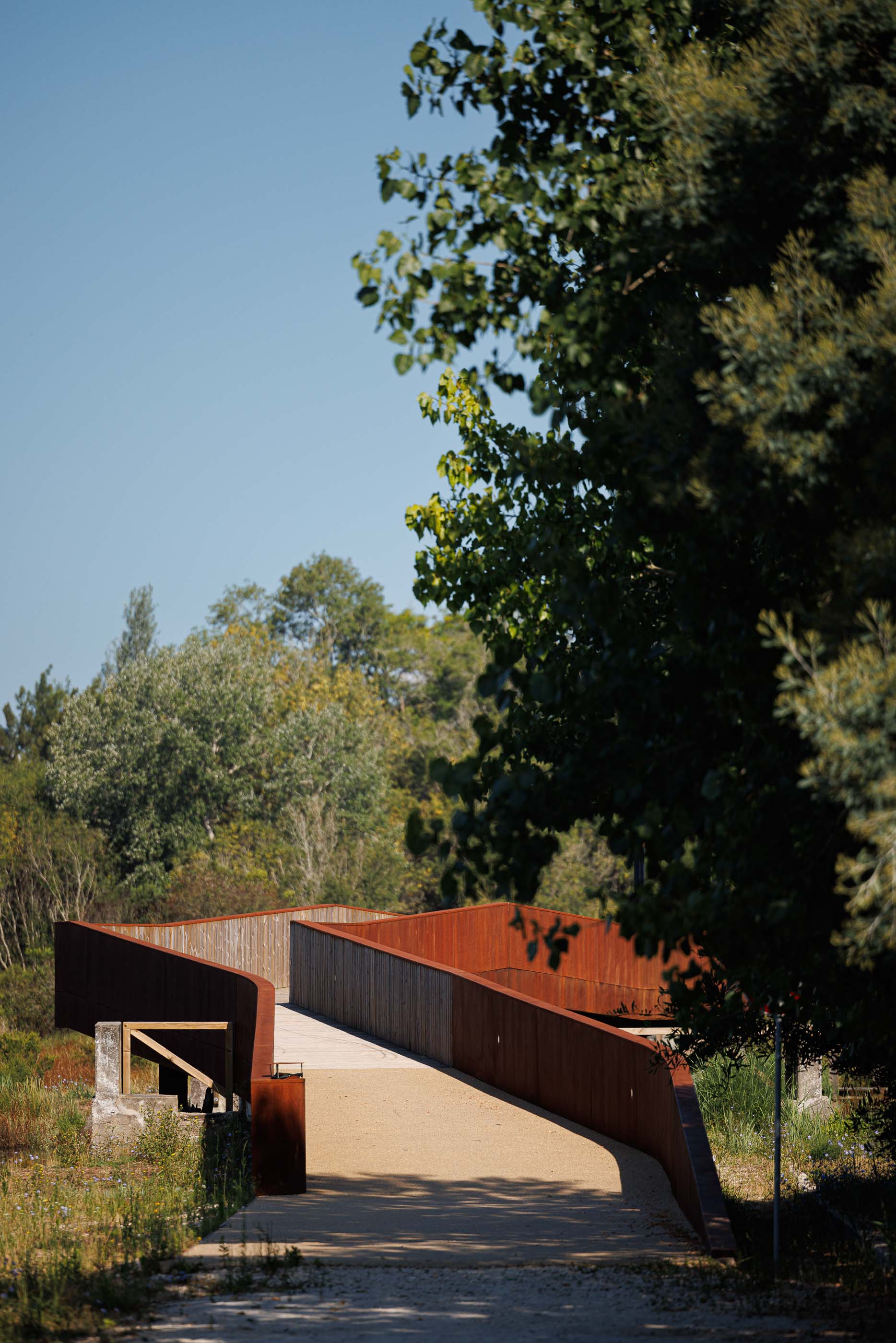
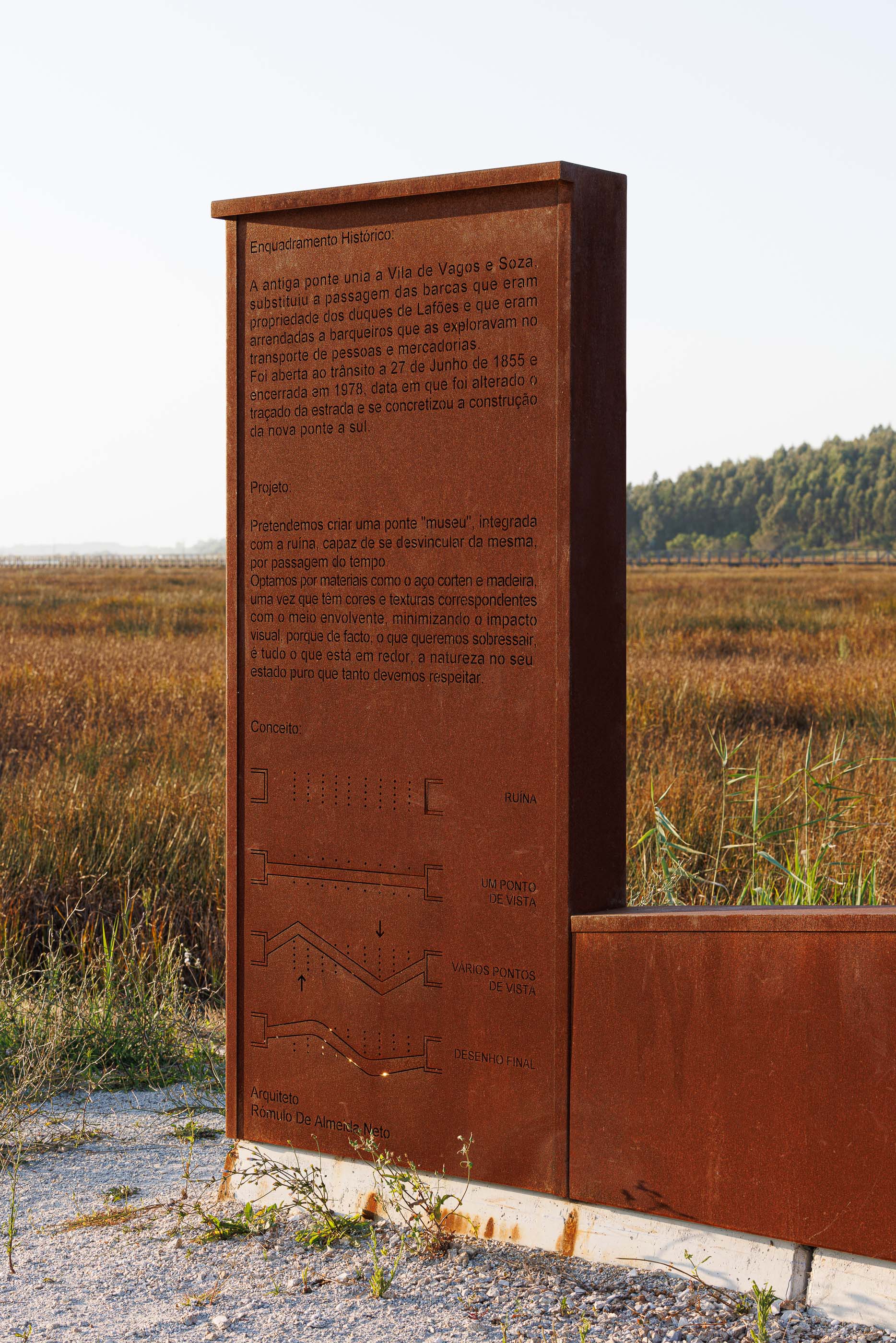
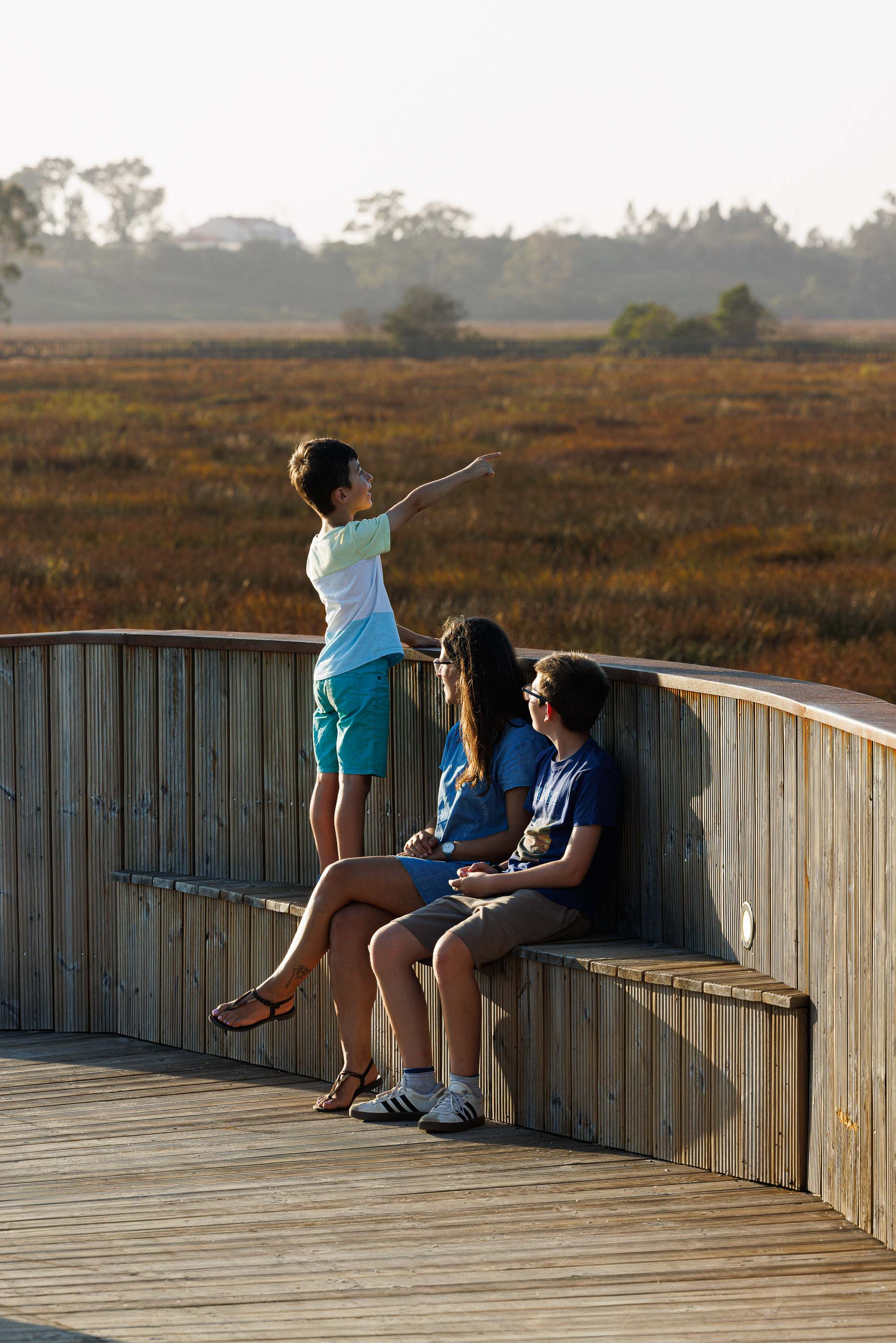
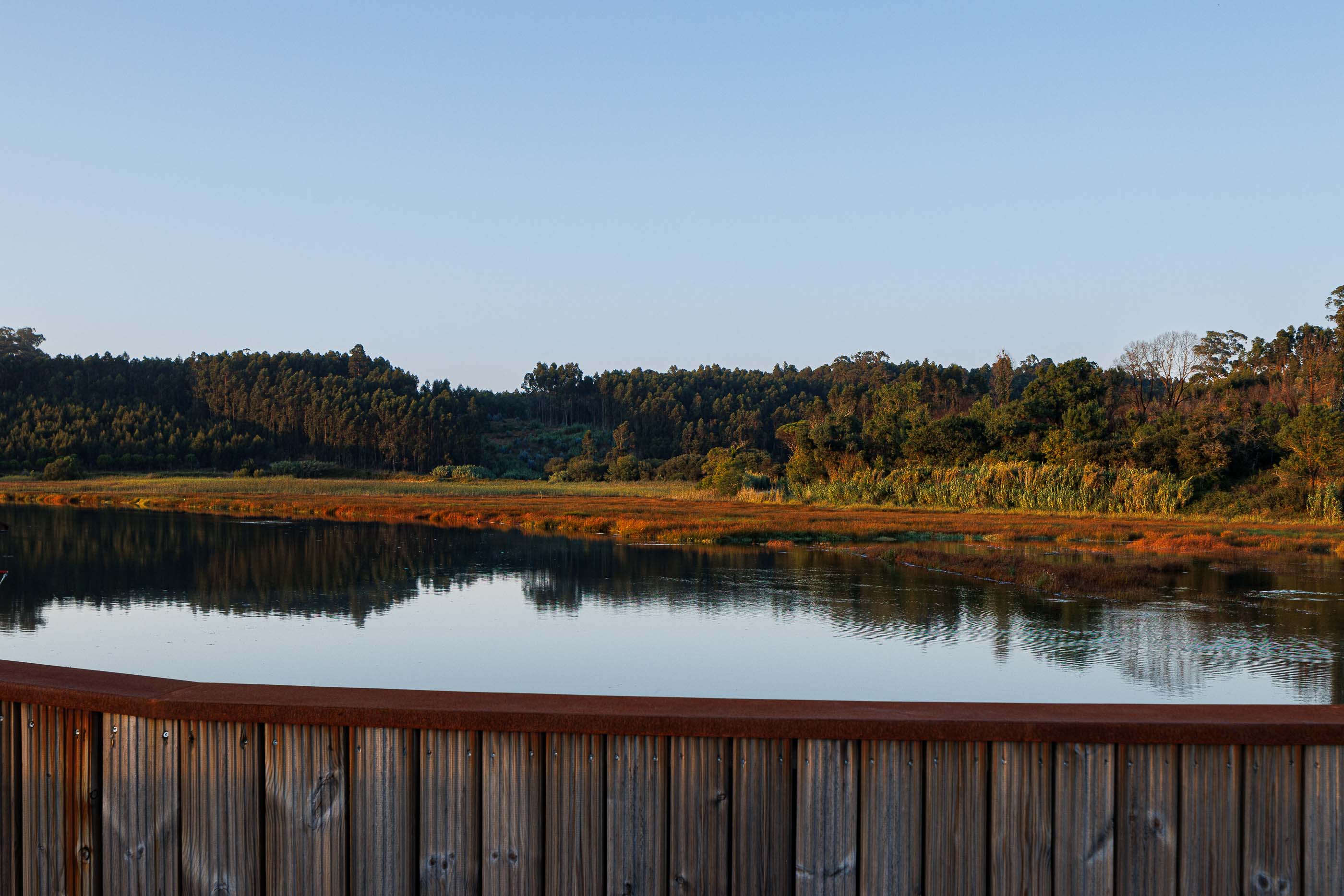
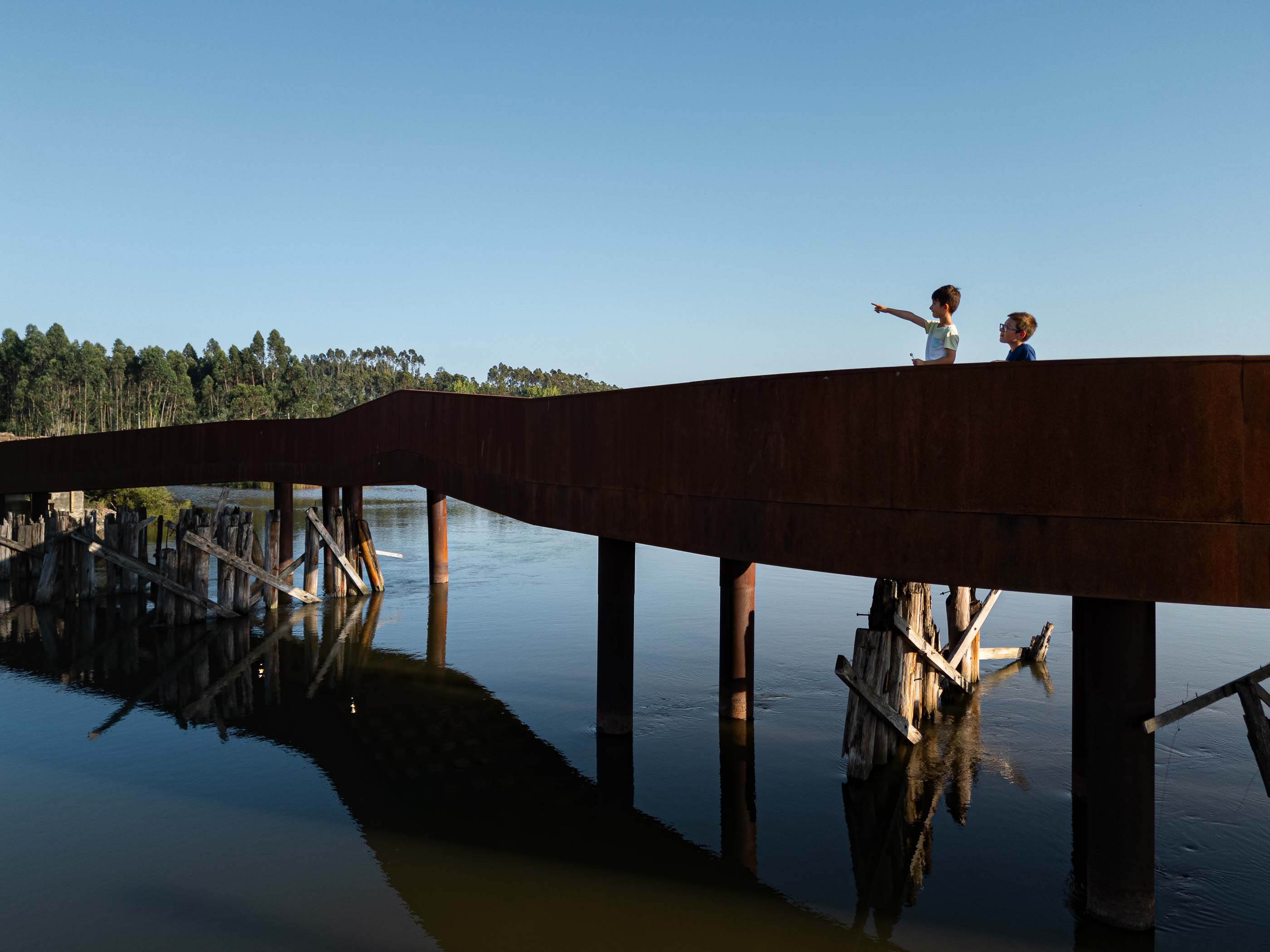
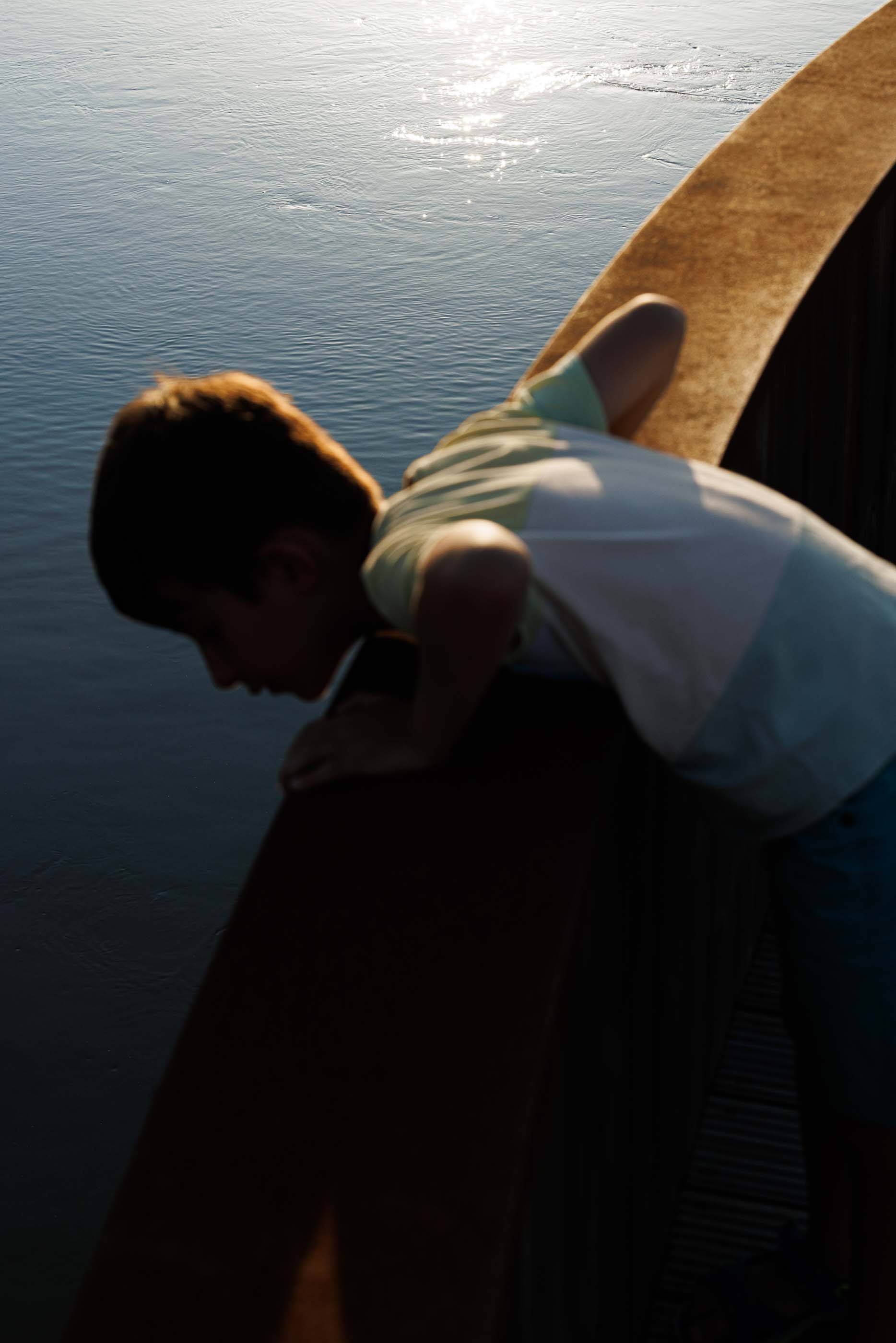
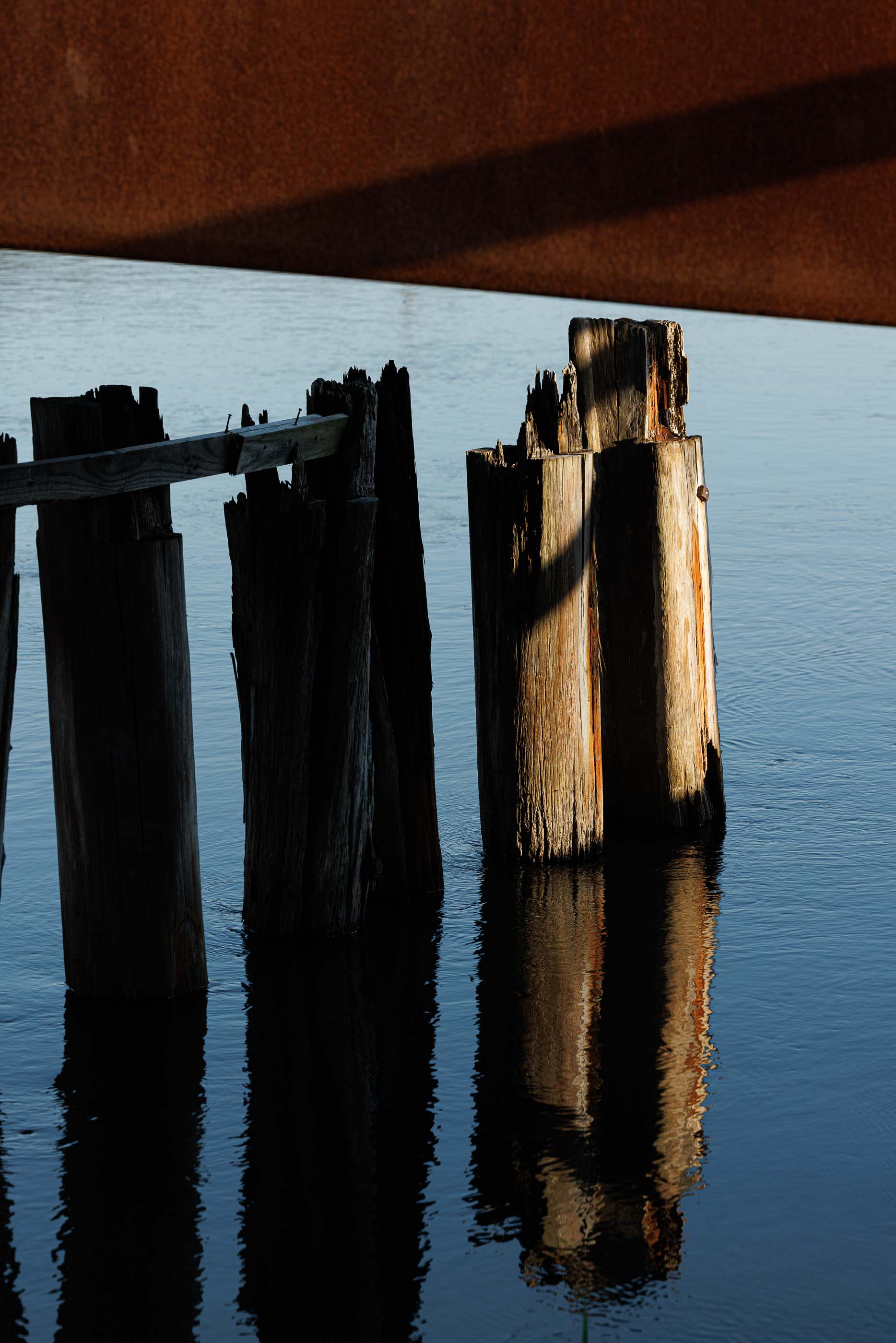
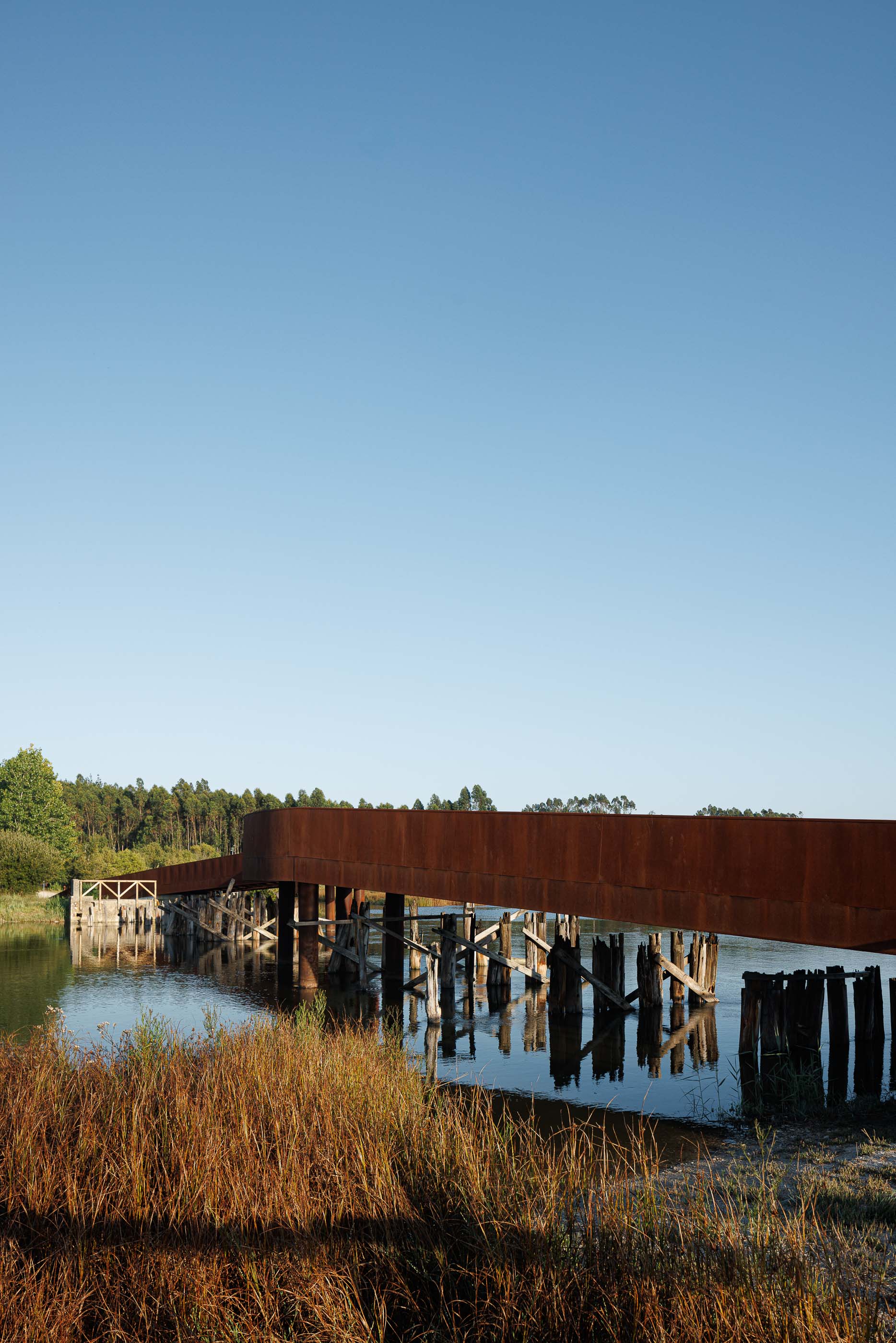
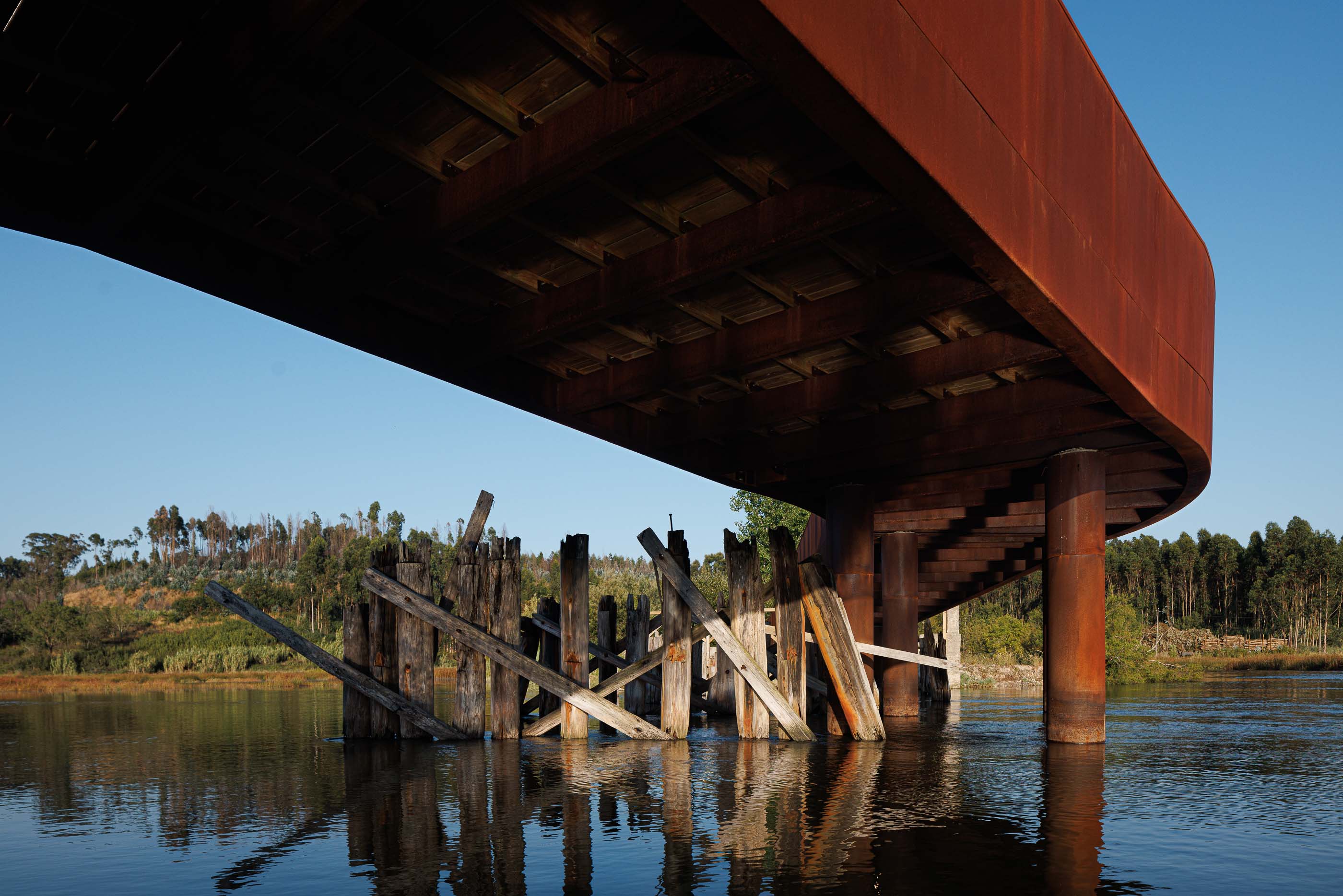
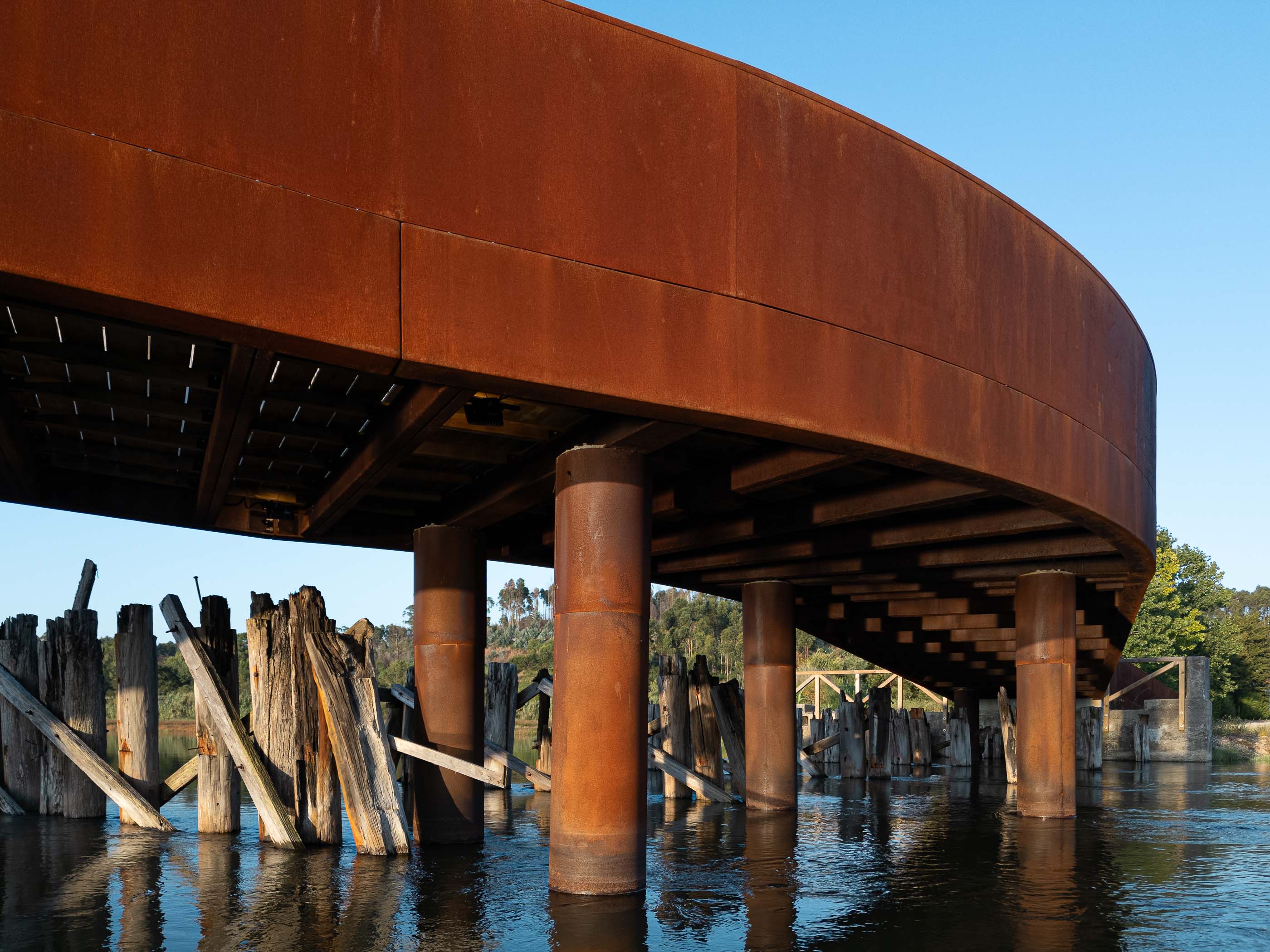
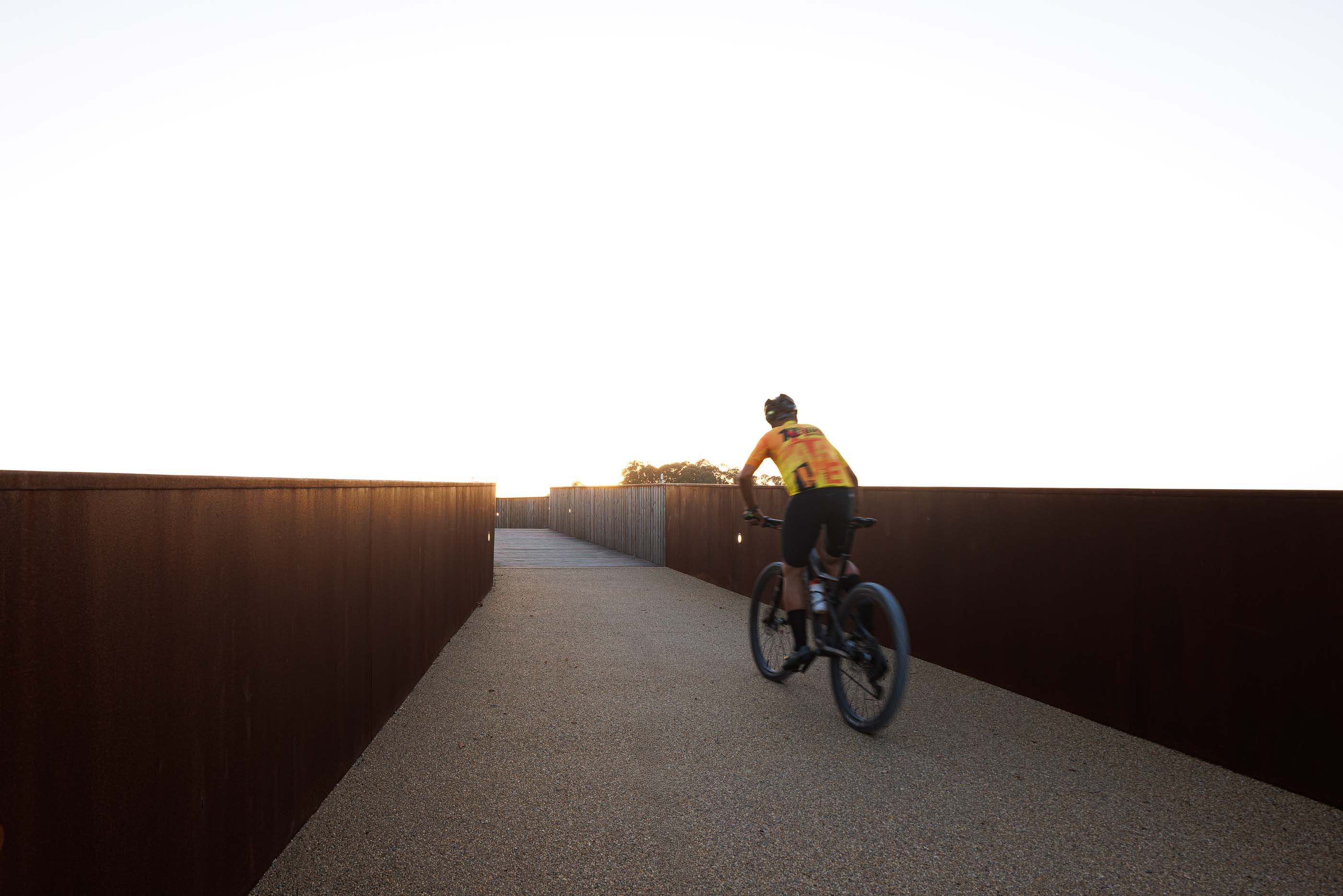
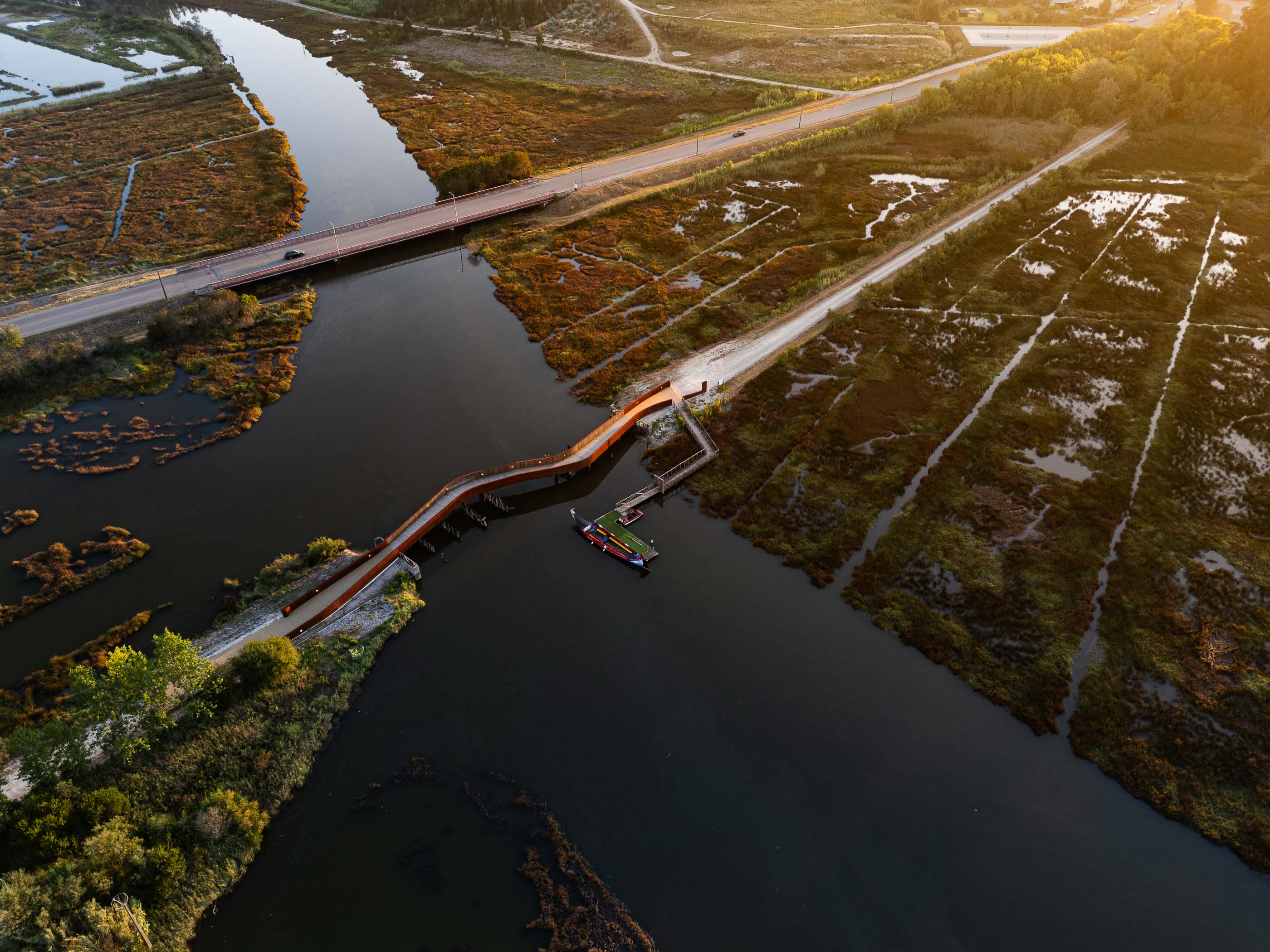
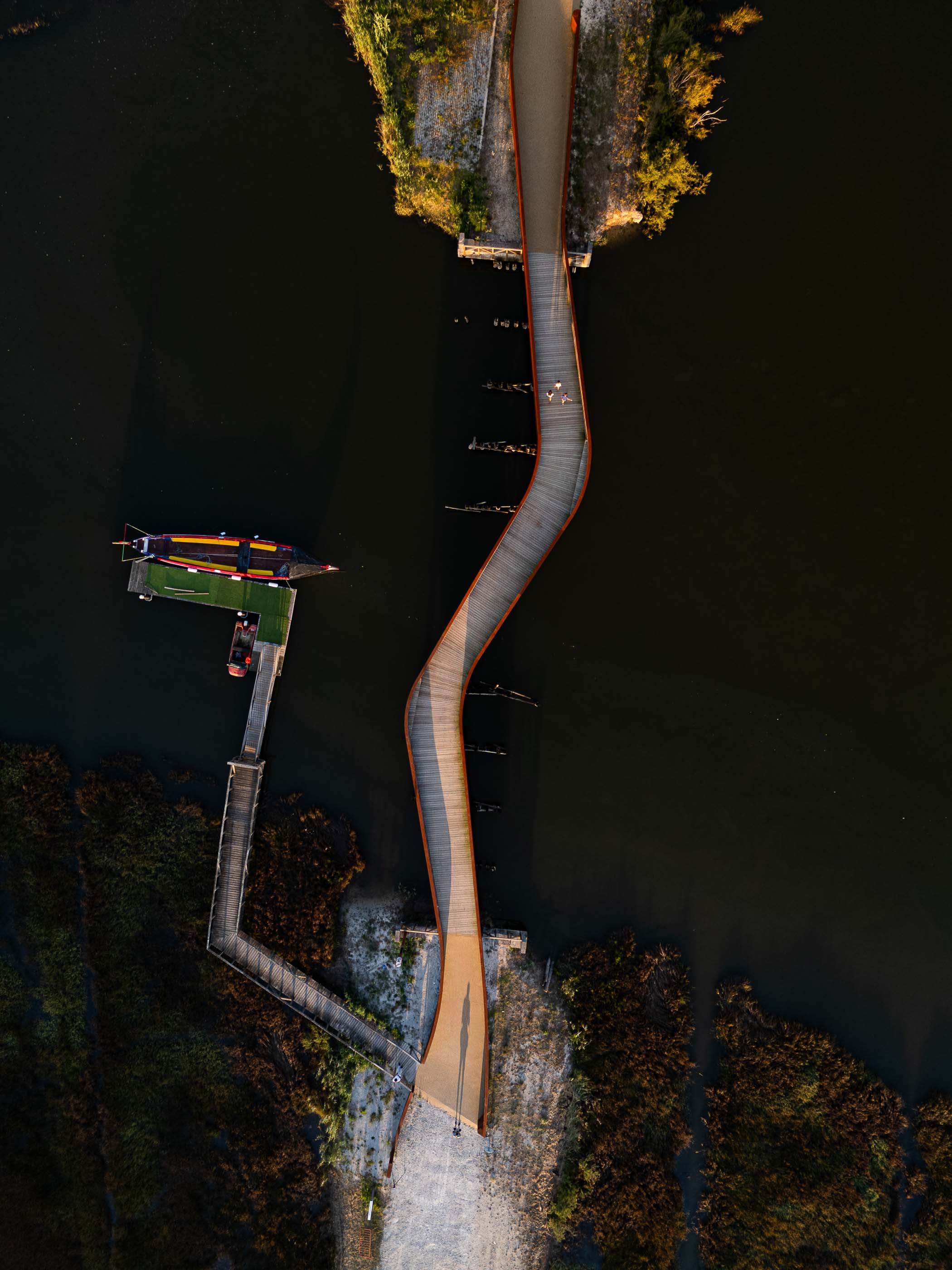
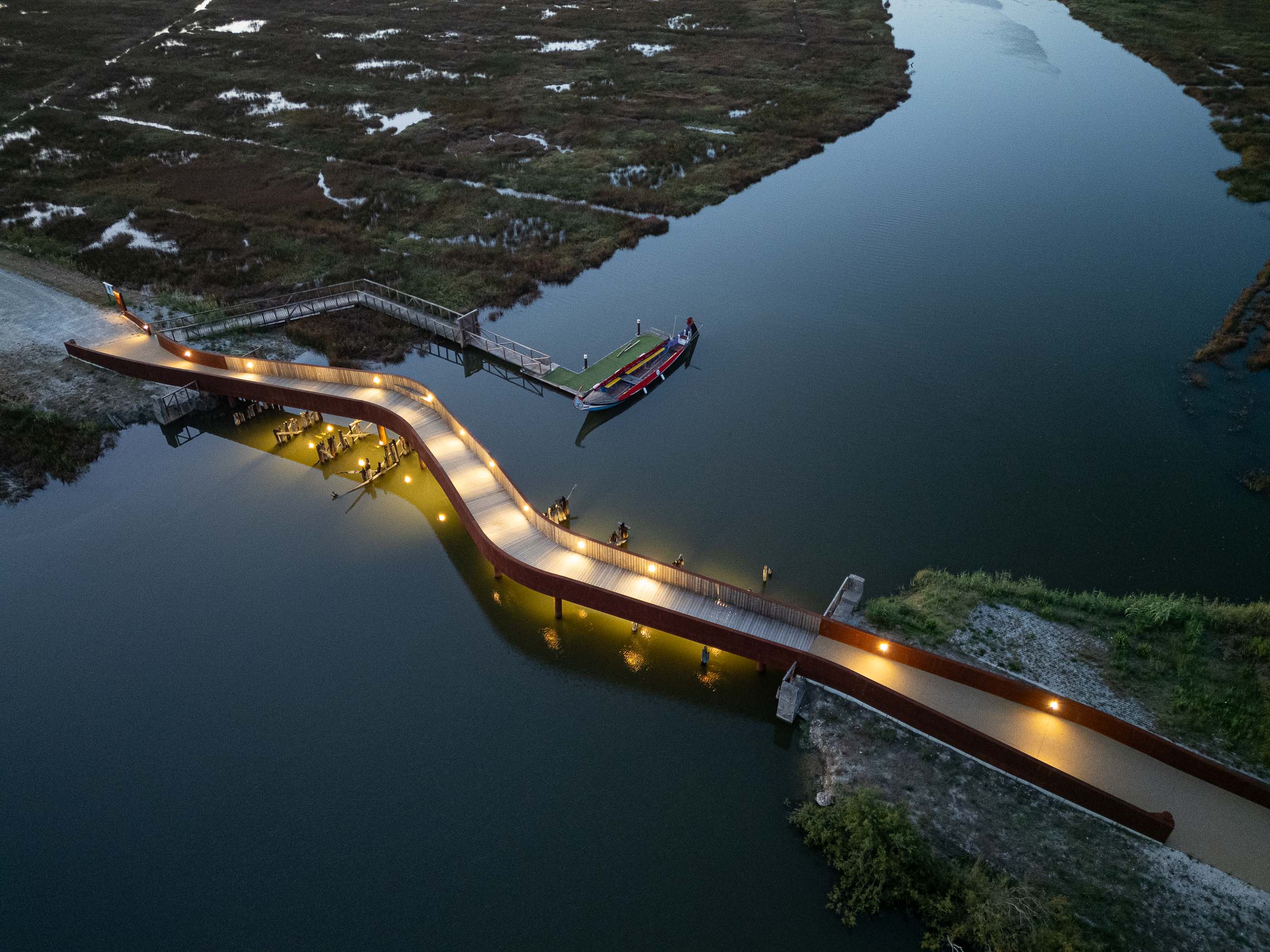
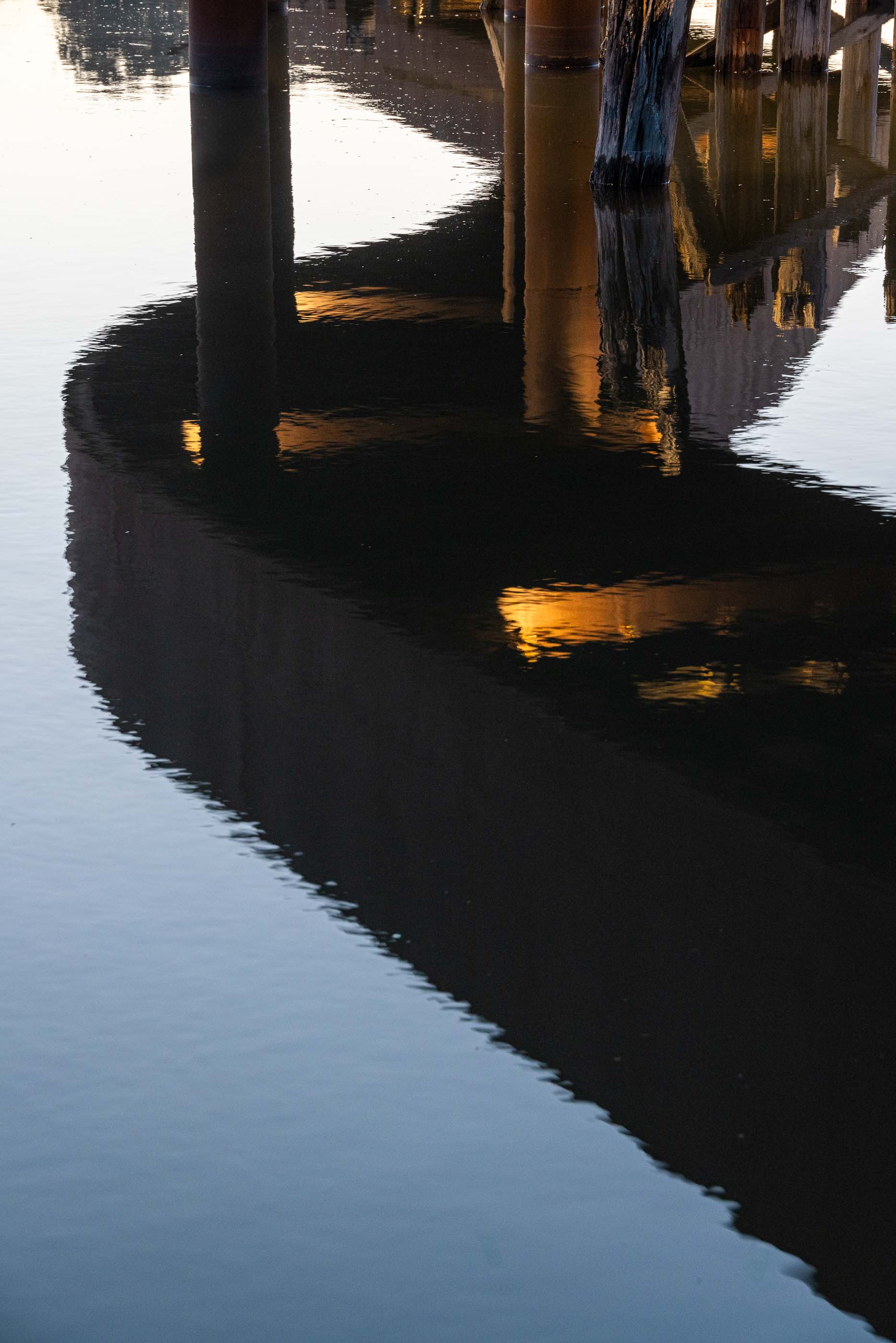
"The local government challenged us to design a new pedestrian and cycling crossing between the banks of Vagos and Sousa. The old bridge, built on June 27, 1855, and closed in 1978, is currently in ruins and should be preserved as an integral part of the landscape and the historical memory of the site. However, being aware that the ruins may eventually disappear over time, the main challenge was to design a "museum bridge" that would enhance the existing structure, while simultaneously having its own identity and being capable of enduring and functioning autonomously in the future. After analyzing and studying the possible solutions for the location, we identified that a crossing with a curve and counter-curve would be the ideal option, as it would allow continuous visual interaction with the ruin along the route. The new bridge was conceived as a true "museum bridge," providing a unique experience: the view of the ruin is permanent while it still exists, and it can be appreciated both during the crossing and directly below the new structure. We chose a clean design approach, using materials with colors and textures that complement the surrounding environment, such as corten steel and wood. The organic nature of the shape was a key element in minimizing the visual impact of the structure on the landscape, ensuring that the new bridge harmoniously integrates into the natural environment, even in the future absence of the ruin. Given that the project’s budget could not exceed €180,000 + VAT, we had to find solutions that were both functional and economical. Thus, the construction method was designed to optimize resources: the bridge was designed in five parts, with each segment not exceeding 14 meters in length. This approach eliminated the need for special transportation, reduced logistical costs, and allowed for an agile and efficient assembly on-site. Furthermore, the scale was carefully adjusted to the program, ensuring a minimum width of 2.50 meters to accommodate both the cycling track and pedestrian traffic. At the transitions of the bridge ramps, leisure spaces with flat areas were created, where benches were installed. These spaces provide resting points, fishing spots, and the opportunity to enjoy the view, making the crossing not only functional but also a place for socializing and contemplation. The volume of the bridge appears subtly, without interfering with the surrounding landscape. The structure’s placement evokes the undulations and curves characteristic of the marine environment, strategically positioning itself to visually integrate with the existing ruin. However, the new bridge was designed to be independent, ensuring that its relevance and functionality remain intact even in the future absence of the ruin, perpetuating its value as an element of connection, experience, and design.
Project’s Poetic Description
The Rebirth of the Bridge: The bridge was worn down by the tides, strong winds, and storms, with its feet buried in the mud; it bore the weight of time with the power man had given it. Along its span, many crossed without noticing the estuary had ceased. They just crossed. Others stopped to marvel at the scenery, feel the wind on their faces, the scent of the sea breeze, the sound of singing birds, and the dance of the reeds. Now, broken and drowned in the estuary, the bridge has crumbled. It is no longer a crossing, merely the mirage of a bridge that vanished with it. And suddenly, it is reborn. And in the mirror of the estuary, old and new are but one: the passage. It crosses the full tide and the empty tide, guided by the current that belongs only to God. It crosses. Bloodied, with its metal exposed to the elements, it was born old, born raw; and now it is this bridge that fights against time, that, with time, will one day rest in the bed of the old bridge. The imagined bridge, sketched on an autumn leaf, is the bridge I cross. It is the bridge that is given to you." Text provided by architect
Conteúdo de vídeo bloqueado pela política de privacidade.
Video content blocked by privacy policy.


